
‘Mocks India’s Heritage’: BJP Hits Back At Congress Over ‘Bhajan Clubbing’ Remark On PM Modi
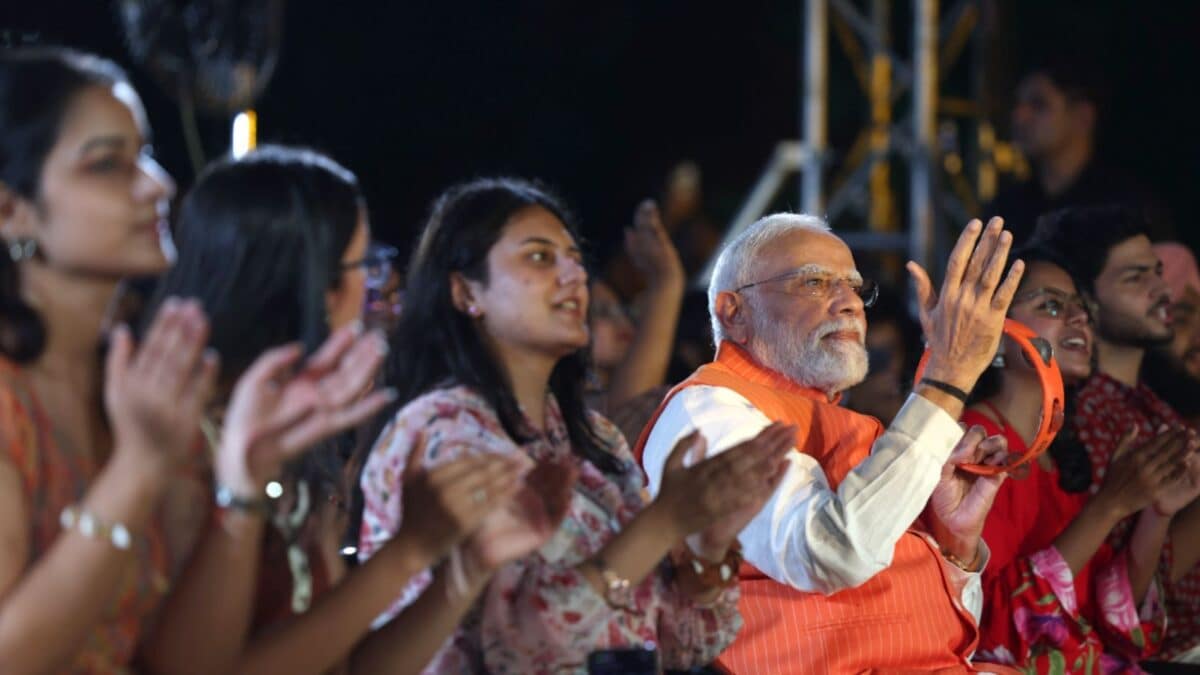
A recent public appearance by Prime Minister Narendra Modi has sparked a fierce political confrontation between the Bharatiya Janata Party (BJP) and the Indian National Congress. At the heart of the latest controversy is a unique event dubbed Bhajan Clubbing, which the Prime Minister attended at Deen Dayal Upadhyaya Park in Delhi. The gathering, organized to mark the 110th birth anniversary of Pandit Deendayal Upadhyaya, combined traditional devotional music with a modern concert-like atmosphere.
The event quickly became a lightning rod for criticism. Priyank Kharge, a prominent Karnataka Minister representing the Congress party, took to social media to voice his disapproval. He suggested that while the Prime Minister appears comfortable participating in a Bhajan Clubbing session, he remains elusive when faced with pressing inquiries regarding the state of democratic institutions, specifically citing concerns about the Election Commission.
The Political Fallout of Bhajan Clubbing
The response from the BJP was both swift and sharp. CR Kesavan, a national spokesperson for the party, condemned the remarks made by the opposition. He argued that the Congress party is consistently mocking India’s civilizational heritage of Bhajan and Bhakti (devotion). According to official records, the BJP views such cultural integration as a positive evolution in public engagement.
Kesavan did not stop at defending the event. He redirected the narrative by questioning the accountability of the Congress leadership itself. He highlighted the party’s electoral struggles, noting that under the leadership of Rahul Gandhi, the organization has faced three consecutive losses in Lok Sabha elections. He further referenced ongoing national debates regarding institutional trust to counter the claims made by his political rivals.
This is not the first time this musical trend has gained national attention. Earlier this year, during his ‘Mann Ki Baat’ broadcast, the Prime Minister spoke favorably about the concept, describing it as a bridge between age-old spiritual traditions and contemporary modernity. By infusing religious devotion with energetic beats and modern stage lighting, supporters argue that the movement effectively connects with younger generations who might otherwise feel disconnected from traditional practices.
However, the skepticism from the opposition persists. Critics argue that these public displays serve as a distraction from structural issues, such as the economic challenges faced during the previous UPA regime, which the BJP characterizes as the era of the fragile five. While the BJP promotes a narrative of robust growth and inclusive governance, the Congress continues to utilize social media to highlight what it perceives as an avoidance of parliamentary and democratic scrutiny.
As the debate rages, it underscores the widening chasm in India’s political discourse. Every public action taken by top leadership is now subject to intense scrutiny, reflecting a broader pattern of Bhajan Clubbing politics where symbolic acts carry as much weight as policy decisions. Whether these cultural initiatives will ultimately sway the electorate or continue to fuel the fire of opposition remains a central question in the lead-up to future electoral cycles. For now, the exchange serves as a reminder of how quickly cultural symbols can be weaponized in the high-stakes arena of Indian politics.