
Palestine weekly: West Bank in flames after Tal killings
A horrific chain of events began on July 24th, when over two dozen Israeli settlers from the illicit Havat Gilad outpost descended upon Palestinian homes on the fringes of Tal, a village nestled southwest of Nablus in the occupied West Bank. Though residents initially repelled the assailants, the settlers soon returned, bolstered by Israeli soldiers. Video footage purportedly depicts a Palestinian man seizing a settler’s rifle and fatally shooting him, only for soldiers to then kill the Palestinian man, with further visuals suggesting continued gunfire.
The immediate fallout was catastrophic: four Palestinians from the Ramadan family perished in the ensuing mayhem, alongside one settler and an Israeli soldier. In the days that followed, the retaliation from both Israeli forces and settlers was nothing short of overwhelming, plunging the occupied territory into a vortex of armed assaults, destructive raids, home demolitions, choked roadways, and widespread arson. This familiar, tragic sequence — settler incursions begetting violence, swiftly followed by expanding Israeli military operations — has unfortunately escalated dramatically, even beyond the already dire baseline, especially as Israeli Prime Prime Minister Benjamin Netanyahu’s far-right coalition nears the end of its term before elections. The region is now gripped by an intense wave of West Bank violence.
Mounting West Bank Violence: Raids, Arson, and Closures
Hours after the killings in Tal, Prime Minister Netanyahu declared a “wide-scale military operation.” His directives included the demolition of the alleged Palestinian attacker’s home, the revocation of work permits in what he termed “terror hotspots” villages, reinforcement of army units, and the expedited “regularisation” of settler farms and outposts—many of which contravene even Israeli law. Finance Minister Bezalel Smotrich chillingly promised an “iron fist” response, while National Security Minister Itamar Ben-Gvir suggested every West Bank village should face the same fate as Beit Hanoon in Gaza, which was flattened after attacks against Israelis. By the weekend, Israeli public radio reported a deployment of 26 army battalions across the occupied West Bank.
Night after night, Israeli forces systematically raided Tal, arresting scores of residents—between 30 and 50—and ransacking approximately 70 homes. This pervasive campaign extended across Jenin, Tubas, Ramallah, Hebron, Bethlehem, Tulkarem, and occupied East Jerusalem. In Nablus, a mere 5km (3 miles) from Tal, Israeli forces stormed a hospital, reportedly handcuffing medical staff before detaining a patient wounded during the Tal attack. Simultaneously, four new Israeli settlement outposts sprang up overnight near Tal and adjacent villages like Awarta, Qusra, and Jabal Ubayd, according to Israeli public radio and local activists. This adds to the distressing tally of 42 new illegal outposts constructed across the occupied West Bank in the first half of 2026 alone, predominantly agricultural and concentrated in the Hebron, Ramallah, and Nablus governorates, contributing to the persistent West Bank violence.
A Weekend Engulfed in Flames and Blockades
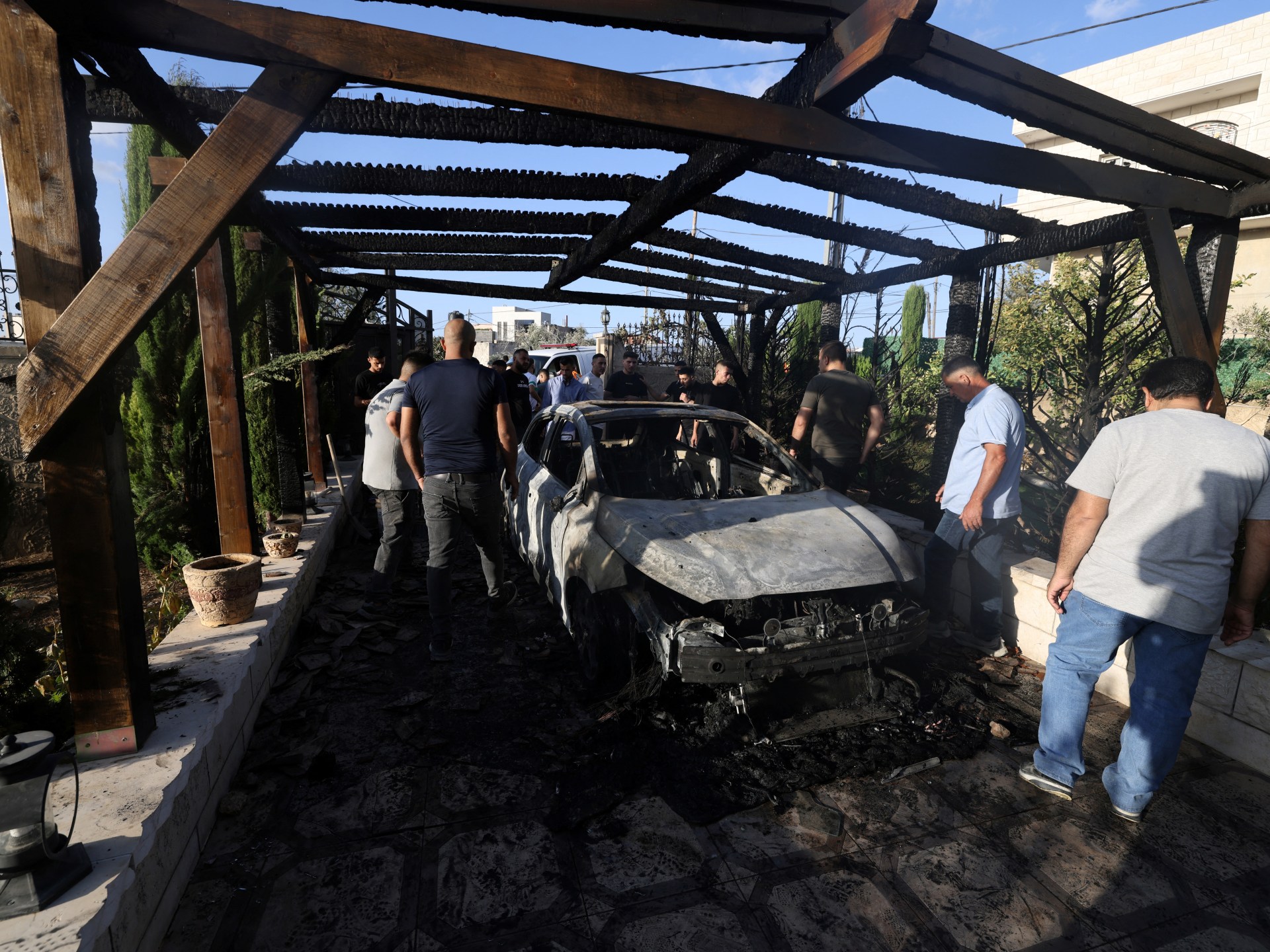
The tragic events in Tal ignited a surge of settler violence that quickly consumed numerous villages across the West Bank. Israel’s Army Radio documented 30 distinct settler attacks territory-wide over the weekend, with influential settler figures reportedly disregarding pleas for calm from army officers. In Sarra, southwest of Nablus, settlers torched six Palestinian homes, five vehicles, and brutally assaulted three villagers. When they attempted a second incursion on Saturday, Israeli forces arrived to “protect” them, firing tear gas that left Palestinians and journalists suffering from inhalation. In Farata, east of Qalqilya, settlers set ablaze a woodworking shop, two homes, and swathes of farmland, injuring five Palestinians with gunfire, stones, and shrapnel, and deliberately draining a civil defence truck responding to the inferno.
Before dawn on Sunday, settlers committed further “price tag” attacks by setting fire to two mosques. The al-Rahma Mosque, still under construction in Qusra, was defaced with Hebrew graffiti reading “revenge for Benayahu”—the Israeli settler killed in Tal. A second mosque in Kour village near Tulkarem was marred with racist slogans, according to the Palestinian Ministry of Awqaf. A Palestinian infant, barely two months old, miraculously survived an arson attack on her Urif home only because her quick-thinking grandfather pulled her from her crib as over 150 settlers set the house ablaze. On July 27, a six-month-pregnant woman tragically lost her child in Awarta after soldiers, despite her extreme bleeding, prevented her from passing a closed gate for medical attention. Roads throughout the northern West Bank were sealed, with checkpoints erected and gates repeatedly shut around Jerusalem. Settlers, too, established rolling roadblocks near Nablus and Ramallah, effectively besieging Palestinian cities and villages and intensifying the atmosphere of West Bank violence.
Land seizure orders further compounded the crisis. This week, Israeli authorities issued new directives to uproot olive trees and seize land in Jaba, Ajjah, and al-Yamoun in the Jenin governorate, alongside additional land in Tubas. As of July 20, deaths linked to settler attacks in 2026 had already reached 18, surpassing the total for all of 2025, according to the UN humanitarian agency. This grim tally does not even include the four Tal killings, or the two Palestinians shot dead on July 23 in Beit Furik, east of Nablus, as they bravely tried to extinguish fires set by settlers on Palestinian farmland.
Gaza’s Persistent Toll and Shifting Landscape
While the focus remains on the West Bank, the humanitarian situation in Gaza continues its own alarming trajectory. Since the October 2025 “ceasefire,” the Ministry of Health reported 1,203 Palestinian fatalities by July 27. Weekly strikes continue to claim lives, with incidents reported in Jabalia, Gaza City, and Khan Younis. Israel’s “Yellow Line,” delineating its controlled area in Gaza, also continues to advance, pushing beyond the agreed-upon ceasefire boundaries. Satellite imagery reveals Israel constructing an earthen barrier stretching 23km (14 miles) across the Strip, effectively bisecting Gaza. The humanitarian crisis is profound: 67% of Gaza’s population, 1.4 million people, face crisis levels of food insecurity. The World Food Programme warns of deeper cuts without urgent funding, while the UN’s FAO and UNICEF highlight a surge in miscarriages and maternal complications. Despite these dire circumstances, an International Stabilization Force (ISF) comprised of personnel from “friendly countries” has been approved for entry into Gaza, though no timeline for its deployment has been set.