
Houthi fighters clash with Yemeni government forces in country’s southwest
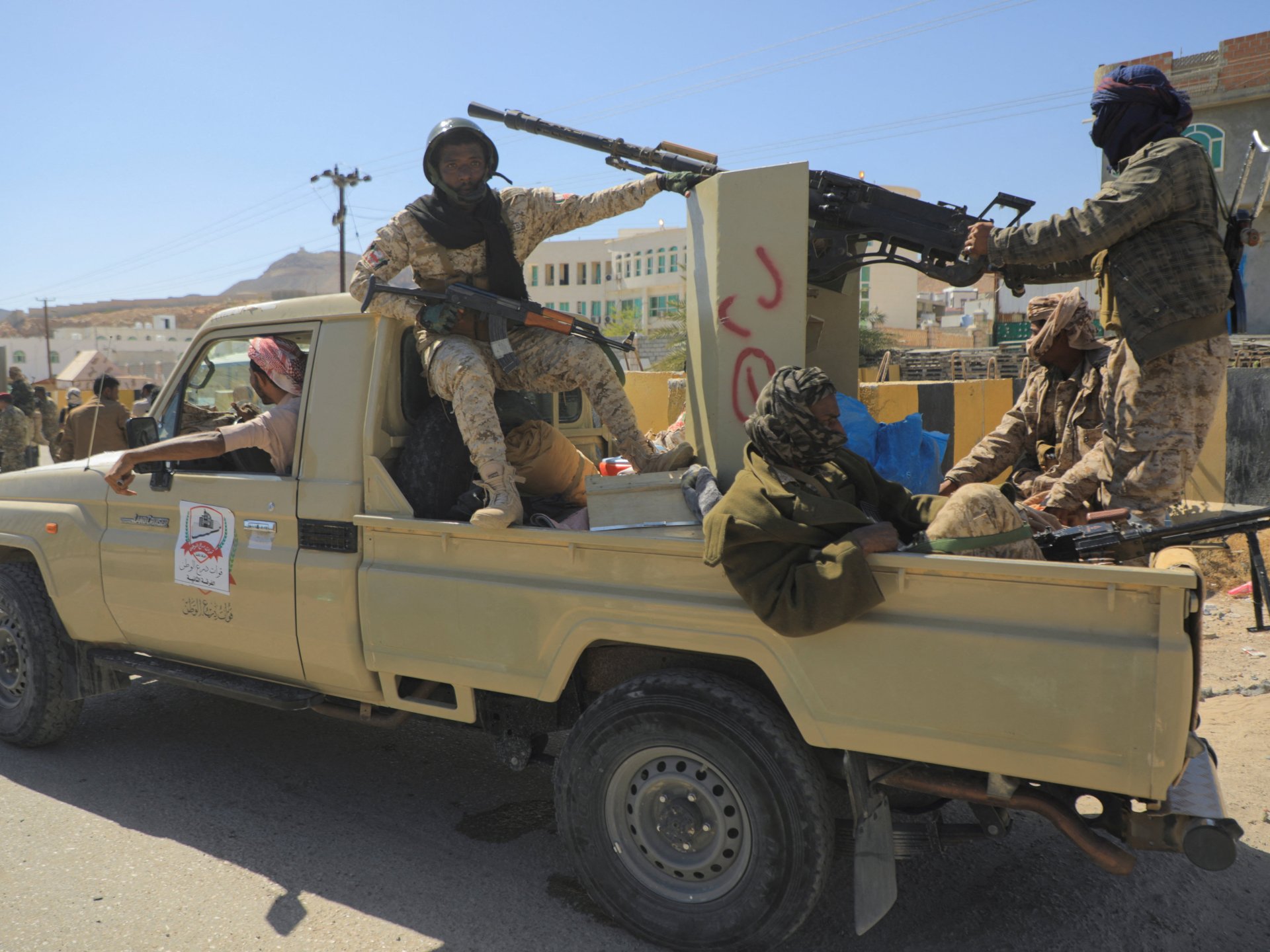
The fragile peace in Yemen has been shattered once more as Houthi fighters and Yemeni government forces engage in ferocious skirmishes across the nation’s southwest. This dramatic resurgence of hostilities, particularly in the strategically vital Taiz province, marks a deeply troubling escalation in the protracted Yemen conflict, signaling a potential return to the full-scale warfare that has ravaged the country for nearly a decade. Reports from the front lines describe a broad offensive by the Iran-backed group, targeting critical arteries and aiming to sever vital government supply routes.
The latest flashpoint centers around the Houthi’s determined efforts to cut the essential road linking Taiz city to the crucial port of al-Makha (Mocha). This move is a calculated attempt to isolate Taiz from the Red Sea coast, a strategic maneuver that could fundamentally alter the balance of power in the region. Al Jazeera’s Yousef Mawry, reporting from Sanaa, highlighted the profound implications: seizing al-Makha would not only cut off government forces from a primary supply route but also provide the Houthis with a significant foothold in the Red Sea, an indispensable maritime corridor for global oil exports and international trade. The stakes, therefore, extend far beyond Yemen’s borders, touching upon geopolitical interests and economic stability across the globe.
The Escalating Yemen Conflict: A Return to Full-Blown War?
Yemeni government forces are not yielding ground easily. They are locked in what has been described as fierce clashes across multiple fronts west of Taiz. The Yemen Army Media Centre has detailed the Houthi offensive, noting attacks on army positions in the rugged Maqbanah Mountains, west of Taiz province. Further infiltration attempts were reported in areas such as al-Ahtoub, al-Tuwair, al-Kadha, and Jabal Ghabari. The media center also confirmed that Houthis had launched 14 ballistic missiles and deployed drones against populated districts in Taiz and Hodeidah provinces, underscoring the intensity and advanced weaponry being utilized in this renewed bout of fighting. In a testament to the ferocity of the combat, official reports indicate that more than 18 Houthi fighters were killed, with others wounded or captured, as government forces resisted their advances on Thursday.
However, the cost of these skirmishes is tragically borne by both sides. An unnamed military source, speaking to the AFP news agency, revealed that 13 government forces perished in the fighting. The majority of these casualties occurred on the critical front lines between al-Makha and Taiz, with others succumbing to clashes near the Red Sea coast. A field officer stationed in al-Makha recounted their desperate struggle, stating his men were “fighting fiercely to repel the massive Houthi offensive.” He further disclosed the thwarting of an attack involving two booby-trapped boats that detonated perilously close to the port, illustrating the varied and dangerous tactics employed by the Houthi forces.
Strategic Significance and Regional Ripple Effects
The Yemen News Agency, Saba, corroborated these accounts, reporting that the army successfully downed three Houthi drones in the Jabal Habashi district of Taiz governorate, even as intense clashes continued on the al-Barah front, west of Taiz city. This critical development underscores the perilous volatility of the Yemen conflict. For years, the nation has been entangled in a devastating civil war, ignited in 2014 when the Houthis seized the capital, Sanaa. This prompted a Saudi-led military intervention the following year, which spiraled into a prolonged and brutal conflict. A truce brokered in 2022 offered a glimmer of hope, largely holding until recent weeks, but progress toward a lasting peace agreement has been conspicuously absent throughout 2023.
The stagnation in peace talks, it seems, has been tragically compounded by broader regional instability. The escalation of tensions across the Middle East, particularly following Israel’s ongoing war on Gaza, has undoubtedly reverberated through Yemen, creating fertile ground for a resurgence of hostilities. “Both sides are now scrabbling to gain territory and gain control not just on land, but at sea,” Al Jazeera’s Mawry elaborated, highlighting recent Houthi attacks on government-affiliated Saudi oil tankers. This regional dynamic echoes concerns about a shifting geopolitical landscape, as explored in the analysis Six months into the Iran war, a new Gulf security architecture is emerging, which underscores how interconnected conflicts can shape regional security. The renewed intensity of the Yemen conflict carries devastating implications for the civilian population, already reeling from years of the dire humanitarian situation.
The Looming Specter of Full-Scale War
The ability of Houthi fighters to penetrate government-held territory and briefly seize areas serves as a stark warning: attempts to resume peace talks and establish a durable ceasefire are faltering, perhaps on the verge of complete collapse. Mawry’s observations underscore a critical juncture in this protracted struggle. The humanitarian consequences of a return to full-scale war would be catastrophic, exacerbating a crisis that has already claimed countless lives and displaced millions. The international community, already grappling with multiple global hotspots, must now confront the real possibility of Yemen plunging back into the abyss of widespread violence.
The immediate future of Yemen hangs precariously in the balance. Government forces face the daunting task of not merely maintaining control but actively thwarting the Houthis’ “fierce advancement.” The strategic importance of the Red Sea, coupled with the interconnected nature of regional conflicts, elevates this renewed fighting from a local skirmish to a development with potentially far-reaching global repercussions. As tanks rumble and missiles fly, the hope for a peaceful resolution seems to recede further with each passing day, leaving an already beleaguered populace to face an uncertain and increasingly perilous tomorrow.