
At least 34 people die as thousands cross to Spanish enclave of Ceuta from Morocco
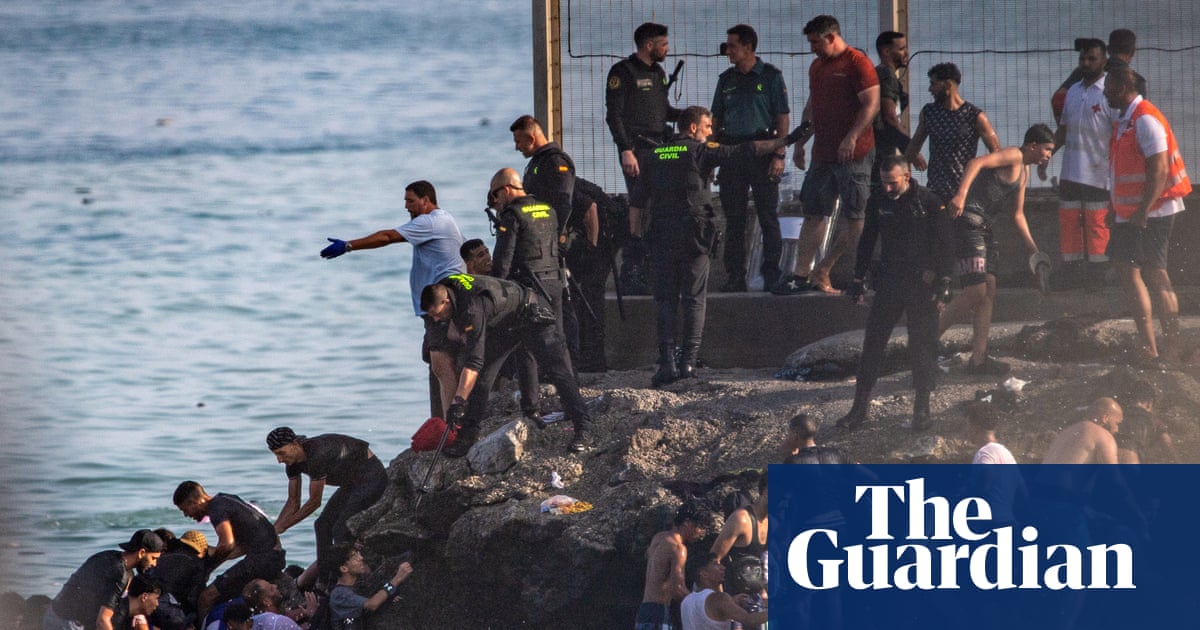
The small Spanish enclave of Ceuta, perched precariously on Africa’s northern coast, has been plunged into an unprecedented humanitarian catastrophe. In a mere matter of hours, over 40,000 desperate individuals surged across its borders from Morocco, many attempting perilous swims or scaling daunting fences. This massive influx has tragically claimed at least 34 lives, igniting a ferocious political firestorm in Madrid and unleashing a torrent of criticism from across the European Union. At the heart of this unfolding tragedy lies the escalating Ceuta migrant crisis.
The Immediate Aftermath: A City Overwhelmed
Ceuta, a city of just 85,000 residents, was utterly unprepared for such an overwhelming human tide. Local police associations have starkly labelled the situation a ‘serious humanitarian crisis,’ with thousands, including unaccompanied children, left without shelter, sleeping in parks, on pavements, and wandering aimlessly through the streets. Spanish Prime Minister Pedro Sánchez, arriving amidst the chaos, condemned the influx as ‘a violation of Spain’s territorial integrity.’ He vowed to deploy every state resource to safeguard the city, attributing the mass crossing to ‘human trafficking mafias’ exploiting a recent supreme court ruling that restricted the summary return of those intercepted at sea.
European Discord Over the Ceuta Migrant Crisis
Under immense pressure, Sánchez announced plans for a temporary reception centre to expedite documentation and expulsion for those without legal claims, alongside the installation of a buoy barrier at Tarajal beach to clearly mark the border. This latest surge dwarfs the 2021 incident, where 10,000 people entered over two days. Moroccan government sources, however, blamed ‘criminal organisations’ for the current wave, maintaining their cooperation with Spain remains ‘exemplary.’ Spain has dispatched 60 armed forces personnel and 30 Guardia Civil officers to reinforce the struggling city, yet the situation remains ‘chaotic,’ according to local union leader Rachid Sbihi. The sheer scale of the Ceuta migrant crisis has resonated deeply across the continent.
Indeed, the reverberations extend far beyond Ceuta’s shores, sparking sharp rebukes from other EU nations. Italy’s far-right government, led by Giorgia Meloni, astonishingly called for Spain’s suspension from the Schengen free-movement zone, citing the ‘shocking’ scenes as a threat to Europe’s borders. Meloni’s foreign minister, Antonio Tajani, lambasted Spain’s previous scheme to regularise over a million undocumented migrants as ‘profoundly wrong,’ accusing it of incentivising trafficking. Spain’s foreign minister, José Manuel Albares, retorted sharply, labelling Italy’s comments ‘unbecoming’ and ‘partisan demagoguery.’ French and Swedish leaders echoed calls for Spain to regain control, with Finland’s interior minister going so far as to suggest suspending Spain’s Schengen status. Opposition parties in Spain, from the People’s Party to the far-right Vox, have demanded a tougher response, describing the situation as an ‘invasion’ and a city ‘occupied.’ For more on ongoing European developments, follow our live coverage. The stakes could not be higher for Ceuta migrant crisis resolution.