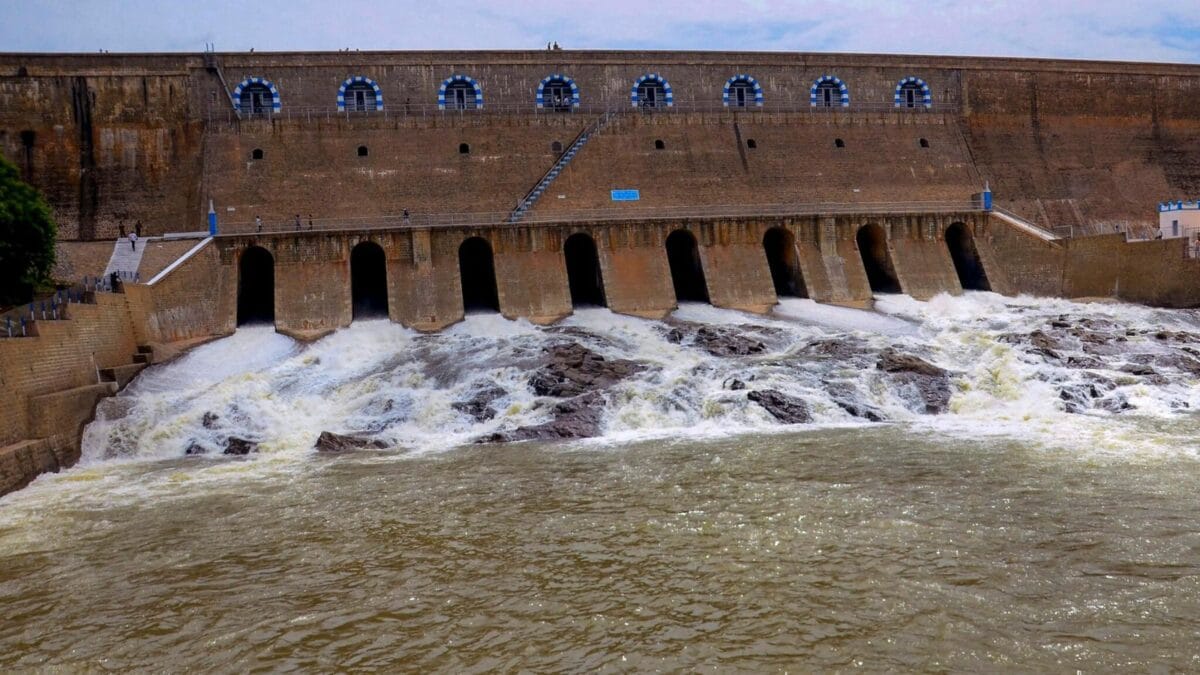
Karnataka braces for a tense day. A comprehensive 12-hour statewide shutdown, slated for August 13, 2026, has been orchestrated by various pro-Kannada organizations. This significant protest directly challenges the Cauvery Water Management Authority’s (CWMA) directive: release 3,500 cusecs of precious Cauvery river water daily to neighboring Tamil Nadu. This simmering animosity boils over once again, fueled by the complex, century-old Cauvery Water Dispute, a relentless struggle for a fundamental resource.
The call for this ‘bandh,’ scheduled from 6:00 AM to 6:00 PM, comes amidst the Supreme Court of India’s concurrent plan to hear Tamil Nadu’s urgent plea regarding its remaining water share—on this very day. The timing underscores the deep judicial entanglement of this contentious issue. While activist Vatal Nagaraj spearheads the shutdown, aiming to voice fierce opposition to the CWMA’s orders, the actual impact may be somewhat softened. Several prominent trade, film, and hotel associations have recently rescinded their support, citing improved water levels from reinvigorated monsoon rains as a mitigating factor.
Understanding the Karnataka Bandh’s Impact
Residents and businesses across Karnataka, particularly in major urban centers and border regions, face potential disruptions. Here’s a breakdown of what to expect:
What Will Remain Shut or Face Heavy Disruptions:
- Shops & Markets: Commercial establishments, local business markets, malls, and sprawling shopping complexes in key protest hubs are largely anticipated to halt operations, either voluntarily or in response to activist appeals.
- Inter-State Travel & Freight: Movement near crucial border points, most notably the critical Attibele border between Karnataka and Tamil Nadu, will likely encounter severe blockades and delays.
- Private Transport: Local auto-rickshaws, popular app-based cabs (like Ola/Uber), and private tourist buses are expected to operate with severely limited capacity or may stay off the roads entirely to circumvent anticipated disruptions.
- Entertainment: Single-screen cinema halls and various entertainment venues are almost certainly to suspend their operations for the entire day.
What Will Stay Open:
- Schools & Colleges: Academic institutions are slated to maintain normal operating hours. The Associated Management of Primary and Secondary Schools in Karnataka (KAMS) wisely withdrew its earlier call for closure, prioritizing academic schedules and opting for staff to wear symbolic black ribbons instead.
- Public Transport: State-run BMTC and KSRTC buses, alongside the vital Namma Metro services, are scheduled to run as usual. However, minor route diversions might be implemented near active protest rallies.
- Essential Services: All hospitals, emergency ambulance services, critical medical pharmacies, ubiquitous milk booths, and grocery stores providing basic essential items will function without interruption, ensuring public well-being.
- Corporate Offices & Banks: IT companies, private offices, and banking institutions are set to operate normally. Nevertheless, many astute IT firms are advising employees to work from home, wisely sidestepping potential commute delays.
- Railways & Airports: Flight operations at the bustling Kempegowda International Airport and the extensive railway services will remain fully functional, keeping crucial transport links open.
Unpacking the Cauvery Water Dispute
The Cauvery Water Dispute isn’t merely a recent squabble; it’s a deep-seated, century-old conflict over irrigation rights between Karnataka (the upper riparian state) and Tamil Nadu (the lower riparian state), with minor claims from Kerala and Puducherry. The very genesis of this protracted legal and political battle can be traced back to two colonial-era agreements. These pacts, signed in 1892 and 1924 between the erstwhile Mysore Kingdom and the Madras Presidency, heavily favored Madras, granting it a larger share of water and imposing restrictions on Mysore’s ability to construct dams without express permission.
Decades of persistent friction necessitated intervention. In 1990, the Government of India established the Cauvery Water Disputes Tribunal (CWDT). The tribunal delivered its final award in 2007, meticulously allocating fixed annual water shares to each state, predicated on a “normal” water year. Yet, dissatisfaction brewed on both sides regarding the tribunal’s calculations, propelling the states to seek judicial recourse once more. February 2018 marked a watershed moment when the Supreme Court of India issued a landmark final verdict.
Under this definitive ruling, Tamil Nadu’s share saw a slight reduction to 404.25 tmcft. Conversely, Karnataka’s allocation was increased to 284.75 tmcft, specifically to address the burgeoning drinking water demands of its capital, Bengaluru. This intricate allocation highlights the life-or-death implications of the Cauvery Water Dispute for millions.
Why Does Cauvery Water Ignite Such Protests?
The Supreme Court also mandated the creation of the Cauvery Water Management Authority (CWMA) to meticulously oversee day-to-day water releases. The primary catalyst for intense protests and recurring legal face-offs invariably arises during years plagued by a deficient monsoon season. When rainfall is scarce, reservoirs fail to adequately replenish, creating a critical dilemma.
Karnataka adamantly argues that under such circumstances, it simply cannot meet predetermined water quotas for Tamil Nadu without severely jeopardizing its own cities’ drinking water supply and devastating its agricultural sector. Conversely, Tamil Nadu’s argument is equally fervent: its crucial delta farmers rely almost entirely on the timely opening of Karnataka’s dams. Any delay, they assert, poses an existential threat to their agricultural cycles and livelihoods. The Cauvery River, a lifeline for millions, flows through a region historically prone to inter-state river conflicts.
About the Author