
Smriti Irani’s Big Comeback In BJP: What’s Next For Her As UP, Punjab Head To Polls Next Year?
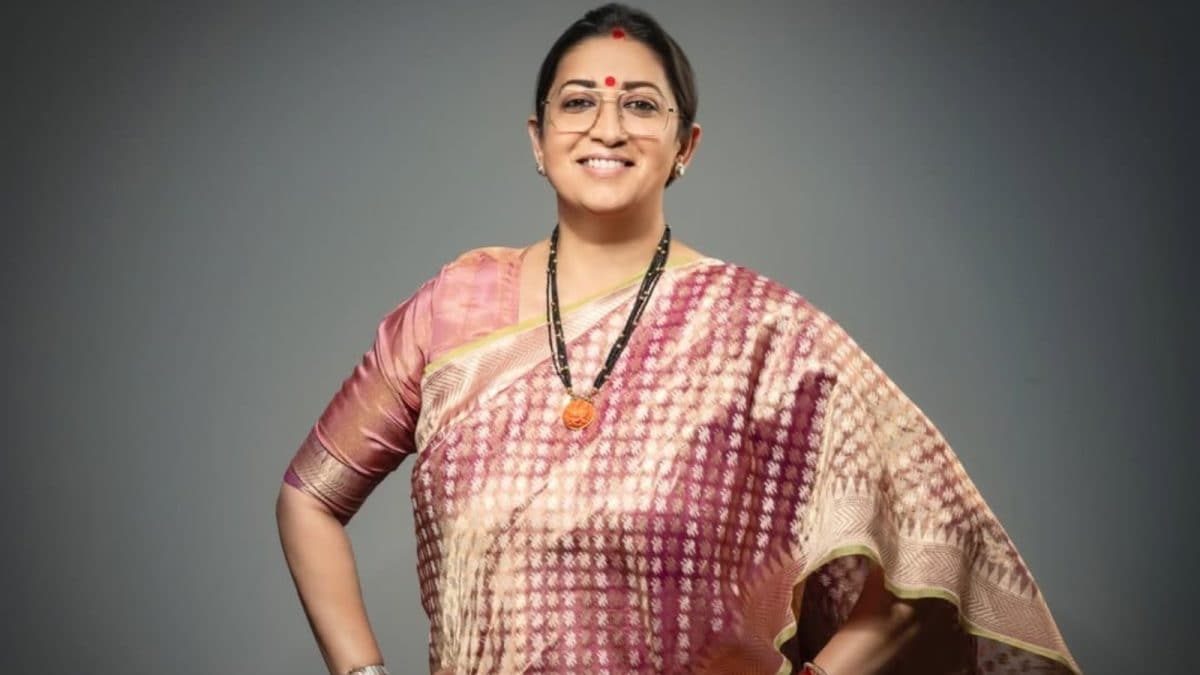
In a significant political maneuver, former Union Minister Smriti Irani has staged a remarkable Smriti Irani comeback to the Bharatiya Janata Party’s core organizational structure, taking on a pivotal role in Uttar Pradesh. This re-entry, announced in BJP president Nitin Nabin’s newly formed team, positions her at the helm of strategic coordination for the electorally crucial state ahead of the high-stakes 2027 Assembly elections. It’s a bold move, particularly after her recent electoral setback in Amethi during the 2024 Lok Sabha polls and subsequent exit from the Union Cabinet.
Irani’s appointment as a national general secretary, specifically tasked with the Uttar Pradesh charge, heralds a new chapter in the saffron party’s preparations. The political landscape of UP, often considered the heartland of Indian politics, remains paramount for the BJP’s national aspirations. Her involvement suggests a sharpened focus and renewed energy in a state where the party faced considerable challenges in the last general election.
The Strategic Significance of Smriti Irani’s Comeback in Uttar Pradesh
Uttar Pradesh, undoubtedly the BJP’s most vital electoral state, will witness the 2027 Assembly election as a litmus test following the party’s performance in the Hindi belt during the 2024 Lok Sabha election. As National General Secretary in-charge, Irani steps into a role demanding intricate coordination between the state BJP unit and the Chief Minister’s office. Her mandate is expansive, encompassing everything from political strategy formulation to messaging, candidate selection oversight, and crucially, resolving internal factional disputes among local leaders, MLAs, and MPs.
Her brief is also expected to delve into the granular details of electoral campaigning, including booth-level mobilization, meticulous voter-list micro-management, and adeptly weaving central government schemes into the state’s campaign narrative. The seasoned politician’s combative style and prominent public profile will undoubtedly provide the party with a recognized, high-octane voice for rallies and media appearances across the state. This strategic placement underscores the party’s intent to recalibrate its approach in the state, especially following the mixed results of the 2024 Lok Sabha elections. Indeed, the Smriti Irani comeback isn’t just about a portfolio; it’s about injecting seasoned leadership into a critical battleground.
The BJP has effectively implemented a dual in-charge system for Uttar Pradesh, pairing Irani with Harish Dwivedi. Dwivedi, with his deep grassroots connections and organizational acumen within UP, complements Irani’s anticipated focus on high-level coordination, narrative shaping, and media engagement. Both leaders will operate under the overarching guidance of the national leadership, including BJP President Nitin Nabin and General Secretary (Organisation) B.L. Santhosh.
While Uttar Pradesh garners significant attention, its neighboring state, Punjab, is also slated for Assembly polls in 2027. However, Punjab does not fall under Irani’s direct organizational purview. Instead, its strategic oversight is distributed among various leaders, including Manpreet Singh Badal as a National Vice-President and Tarun Chugh as Central Office In-charge, ensuring a multi-faceted approach to its electoral strategy.
Why the BJP Orchestrated This Comeback
Irani’s return carries immense organizational and political weight. The BJP is keenly focused on fortifying its ground-level campaign in UP, learning lessons from its 2024 Lok Sabha setbacks. She is widely regarded within party circles as a disciplined organizer capable of fostering close collaboration with the RSS and the state machinery. Furthermore, her exceptional communication skills remain a vital asset; Irani stands out as one of the BJP’s most formidable television debaters and communicators, providing a high-profile voice as the 2027 election cycle gathers momentum. Her long-standing association with the Modi-Shah leadership renders her a trusted choice for navigating a politically sensitive state, where local factionalism and competing power centers perpetually influence dynamics. Her return is not merely a rehabilitation; it’s a clear signal from the central leadership. The decision to orchestrate this prominent Smriti Irani comeback reflects a calculated move to leverage her unique strengths.
Over the coming six to twelve months, Irani is expected to dedicate substantial time crisscrossing Uttar Pradesh, meticulously reviewing mandal and booth committees, and engaging extensively with MPs, MLAs, and local leaders. Her mandate will also involve meticulously shaping the BJP’s 2027 campaign narrative, focusing on welfare delivery, law and order, Hindutva, and countering opposition “family politics,” all while artfully managing complex caste and community equations. This pivotal political role could strategically position her for a more significant national campaign role in 2029 or potentially a senior state or central position, contingent upon the BJP’s performance in 2027. Her appointment, though not a guaranteed path to victory, undeniably signals a more aggressive and centrally supervised campaign strategy in India’s most electorally consequential state. To understand more about electoral processes in India, visit the Election Commission of India website.
The contrast in organizational strategy between Uttar Pradesh and Punjab is stark: UP receives a high-profile dual charge under Irani and Dwivedi, whereas Punjab’s responsibilities are judiciously distributed among Badal, Chugh, and the central leadership, reflecting tailored approaches to distinct regional political landscapes. The Smriti Irani comeback is a testament to the BJP’s adaptability and determination.