
Turkish authorities launch crackdown on LGBTQ+, HIV support groups
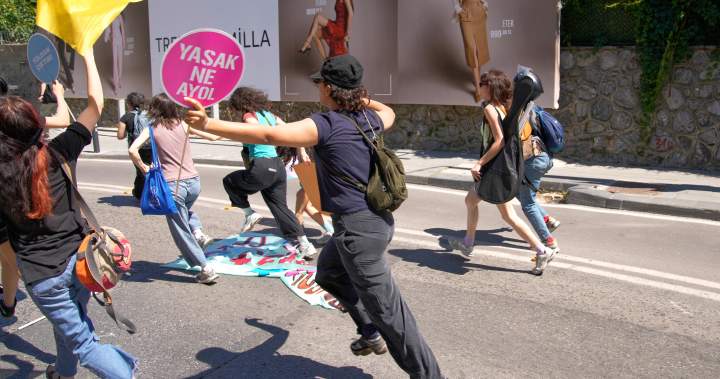
In a deeply concerning escalation, Turkish authorities have intensified their long-standing hostility towards LGBTQ+ and HIV support organizations, launching a sweeping series of raids that have shocked civil society. Early Sunday morning witnessed a meticulously coordinated Turkish LGBTQ crackdown, resulting in the detention of dozens, the forced entry into association offices, and searches of popular community gathering spots across major urban centers. This concerted action marks a significant regression for human rights and individual freedoms in the nation.
The dawn raids, commencing around 1 a.m., unfolded simultaneously in Istanbul, Ankara, Izmir, Aydin, and Mersin. This wide geographical scope underscores the coordinated nature of the operation, targeting 162 suspects, nine associations, and 13 businesses. Justice Minister Akin Gurlek, in a public statement via social media, framed the investigation as a necessary measure to “protect children, the institution of the family, and public order.” He asserted that these actions were in strict adherence to President Recep Tayyip Erdogan’s decade-long executive order aimed at safeguarding families and children from perceived threats. Gurlek’s declaration echoed a resolute governmental stance: “As per the duty to protect families and children given to the state by the constitution, no criminal organization, abuse network or illegal activity which targets children, youths or families will be tolerated!”
The targets of this widespread dragnet were not random. Both current and former members of prominent LGBTQ+ rights groups and critical HIV awareness organizations found themselves ensnared. Beyond the detentions and physical raids, the digital infrastructure supporting these groups was also dismantled, with their websites promptly blocked. Minister Gurlek further implied a nefarious motive, noting that many of these associations received substantial funding from international sources and agencies, subtly hinting at foreign influence or illicit activities.
Unpacking the Turkish LGBTQ Crackdown
This aggressive posture has drawn sharp criticism from international bodies. Organizations like Amnesty International have consistently highlighted the deteriorating human rights situation in Turkey, particularly regarding freedom of expression and assembly. Locally, the Human Rights Association vehemently condemned the operation, rejecting the official narrative outright. “This is not a judicial investigation; it is a political operation aimed at forcing society into a monolithic family model and purging LGBTI+ and independent civil society under the guise of protecting the family and children,” the association declared. They further asserted that the inclusion of charges like “forming a criminal organization,” “drugs,” “prostitution,” and “obscenity” was not about uncovering truth but about “incriminating the entire community” through guilt by association.
The timing of this Turkish LGBTQ crackdown, coming as it does in the lead-up to elections, is perceived by many observers as a calculated move by the ruling religious conservative Justice and Development Party (AKP) to consolidate support among its more traditional and conservative base. The AKP has, for years, amplified its anti-LGBTQ+ rhetoric, turning a blind eye, and at times actively contributing, to social discrimination. This strategy is not new; since 2015, authorities have consistently banned Istanbul Pride, a vibrant event that previously drew tens of thousands. Attempts to gather for Pride have since been met with violent dispersal by security forces, demonstrating a clear pattern of suppression.
Adding to the climate of intolerance, the summer saw an LGBTQ+ cruise ship, which had historically docked in Turkey on multiple occasions during its Mediterranean tours, summarily denied permission to enter Turkish ports. This incremental constriction of spaces for LGBTQ+ individuals and their allies reflects a broader, more systematic effort to marginalize and erase the community from public life. The rise of conservative political forces, mirrored in discussions observed globally – for instance, debates surrounding Germany’s far-right political landscape – often correlates with heightened scrutiny and restrictions on civil liberties, making the situation in Turkey part of a larger, concerning trend.
It is a profound irony that the predecessor to modern Turkey, the Ottoman Empire, decriminalized homosexuality in 1858, a relatively progressive stance for its era. Yet, despite this historical precedent, the present reality for LGBTQ+ individuals in Turkey is one of pervasive social discrimination and increasing state-sponsored hostility. The latest Turkish LGBTQ crackdown underscores a deepening divide between official policy and the fundamental human rights enshrined in international conventions, casting a long shadow over the future of civil liberties and diverse communities within the country.