
Jammu Kashmir Assembly Erupts Over Sheikh Abdullah Holiday Demand | BJP Stages Walkout | News18
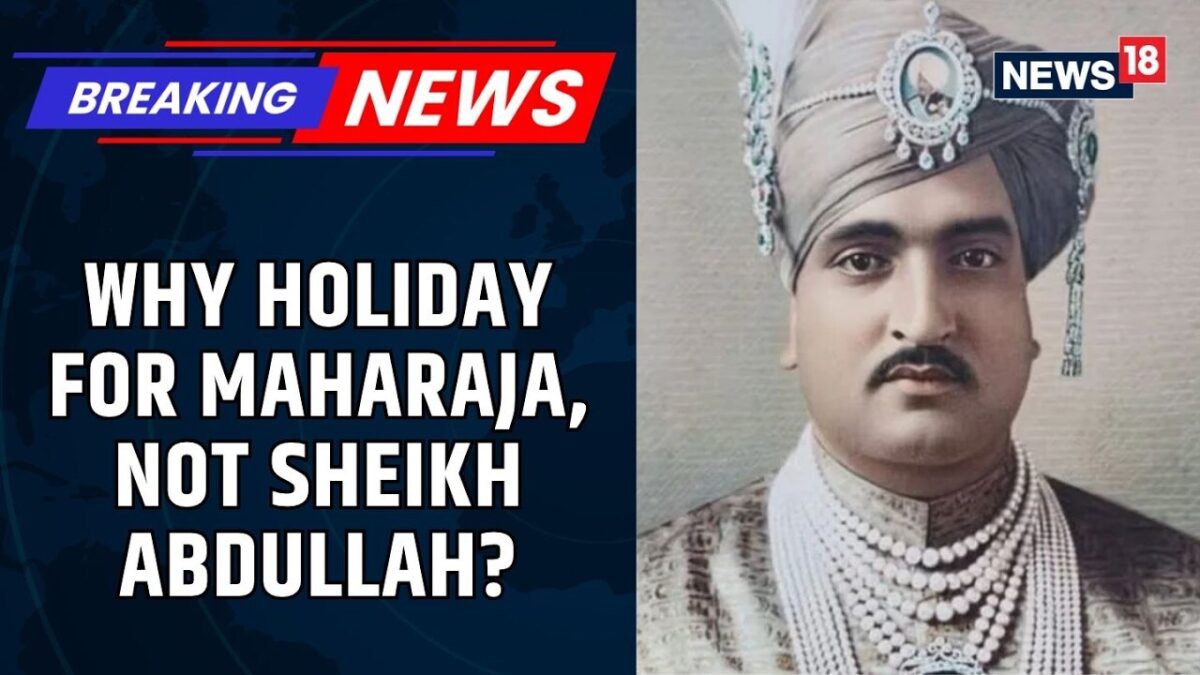
Tensions flared dramatically inside the Jammu Kashmir Assembly on Monday as legislators clashed over historical legacy, identity, and commemorative holidays. What began as a routine legislative sitting swiftly degenerated into loud shouting matches, desk thumping, and ultimately a coordinated walkout staged by Bharatiya Janata Party (BJP) legislators. The flashpoint was ignited by the National Conference (NC), which demanded the immediate restoration of the official state holiday honouring Sheikh Mohammad Abdullah.
Abdul Majid Larmi, an elected member representing the National Conference, provoked fierce objections from across the aisle when he brought the contentious calendar issue to the floor. Larmi questioned why the holiday observing the birth anniversary of Sheikh Abdullah—the towering Kashmiri leader revered as ‘Sher-e-Kashmir’—remained struck off the administration’s official roster, while the holiday dedicated to the last ruling Maharaja of the princely state, Hari Singh, continues to be observed with full state honours.
Heated Clashes in the Jammu Kashmir Assembly
The confrontation exposed long-simmering regional and ideological divisions between the Kashmir Valley and Jammu. Larmi argued forcefully that Sheikh Abdullah was the architect of modern land reforms and social equity in the region. He maintained that omitting Abdullah’s birth anniversary from the official calendar amounts to erasing Kashmir’s democratic history. Larmi went a step further, suggesting that if the administration refuses to honour Abdullah, it must justify why Maharaja Hari Singh’s holiday should remain protected.
BJP members erupted in immediate protest. Accusing the National Conference of reigniting separatist sentiments and insulting the memory of the monarch who signed the Instrument of Accession to India, BJP lawmakers rushed toward the well of the house. Pandemonium ensued as both sides exchanged barbs across the aisle. Unable to calm the chamber, the presiding speaker struggled to maintain decorum before the entire BJP contingent marched out of the legislative hall.
The Battle Over Regional Symbols
The holiday dispute is far from a minor bureaucratic grievance; it strikes at the core of post-2019 politics following the revocation of Article 370. When the federal government reorganized the state into two Union Territories, authorities fundamentally altered the official calendar. Commemorative holidays such as Martyrs’ Day on July 13 and Sheikh Abdullah’s birth anniversary on December 5 were discontinued. In their place, the birth anniversary of Maharaja Hari Singh on September 23 was later designated a public holiday following sustained pressure from Dogra groups in Jammu.
For regional leaders, these calendar adjustments were perceived as a symbolic marginalization of the political struggle against monarchy. Conversely, nationalist politicians view Abdullah’s long career through a critical lens, framing his past political stances as destabilizing. The legislative clash reflects how contested interpretations of history continue to disrupt governance even while security challenges persist, including recent operations where a terrorist was killed during an anti-terror operation in the Valley.
Divergent Visions for Regional Governance
Following their walkout, BJP legislators addressed journalists outside the complex, slamming the NC for pursuing divisive politics rather than addressing grassroots socioeconomic concerns. Party spokespersons insisted that Maharaja Hari Singh unified the region with the Indian Union and that comparing the Dogra ruler with Sheikh Abdullah is unacceptable to the people of Jammu.
Conversely, National Conference representatives defended Larmi’s intervention. They insisted that the proceedings of the Jammu Kashmir Assembly must represent the collective consciousness of all citizens, rather than serving a single political agenda. Senior party leaders stated that Sheikh Abdullah gave voice to impoverished peasants across ethnic and religious lines, reshaping the agrarian landscape through radical agrarian reforms without monetary compensation.
With civic demands piling up, observers note that symbolic flashpoints continue to overshadow policy debates. Whether the holiday row will trigger wider protests outside the legislature remains uncertain, but inside the chambers, the fault lines run deep.