
NJAC To CEC Law: The Long Executive-Judiciary Battle Over Who Gets To Appoint Whom
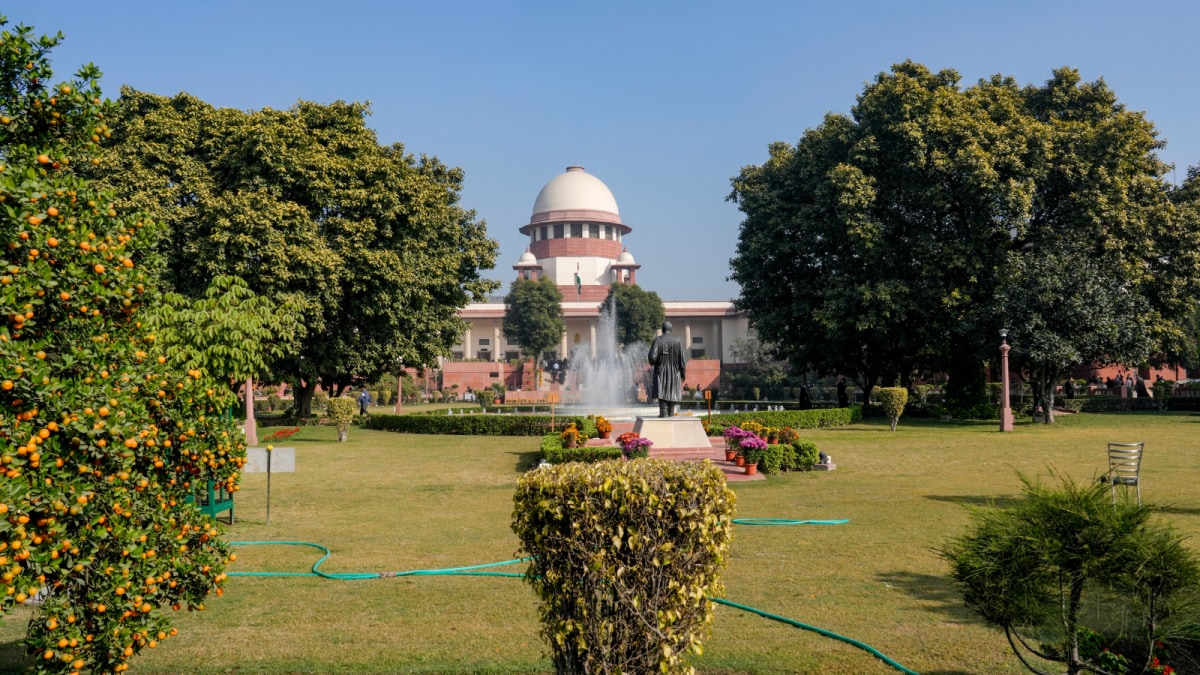
The ongoing tension between the executive branch and the judiciary has reached a new boiling point in India, centered on the sensitive Executive-Judiciary Battle over institutional appointments. Justice Dipankar Datta’s recent, stinging remarks regarding the government’s defense of the 2023 Chief Election Commissioner (CEC) law have reignited a fundamental debate about the balance of power within the Indian constitutional framework. At the core of this dispute lies a simple but profound question: who should hold the final authority to appoint those tasked with leading India’s most critical democratic institutions?
The current controversy stems from the 2023 legislation that effectively altered the selection mechanism for the Election Commission. Previously, the selection process was governed by the Supreme Court’s Supreme Court of India guidelines established in the Anoop Baranwal case, which included the Chief Justice of India in the selection panel. The new law, however, replaced the judicial member with a Union Cabinet minister, granting the government a two-member majority on the three-person panel. This structural change has sparked significant concerns regarding the perceived impartiality of the Election Commission.
The Executive-Judiciary Battle and Institutional Control
Justice Datta, in his separate opinion, expressed deep skepticism about whether such a structure can truly foster an independent institution. He noted that the role of the Leader of the Opposition risks becoming “largely ornamental” when balanced against two government-aligned members. These observations mirror larger, decades-old concerns regarding the Executive-Judiciary Battle for constitutional dominance. Critics argue that when the ruling executive holds the power to handpick election referees, the foundational guarantee of free and fair elections is inevitably compromised.
Interestingly, the government has attempted to defend its stance by pointing toward the judiciary’s own “collegium” system. The executive argues that since the judiciary itself operates through a system where judges select their peers—a process often criticized for its own lack of transparency—they have little moral standing to lecture the government on institutional independence. Justice Datta, however, pushed back forcefully, dismissing the popular claim that “judges appoint judges” as a myth. He underscored that the executive remains deeply involved in every judicial appointment through vetting and processing, suggesting that the government’s comparison is fundamentally flawed.
This friction is not entirely new. The roots of this struggle predate the 2014 administration, with political leaders like the late Arun Jaitley having long argued that the judiciary had overstepped its bounds. These past efforts, including the 2010 Judicial Standards and Accountability Bill, highlight the long-standing quest to find a mechanism that satisfies the need for accountability without sacrificing judicial independence. The failed attempt to introduce the National Judicial Appointments Commission (NJAC) in 2014 was a direct manifestation of this desire to dismantle the collegium. While the Supreme Court struck down the NJAC in 2015 for violating the “basic structure” of the Constitution, the underlying frustration of the executive remains, manifesting now as it attempts to replicate similar control over the Election Commission.
As the debate moves forward, it forces us to reconsider whether the Executive-Judiciary Battle is truly about “who appoints whom,” or if it is a deeper crisis of institutional design. One must ask, as noted in recent reports regarding potential breaches in government digital infrastructure (read more about the OpenAI agent incident here), how vulnerable our systems of oversight have become. Ultimately, the question is not merely about procedural appointments, but about how to craft a system where independence is insulated from political influence while remaining accountable to the democratic values of the nation. The upcoming rulings on the CEC law may well determine the future of India’s constitutional checks and balances.