
Berlin Pride attack suspect shot and killed during police operation
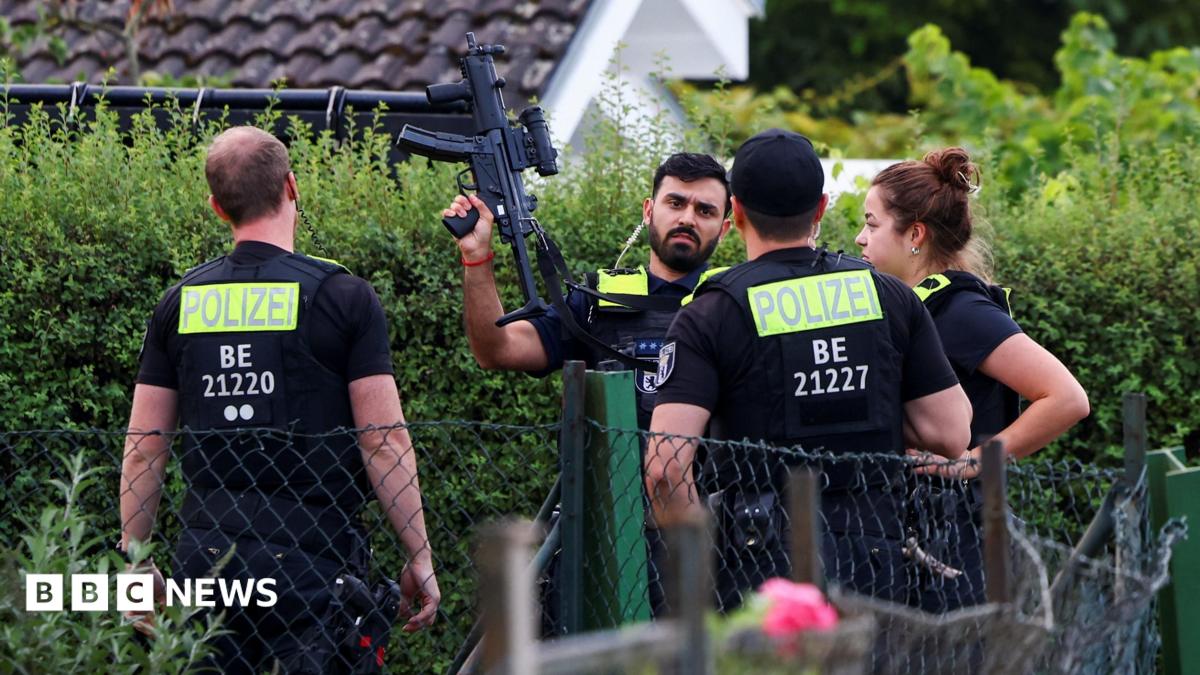
A massive manhunt, initiated after a white van careened into a jubilant crowd at Berlin Pride, has culminated in a dramatic police confrontation. Authorities confirm that the man suspected of orchestrating what they term an “Islamist terror attack” at the capital’s vibrant Pride celebrations was shot and killed by officers in Spandau. This swift, decisive action brings a tense chapter to a close following the devastating Berlin Pride Attack.
Abdul Ballout, a 21-year-old German citizen of Lebanese descent, was reportedly rushing at officers with a knife when police opened fire. The tragic events of Saturday evening saw one woman killed and at least 29 others injured after a vehicle was deliberately driven into people near Tiergarten park just before 10 PM local time. Compounding the horror, several individuals were also wounded in a subsequent stabbing spree.
Unpacking the Berlin Pride Attack: Suspect’s Troubled Past
German Interior Minister Alexander Dobrindt wasted no time in addressing the nation on Sunday, unequivocally stating that evidence pointed to an “Islamist terror attack.” Dobrindt revealed a deeply troubling profile: “We are dealing with a suspected perpetrator, who had previously drawn attention to himself through a high volume of criminal offences, radicalisation and affiliation with the Islamist scene.”
Further details, released by the Berlin public prosecutor’s office, paint a stark picture of Ballout’s criminal trajectory. In May 2025, he allegedly journeyed through Turkey to Lebanon, purportedly with the intention of joining the Islamic State group (IS) in Syria. While abroad, he reportedly made contact with individuals he believed to be IS members. He was arrested in Lebanon that July, serving three months for inciting religious and sectarian conflict.
Upon his return to Germany in November 2025, Ballout was immediately arrested at Berlin Brandenburg Airport and placed in pre-trial detention. Just this May, he received a sentence of one year and ten months for “preparing a serious act of violence endangering the state,” a decision deferred for six months under the supervision of a parole officer. His record also included convictions for assault and robbery in 2022, and a headphone robbery in 2020. The repercussions of the Berlin Pride Attack are expected to resonate deeply within security circles across Germany.
Echoes of Resilience Amidst Grief
The German government has responded with solemn resolve. Interior Minister Dobrindt announced a raised threat level across the country, with other states advised to review security measures for major public events. Chancellor Friedrich Merz visited the attack scene in Tiergarten park, later speaking outside a church service dedicated to the victims. He vowed to “defend the freedom and openness of our lives,” asserting that “These extremists have no place in our society” and Germany would not succumb to the “poison of terrorism.” Such strong words underscore the gravity of the Berlin Pride Attack.
Saturday’s attack brutally shattered the spirit of Berlin’s Christopher Street Day, an iconic celebration where hundreds of thousands typically throng the city streets. Christopher Street Day itself commemorates the seminal 1969 Stonewall Inn uprising in New York City, a pivotal moment for the LGBT community.
Following the tragedy, a planned clean-up and breakfast market in Tiergarten were cancelled. Yet, later that Sunday, members of the LGBT community defiantly gathered for an impromptu vigil near the Brandenburg Gate. Speakers condemned all forms of extremism but also voiced criticism over perceived governmental neglect, specifically citing recent budget cuts to queer organisations. Armin Duenhoelter, a drag artist present backstage when the attack unfolded, expressed his shock but remained resolute. “We won’t let it beat us down,” he declared, vowing to return for next year’s celebration. For more context on the ongoing struggle against extremist threats, you can refer to this overview.