
Canada, Philippines conclude negotiations for free-trade agreement, aiming for 2027
Introduction & Key Takeaways
The geopolitical landscape of the Indo-Pacific is shifting, and Canada is moving to secure its place within this vital economic corridor. Prime Minister Mark Carney has officially concluded negotiations for a comprehensive Free Trade Agreement (FTA) with the Philippines, marking a significant milestone in Ottawa’s broader Indo-Pacific strategy. By fostering deeper ties with the Philippines, Canada aims to diversify its export markets, reduce dependence on the United States, and establish a firmer foothold in one of the world’s fastest-growing economic regions.
- Canada and the Philippines have finalized terms for a landmark trade deal, with a formal signing expected in 2027.
- The agreement is part of a larger Canadian effort to double non-U.S. exports by 2035.
- Strategic focus areas include energy, food technology, digital trade, and military collaboration.
- Experts warn that while trade is vital, Canada must also address broader security and development concerns to maintain meaningful regional influence.
Background & Context (What Just Happened?)
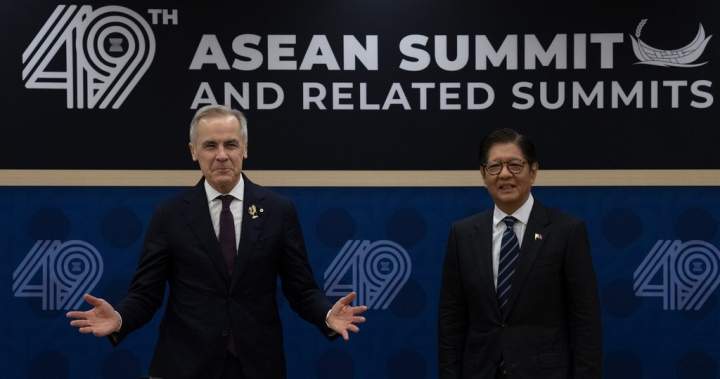
The announcement followed meetings between Prime Minister Mark Carney and President Ferdinand Marcos Jr. on the sidelines of the Association of Southeast Asian Nations (ASEAN) summit in Manila. This agreement follows years of deliberation, with negotiations having effectively restarted roughly a year ago. The bilateral relationship currently spans diverse sectors, including mineral ores, agricultural exports such as meat and cereals, and essential aircraft technology. In 2025 alone, the merchandise trade between the two nations reached $3.4 billion, a figure both administrations hope to scale significantly through the removal of barriers.
Root Cause & Deep Dive Analysis (Why Did This Happen?)
The push for this FTA is deeply rooted in Canada’s desire to hedge against global supply chain volatility and geopolitical coercion. As ASEAN countries grapple with the intense economic competition between the United States and China, Canada is positioning itself as a reliable, rules-based partner. Furthermore, as the world navigates recent technological disruptions, such as the global outage that impacted many systems, the need for stable, diversified supply chain partnerships has never been more urgent. By securing formal trade pacts, Canada hopes to insulate its industries from the erratic shifts in global trade policy while providing Southeast Asian partners an alternative to superpower dependency.
Strategic Implications & Future Impact (What Does This Mean Globally?)
While the trade pact is a victory for Canadian exporters, academic and strategic analysts suggest that the approach requires nuance. The Philippines, like many ASEAN members, views security through a multi-faceted lens that includes environmental resilience, regime stability, and inclusive economic growth. Critics argue that focusing exclusively on short-term trade metrics might overlook the cultural and social depth required for a lasting alliance. For Canada to truly succeed, it must pivot from being a mere exporter of raw materials to an integrated partner within the regional supply chain. This involves fostering genuine collaboration in technology transfer, such as improving agricultural protein content or developing climate-resilient infrastructure.
Conclusion & What to Watch Next
As the countdown to the 2027 signing begins, attention will turn toward the implementation of these agreements and the resolution of sector-specific friction points. For instance, Canada’s ongoing negotiations regarding pork imports underscore the complexity of balancing domestic industrial interests with international regulatory requirements. Observers should monitor whether this move triggers a ripple effect, encouraging other ASEAN nations to seek similar deals with Ottawa. Ultimately, the success of this agreement will be measured not just by the volume of goods crossing the Pacific, but by how well Canada integrates into the fabric of the region’s long-term economic and security architecture.