
CBSE Fee for Re-checking Questioned After RTI Reveals ₹23 Crore Collection
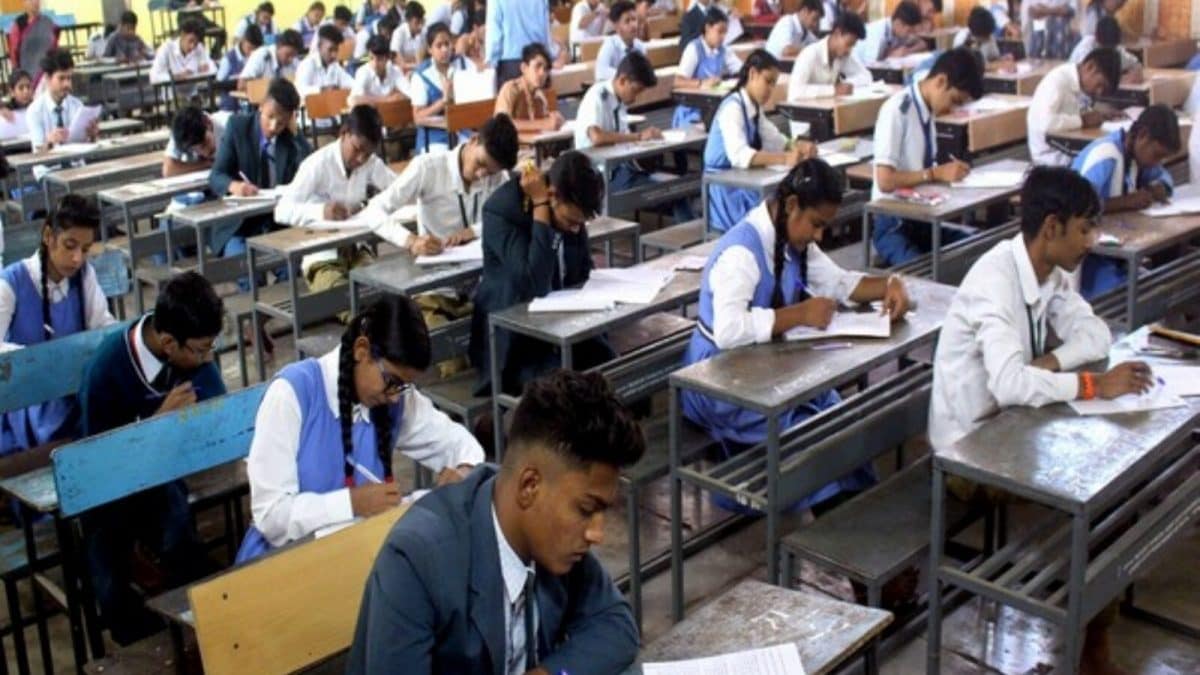
A startling Right to Information (RTI) disclosure has ignited a fervent debate around the financial practices of the Central Board of Secondary Education (CBSE), specifically concerning the CBSE re-checking fee for board exam answer sheets. It appears the board amassed an astronomical ₹23 crore from Class 10 and 12 students in the 2024–25 academic session alone, merely for these post-examination services.
Educationist Keshav Agarwal, the man behind the RTI request, unveiled a breakdown of these significant earnings. Roughly ₹3.09 crore originated from students requesting scanned copies of their evaluated answer books, while a staggering ₹20.09 crore was collected through the verification and re-evaluation processes following the rigorous board examinations.
This revelation has not merely raised eyebrows; it has drawn intense scrutiny from students and their often-concerned parents. The timing is particularly poignant, coming after the Education Ministry itself adjusted the fee structure. (For more on broader educational policies, you might consult resources from the Ministry of Education.) Now, a single question’s re-evaluation costs ₹100, and obtaining verification for an entire answer book demands ₹500.
The Escalating Burden of CBSE Re-checking Fee
For those who recently received their Class 12 board examination results on May 13, showcasing an overall pass percentage of 85.20%, the CBSE has already laid out its schedule for seeking rechecking. The window for applying for scanned copies of answer sheets opens on May 19, 2026. Subsequently, students wishing for marks verification or full re-evaluation can apply from May 26 to May 29, 2026. A crucial caveat remains: only students who first secure photocopies of their answer books are deemed eligible to pursue further verification or re-evaluation.
The sheer scale of the RTI findings has, predictably, triggered considerable concern over the financial strain placed upon students. Agarwal minced no words, labelling the figures ‘shocking.’ He boldly questioned the fairness of requiring students and their families to shoulder the financial burden of what might, in many instances, be simple evaluation errors. Indeed, Agarwal highlighted a troubling pattern: countless instances where students’ marks inexplicably climb after re-evaluation, casting a long shadow of doubt over the initial marking accuracy. If such glaring discrepancies persist, he passionately argued, the board should promptly consider refunding the entire CBSE re-checking fee charged to these students.
Under the existing framework, students pay a non-negotiable ₹500 for a scanned copy of an answer book and an additional ₹100 per question for re-evaluation. This exact structure, now transparently exposed by the RTI disclosure, is at the heart of the burgeoning public debate. As of writing, the CBSE remains conspicuously silent, having issued no official statement addressing the widespread concerns regarding its fee structure or the implications of the RTI findings.