
Child among three killed in Russian missile attacks near Kyiv
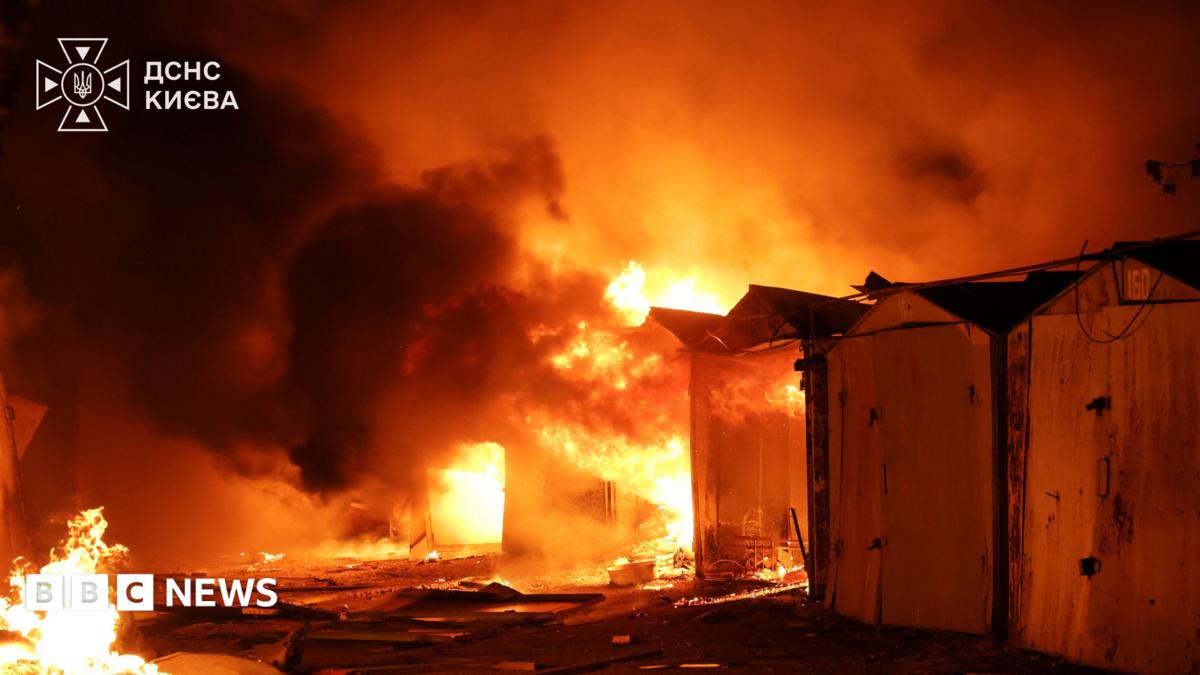
Overnight, devastating Russian missile attacks near Ukraine’s capital, Kyiv, have tragically claimed at least three lives, including that of a young child. The relentless barrage unfolded in the early hours of Saturday, shaking communities east of the vibrant capital. Witnesses recounted terrifyingly powerful explosions echoing through the pre-dawn darkness, a stark reminder of the conflict’s brutal toll, coming just days after another series of strikes killed 21 across the nation.
Escalation of Russian Missile Attacks Continues
Timur Tkachenko, head of the regional military administration, confirmed the ballistic missile strikes left three dead and injured three others. The sheer force of the blasts caused extensive damage: apartment buildings were scarred, cars obliterated, and a significant blaze erupted at a separate structure. In Kyiv itself, Mayor Vitaly Klitchko reported on Telegram that emergency crews battled fires engulfing a building and a fuel tank. Ukraine’s state emergency service, DSNS, released chilling photographs depicting garages, businesses, and other structures consumed by flames in the capital’s Holosiivskyi district. “The number of victims is being clarified,” they stated, painting a grim picture of the immediate aftermath.
Meanwhile, President Volodymyr Zelensky embarked on a crucial diplomatic mission, visiting Belgrade for the first time. There, he engaged with Serbian President Aleksandar Vučić, focusing on economic ties, security concerns, and the complex relationship with the European Union. Despite Ukraine’s urgent need for broader international solidarity, Vučić has notably declined to impose sanctions on Russia. Zelensky, earlier in the week, issued a stark warning: delays in receiving anti-ballistic systems from international partners directly lead to “horrific casualties and destruction.” He asserted that enhanced interceptor capabilities “could have saved lives” during recent deadly assaults, lamenting a “significantly reduced” supply of these critical defenses this year.
This tragic escalation follows Ukraine’s own aggressive counter-actions, targeting two oil refineries deep within Russian territory and Moscow-linked vessels in the Black Sea. These strikes, according to Zelensky, aim to cripple oil revenues funding Russia’s ongoing war efforts. The Ukrainian general staff confirmed hitting Russia’s Ilsky and Syzran oil refineries overnight, igniting substantial fires. Adding to the regional tension, a drone carrying a “significant” amount of explosives entered Bulgarian airspace and detonated near an international gas pipeline after traversing Romania. While no casualties or damage were reported, its origin remains unclear, further muddying the already complex geopolitical waters. The recent faltering of mediation talks between Ukraine and Russia clearly underscores a broader, concerning trend towards intensified aggression from both sides, perpetuating the cycle of Russian missile attacks and retaliatory strikes. For deeper insights into global conflict dynamics, one might consult authoritative sources on international conflict updates.