
Heavy Rain Batters Delhi-NCR, Traffic Hit, More Showers Likely; Advisory Issued In Gurugram
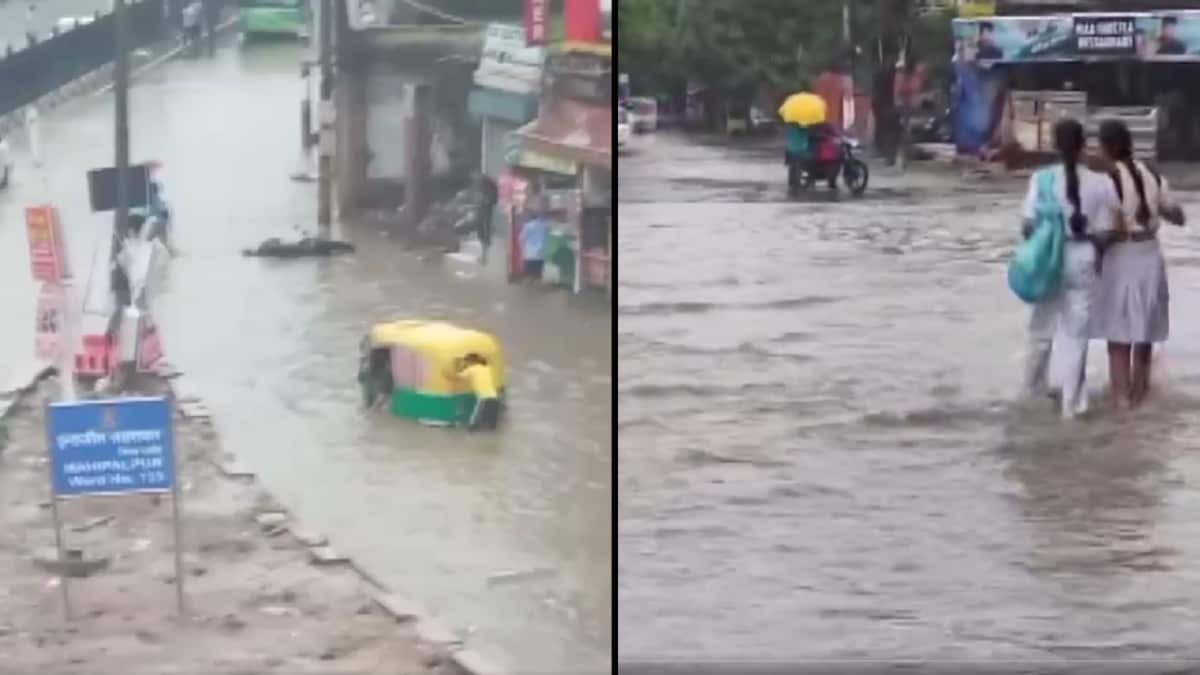
The National Capital Region (NCR) was brought to a near standstill this past Saturday as relentless and heavy Delhi rain lashed the twin cities of Delhi and Gurugram. An intense deluge submerged critical thoroughfares, crippled public transport, and left millions of commuters stranded, forcing authorities to issue urgent advisories. The sheer volume of water, falling in concentrated bursts, quickly overwhelmed the urban drainage systems, painting a familiar yet ever-frustrating picture of monsoon mayhem.
From the early hours of the morning, the skies opened up, unleashing a torrent that seemed determined to test the very resilience of the region’s infrastructure. Between 8:30 AM and 11:30 AM, weather stations reported significant accumulations: Safdarjung recorded 22 mm, Palam received a substantial 25.2 mm, and Lodhi Road measured 24.4 mm. These figures, while not record-breaking on their own, indicate an “intense spell” – a period where rainfall rates exceed the capacity of surface runoff and drainage, leading almost inevitably to waterlogging.
Gurugram Grapples with Heavy Delhi Rain Chaos
Neighboring Gurugram, the bustling IT and financial hub, faced an equally grim situation. The heavy showers prompted an immediate response from local authorities, with the District Disaster Management Authority issuing a comprehensive safety advisory as further downpours were anticipated. This wasn’t merely a precautionary measure; the India Meteorological Department (IMD) had issued a ‘nowcast’ warning of over 15 mm of rain per hour for the subsequent two to three hours, accompanied by thunderstorms and strong winds, signaling a high-alert situation for the city’s populace.
The impact on Gurugram was vividly captured in visuals circulating online, particularly around the Sheetla Mata Temple area, where streets transformed into veritable rivers. Commuters shared harrowing tales of navigation through knee-deep water, with vehicles inching along or, in many unfortunate cases, breaking down altogether. The advisory urged residents to “avoid unnecessary travel, flooded roads, underpasses, and low-lying areas.” Furthermore, a stark warning was issued against approaching trees, electric poles, and overhead wires, a critical caution given the heightened risk of electrocution during such conditions. Emergency services and government departments were placed on high alert, instructed to maintain vigilance and implement swift precautionary measures.
Traffic Paralysis and Commuter Agony
Across Delhi, the morning commute morphed into an arduous test of patience and endurance. Major arteries, including NH-48, the vital link between the Indira Gandhi International Airport and Dhaula Kuan, became choked. Other severely affected stretches included Mahipalpur, Sangam Vihar, Shakarpur, Laxmi Nagar, and the perennially busy Mehrauli-Badarpur Road. Perhaps most concerning were reports of significant waterlogging near the Palam airport tunnel and at Terminal 3 of the international airport itself, highlighting vulnerabilities in critical infrastructure. The chaos extended to residential sectors like Dwarka, where roads around Omaxe Road and the NH-8 underpass were inundated.
The Delhi Traffic Police struggled to manage the burgeoning gridlock, frequently updating commuters via social media platforms. Adding to the misery was a fallen tree on Mathura Road, between Apollo Hospital and Ashram Chowk, which further constricted movement and deepened the traffic snarls. The sheer inefficiency of moving through the city during these extreme weather events often leads to a staggering loss of productivity and considerable mental strain on its citizens. Such urban challenges are not unique to Delhi, as other rapidly expanding metropolitan areas face similar struggles with infrastructure under pressure, much like Bengaluru grappling with traffic curbs on its airport road.
The India Meteorological Department maintains its forecast for more inclement weather. Light to moderate showers are expected, with the possibility of moderate to heavy downpours accompanied by thunderstorms and lightning continuing from the afternoon well into the evening, and even throughout the night. This ongoing threat of further Delhi rain means the city remains on edge, with residents bracing for another day of potential disruption.
Understanding Monsoon Patterns and Urban Resilience
The annual monsoon season is a lifeline for India, replenishing water sources and sustaining agriculture. However, in heavily urbanized zones like the NCR, the blessings of rain often turn into a curse due to inadequate drainage systems, rampant construction, and the increasing frequency of extreme weather events attributed to climate change. The phenomenon of localized heavy downpours, often referred to as ‘cloudbursts’ or intense spell events, has become more common, overwhelming storm drains designed for different precipitation patterns. Understanding the broader context of the Indian Monsoon is crucial to appreciating the scale and impact of these weather phenomena.
While advisories offer immediate guidance, the long-term solution lies in robust urban planning, resilient infrastructure, and effective disaster management protocols. As the population of Delhi and Gurugram continues to swell, so does the imperative for sustainable solutions that can withstand the increasingly unpredictable whims of nature. The weekend’s heavy Delhi rain serves as a potent reminder of the urgent need for a holistic approach to urban resilience, ensuring that the critical lifeblood of these vibrant cities can flow unimpeded, even when the heavens open up.