
Just 25 Km From China Border: IAF Plane Makes Record Landing At Nyoma Airbase In Ladakh | Video
Introduction & Key Takeaways
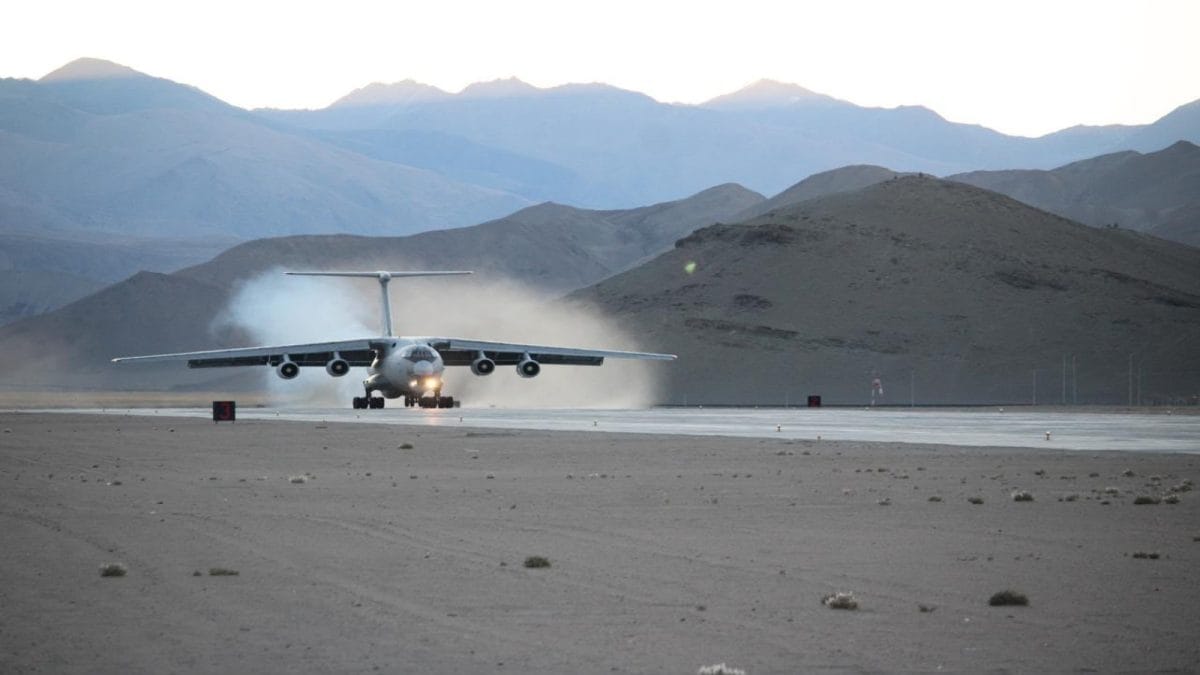
The Indian Air Force (IAF) has reached a monumental aviation milestone, successfully landing a Russian-origin Ilyushin IL-76MD transport aircraft at the remote Nyoma airbase in eastern Ladakh. Situated at an astonishing altitude of 13,629 feet and merely 25 kilometers from the Line of Actual Control (LAC) with China, this feat underscores a significant shift in India’s defensive posture. This Nyoma airbase development is not merely an engineering success, but a potent signal of regional security readiness.
- The IL-76MD landing represents the highest-altitude touchdown ever recorded for this specific aircraft type globally.
- The 2.7-kilometer runway at Nyoma is critical for bolstering military logistics in one of the world’s most challenging high-altitude terrains.
- This operation demonstrates the enhanced professional capabilities of the Indian Air Force in extreme, high-stress environments.
Background & Context
To understand the gravity of the recent air operations, one must look at the geography of eastern Ladakh. Historically, the harsh, thinning air and rugged landscape of the Himalayas have acted as natural barriers to heavy military transport. The Nyoma airbase, previously a modest landing strip, has been meticulously upgraded to serve as a cornerstone of India’s northern defense. The proximity to the LAC makes it a primary asset for rapid troop mobilization and supply chain resilience, effectively narrowing the time-distance gap that has historically favored adversaries in mountainous border disputes.
Root Cause & Deep Dive Analysis
Why did this high-altitude maneuver take place now? The strategic imperative is driven by the ongoing need for a rapid response mechanism near the border. Military analysts have long argued that logistics, rather than purely offensive capabilities, dictate the outcome of high-altitude conflicts. The ability to land heavy transport, such as the IL-76MD, allows the Indian military to deploy massive quantities of hardware and personnel into the front lines without relying on vulnerable road networks. Furthermore, the geopolitical landscape requires that India constantly refines its deterrent strategy. This landing proves that the physical limits once imposed by the mountain range are now being systematically dismantled by modern technology and human expertise.
Strategic Implications & Future Impact
The successful operation at Nyoma signals a broader strategic pivot. Beyond the tactical utility, the presence of such heavy-lift aircraft near the border changes the calculus for any potential aggressor. It suggests that India is moving toward a more assertive posture in the Ladakh sector. For those interested in regional stability, the geopolitical implications extend far beyond the immediate landing. It forces neighbors to recalculate their own deployment timelines. As the IAF continues to integrate advanced logistics, the Nyoma airbase will likely become an even more fortified hub, capable of hosting not just transport craft, but potentially more sophisticated surveillance and offensive assets.
Conclusion & What to Watch Next
As India continues to harden its border infrastructure, the Nyoma airbase serves as a visible testament to the nation’s growing military reach. The precision shown by the crew reflects years of specialized training designed to overcome the thin, cold, and unpredictable conditions of the high Himalayas. Observers should monitor future expansion plans at this facility, specifically regarding hangar capacity and fuel storage, as these will be the next indicators of how quickly and effectively the base can sustain prolonged operations. The era of high-altitude logistics has truly arrived, and the Nyoma airbase stands at the very center of this evolution.