
Nepal flood death toll crosses 900 as hundreds stuck in hydropower tunnels
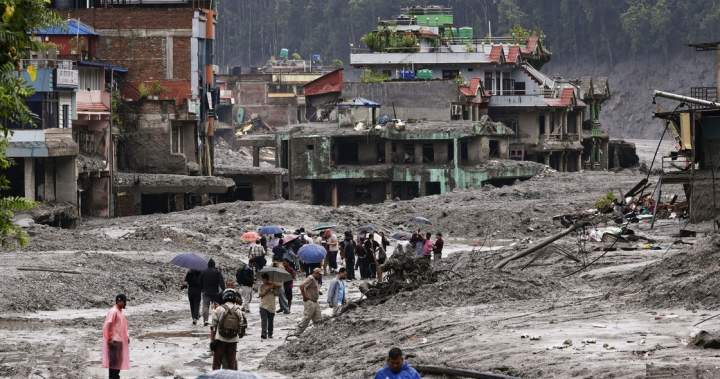
A landscape of unimaginable devastation has gripped the Himalayan nations as catastrophic flash floods, triggered by a massive glacial collapse, have sent torrents of water and mud tearing through valleys in Nepal and China. The immediate aftermath has plunged rescue operations into a frantic, heart-wrenching race against time, particularly for hundreds of workers believed to be trapped deep within the colossal tunnels of crucial hydropower projects. The combined death toll from these devastating Nepal floods and the parallel destruction in China has now tragically surpassed 900, with thousands more officially unaccounted for.
The scale of the calamity is staggering. As Monday drew to a close, a desperate operation was underway to reach an estimated 900 individuals from 12 different hydropower sites in Nepal’s Rasuwa and Nuwakot districts. These projects, vital to the nation’s energy grid, were engulfed by the raging waters and subsequent landslides. Mohan Kumar Dangi, president of the Independent Power Producers’ Association, Nepal (IPPAN), shared a grim estimation: at least 500 of the missing workers are thought to be entombed within the submerged tunnels. Authorities, aided by several foreign specialist teams, are grappling with the harrowing task of search and rescue, facing diminishing hopes with each passing hour.
The Unfolding Tragedy of Nepal Floods
The very infrastructure designed to harness nature’s power has become a potential tomb for those who built and operated it. Experts offer a slender thread of hope, suggesting the sheer size of these hydropower tunnels might have provided pockets of refuge with access to oxygen. However, six days after the disaster struck last Wednesday, fears of suffocation due to limited air supply, dwindling food, and lack of potable water grow more profound. Brigadier General Raja Ram Basnet, the Nepali army spokesman, affirmed, “We are working in search and rescue of the stranded people from hills, settlements and river areas,” acknowledging the multi-faceted challenge. The official count from Nepal’s disaster agency alone cites 903 deaths and 4,247 missing persons, including 592 foreigners.
The genesis of this disaster traces back to a cataclysmic glacial collapse high in the majestic Himalayan region. Scientific analysis of satellite imagery indicates that bedrock underneath a glacier gave way, dislodging a significant portion of the ice mass. This monumental event was so powerful it registered as a magnitude 5.2 seismic event, an astonishing testament to nature’s brute force. The ensuing cascade of rocks and rapidly melted glacial water swelled the rivers below into monstrous torrents, sweeping away everything in their path across Tibet and Nepal. Such events, known as Glacial Lake Outburst Floods (GLOFs), are increasingly becoming a stark reality for communities living downstream of mountain glaciers, a phenomenon exacerbated by climatic shifts in the Himalayas.
Hydropower’s Perilous Promise
Nepal, a nation heavily reliant on its rivers for hydroelectric power, finds itself in a precarious situation. The Dhading power station, for example, a critical node providing electricity to over 20,000 people, lies submerged in mud, its future uncertain. Workers toiling to clear the debris express a fervent hope that any reconstruction avoids proximity to the river’s edge. These vast tunnels, often large enough to accommodate trucks, are fundamental to diverting water for energy generation. Jakob Steiner, a geoscientist based in Dhaka, noted, “There is enough place for people to take refuge safely inside and from what we understand they have managed to get oxygen to some of those stuck inside and are trying to rescue them now. It’s a race for time though as people need food and water.” In the hard-hit Rasuwa district’s Upper Trishuli-1 Hydropower Project, 576 individuals are missing, with approximately 300 believed trapped within its depths. Elsewhere, at Trishuli-3, crews are attempting perilous descents to reach potential survivors.
An Agonizing Search for Loved Ones
The human stories emerging from this tragedy are profoundly heartbreaking. Maraval Nagappan, an Indian national, embarked on a desperate quest for his son, Sathya Narayan, who led a group of 49 Indian devotees returning from a pilgrimage to Mount Kailash in Tibet. The group vanished after floodwaters engulfed a Chinese immigration complex where they were awaiting passage into Nepal. Nagappan, whose Chennai-based travel company organized the pilgrimage, has scoured rescue centers and morgues, travelling for tens of kilometers, but found no trace. Surveillance footage, chillingly, showed water surging through the complex as people frantically tried to escape, with Nagappan identifying some members of his son’s group by their clothing.
On the Chinese side, rescue and recovery efforts are concentrated on rebuilding crucial infrastructure, such as the road leading to Gyirong Port at the China-Nepal border. State broadcaster CCTV showcased trucks battling rapidly rushing waters, ferrying giant rocks to repave a section of the road that now lies meters deep under water. While some Chinese rescue teams have reached the border, the extent of the disaster on their side remains less transparent, with state media primarily highlighting official responses and deployment of forces, rather than specific victim accounts.
The combined agony of Nepal and China underscores a grim reality for communities nestled in the shadow of the world’s tallest peaks. As the immediate crisis slowly shifts towards recovery, the long-term impact on lives, livelihoods, and the fragile environment will undoubtedly necessitate a robust and coordinated international response. For now, every effort remains focused on the desperate, fading hope of finding survivors amidst the mud and wreckage.