
‘Not An Isolated Incident’: Delhi HC Seeks Centre, Police Reply Over Alleged Excessive Force On CJP Protesters
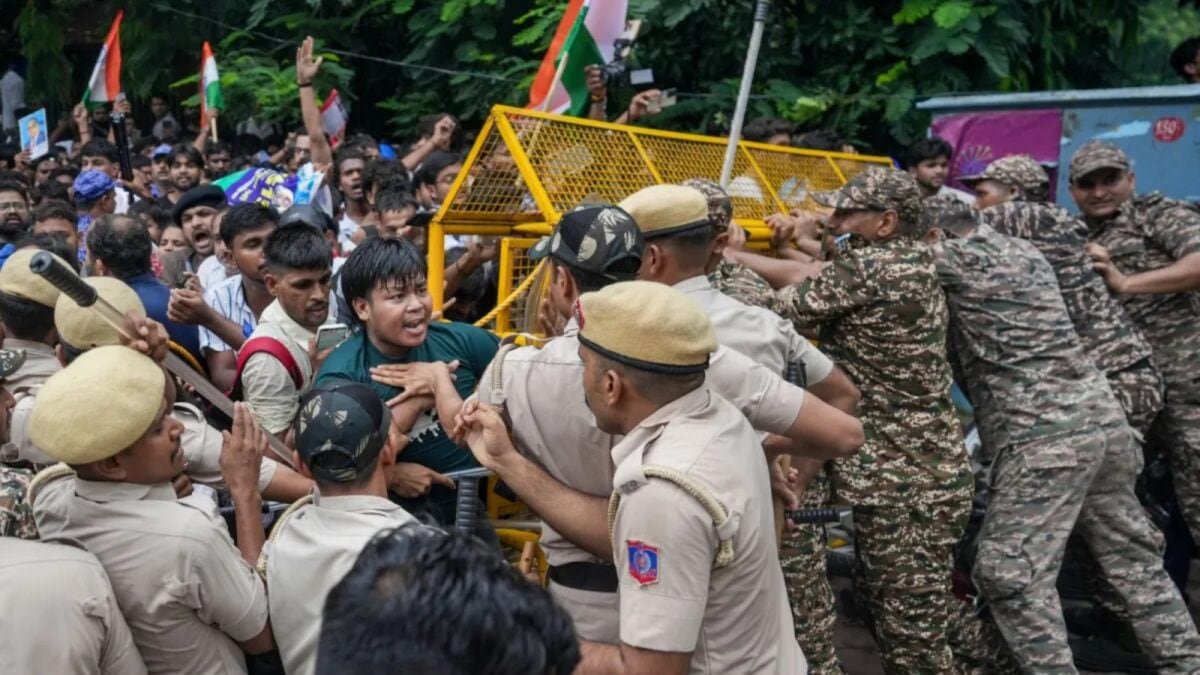
In a significant development, the Delhi High Court has demanded answers from both the Delhi Police and the Central government regarding allegations of excessive force used during a recent CJP protest march towards Parliament. A bench, led by Chief Justice Devendra Kumar Upadhyaya and Justice Tejas Karia, emphatically stated that the reported incidents were far from isolated, marking a critical turning point in the unfolding saga.
The court’s stern observations came after a batch of petitions detailed alleged police brutality against activists of the Cockroach Janta Party (CJP), an online satirical collective, and numerous students. This collective action sought accountability for recurring examination paper leaks and the resignation of Union Education Minister Dharmendra Pradhan. The High Court’s decisive stance underscores the gravity of the situation, refusing to dismiss the pleas as individual complaints.
Mounting Pressure Over CJP Protest Handling
“Had it been an isolated incident, situation would have been different,” the High Court declared, emphasizing that the scale of allegations necessitated a broader inquiry. The bench directed authorities to meticulously preserve all pertinent records, including CCTV footage, videography, and any other evidence related to the clashes. This order aligns with the Standard Operating Procedures (SOPs) of both the Delhi Police and the Union government, ensuring that crucial visual and administrative data remains intact for future scrutiny. This preservation is vital for upholding the integrity of judicial precedents.
Petitioners’ counsels painted a grim picture of the events. Senior advocate N. Hariharan asserted that the protesters were exercising fundamental constitutional rights to assemble peacefully before police reportedly employed disproportionate force. “What followed was unimaginable. Brutality to the largest measure possible was used,” he submitted, alleging over 90 students suffered injuries. He pressed for an independent Special Investigation Team (SIT), highlighting the conflict of interest in allowing Delhi Police to investigate claims against its own personnel. Further alarming allegations included molestation of women protesters and officers striking individuals with batons, even on private parts, all purportedly captured in videos.
Echoing these concerns, senior advocate Vikas Singh questioned the police’s pre-emptive actions, stating there was no evidence of protester violence preceding the crackdown. He stressed the imperative of seizing body cameras from security personnel, stating, “Hitting on the head can never be permitted under the law.” Gopal Sankaranarayanan, representing another petitioner, pointed to alleged violations of Supreme Court guidelines on handling protests, citing instances of personnel in plain clothes or without name badges carrying unauthorized weapons, with one Additional DCP reportedly seen slapping a woman protester without provocation.
Conversely, Additional Solicitor General S.V. Raju, representing the Delhi Police, countered that videos showed protesters pelting stones and attacking officers. He argued that prohibitory orders under the Bharatiya Nagarik Suraksha Sanhita (BNSS) were in effect. Raju also dismissed the Public Interest Litigations (PILs) as “publicity-seeking petitions” based on potentially tampered social media videos, urging individuals to lodge complaints with police or magistrates under BNSS first.
Despite the police’s objections, the High Court firmly disagreed that each affected person should file a private complaint. The bench acknowledged the broader public dimension of police action during a mass **CJP protest**, affirming its commitment to examine the matter thoroughly. While refraining from prejudging the allegations, the court’s priority is to receive comprehensive responses from the Delhi Police and the Centre within four weeks, ensuring all evidence is safeguarded for future proceedings.