
Oil prices surge as US-Iran strikes intensify in Strait of Hormuz
A palpable sense of anxiety grips global energy markets as a fresh wave of strikes between the United States and Iran in the strategically vital Strait of Hormuz has triggered a significant oil prices surge. This escalation, casting a long shadow over international trade routes, has pushed crude benchmarks to nearly six-week highs, sending ripples through economies from Washington to Beijing and prompting a stark re-evaluation of energy security paradigms worldwide.
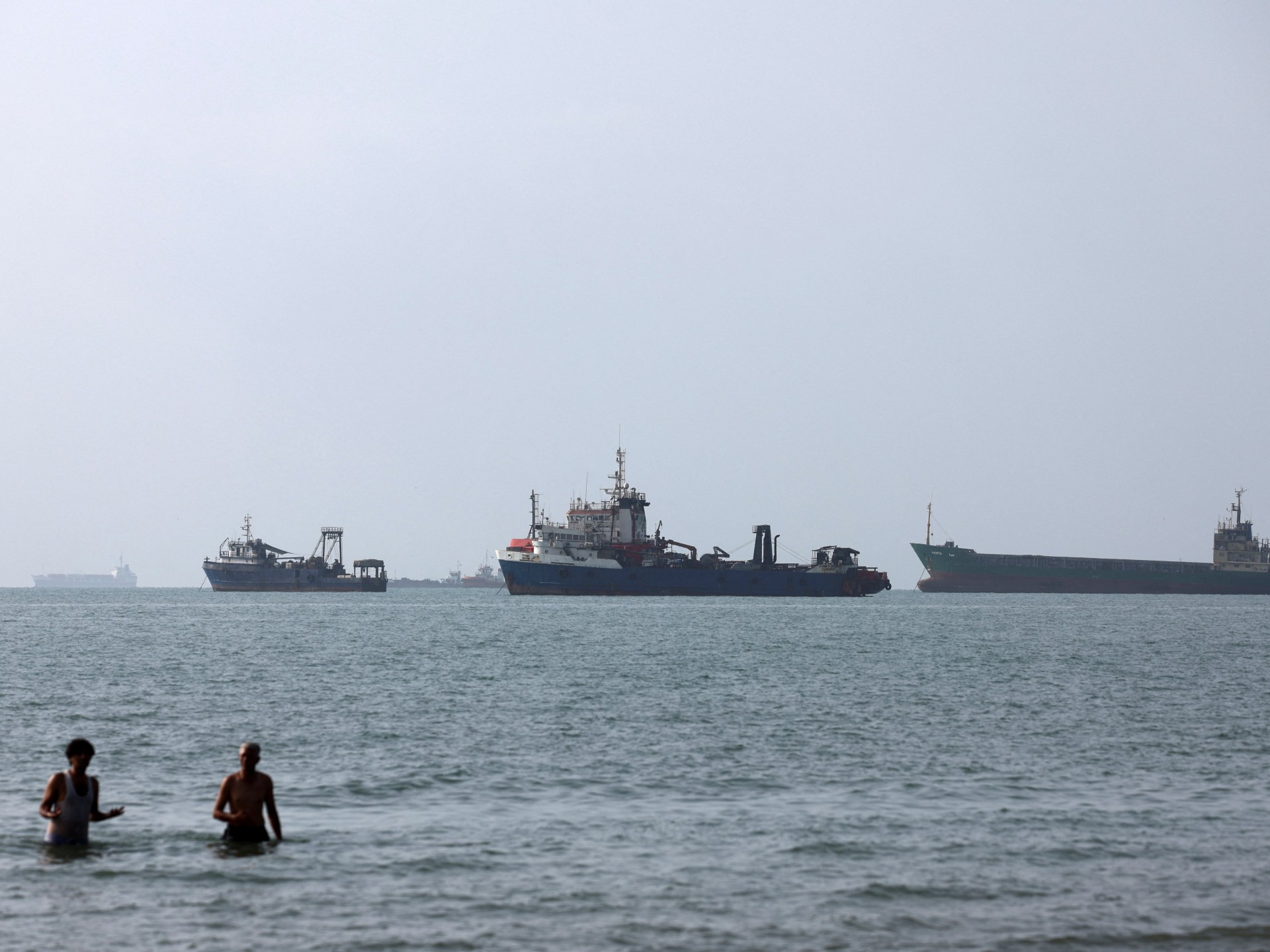
The Strait of Hormuz, a narrow maritime chokepoint nestled between the Persian Gulf and the Gulf of Oman, serves as the passageway for approximately one-fifth of the world’s total oil supply during times of peace. Its geopolitical sensitivity means any disruption can, and often does, send shockwaves through global commodity exchanges. In recent days, the intensifying hostilities have seen the United States target three Iranian oil tankers, while Iran’s Islamic Revolutionary Guard Corps (IRGC) retaliated, claiming strikes on three tankers and multiple US-linked vessels in adjacent waters.
The Unsettling Reality of Oil Prices Surge
On Monday, the financial markets reacted with immediate volatility. Brent crude futures, the internationally recognized benchmark, soared to approximately $97 a barrel. This represents a substantial 9 percent increase over the past five days and a staggering 19 percent jump in just the last month. Such dramatic movements place prices tantalizingly close to their peak of $97.93 recorded on July 24th, illustrating the acute sensitivity of the market to geopolitical tremors. Similarly, US West Texas Intermediate (WTI) crude experienced a parallel ascent, climbing to $92.27 a barrel, marking a 79-cent rise and mirroring the near six-week high of its global counterpart.
Analysts are quick to point out the underlying fragility that these events expose. Rachel Ziemba, an adjunct senior fellow at the Center for a New American Security (CNAS), articulated the gravity of the situation to Al Jazeera. “This is a reflection of continued conflict and exchange of fire. The supply deficits globally are persisting, and there is little end to these shortages,” she observed. Further compounding these concerns was a report by the Financial Times, citing sources familiar with the matter, indicating that Saudi Aramco’s crucial Jizan facilities were struck for the second time in a month. Ziemba added, “The fact that a Saudi refinery in Jizan was hit, possibly delaying its return to production, didn’t help.”
The immediate consequence of these heightened strikes is a noticeable reduction in maritime traffic through this critical maritime artery. Data from Kpler, a leading analytics platform, shows an average of only 10 commodity ships transiting the vital chokepoint daily over the last ten days. Arif Gasilov, a partner at the Gasilov Group, an energy advisory firm, described the erratic nature of the market. “Crude went back down to what the pre-war level was in early July. Then it increased again, and then it reduced again, and now it’s increasing again on this weekend’s exchange plus the Aramco attack,” Gasilov explained. He ominously suggested that an “inflection point” might be approaching where a ceasefire would barely move the market, perhaps by only a dollar or two.
The Heavy Toll on US Consumers and Political Landscape
Across the United States, the ramifications of the oil prices surge are being acutely felt at the petrol pump. The national average price for a gallon of petrol climbed by 7 cents in a single week, reaching $4.15 on Monday, a stark increase from $4.08 just a week prior, according to the American Automobile Association (AAA). This figure is up from $4.04 a month ago and represents a staggering 39 percent increase since the conflict began on February 28th, when prices stood at $2.98. The burden extends beyond everyday drivers; diesel prices last week shattered all previous records, hitting an unprecedented $5.85 per gallon and continuing their climb to over $5.90. Patrick De Haan, head of petroleum analysis at GasBuddy, warned that these record diesel prices would inevitably “start funnelling down into the economy,” impacting everything from food costs to consumer goods.
The financial strain on American households is substantial. Brown University’s Watson School of International and Public Affairs estimates that the average household has spent an additional $418.82 on fuel since the war commenced, totaling $764.59. This economic pressure cooker is brewing just as the US midterm elections loom large, transforming the economy into a paramount concern for voters. Recent polls indicate a significant dip in President Donald Trump’s economic approval rating, plummeting to a new low of just 17 percent in a Financial Times survey. An Economist/YouGov poll further revealed that 39 percent of Americans now believe Democrats are better equipped to handle the economy, compared to 32 percent who favor Republicans. As Americans look ahead to key economic indicators, the latest US adds jobs in August, beating economic forecasts might offer a glimmer of hope amidst the inflationary worries.
China’s Strategic Insulation and Energy Transition
While Western economies grapple with immediate inflationary pressures, Southeast and East Asian markets, heavily reliant on direct imports through the Strait of Hormuz, are also adjusting. However, China has been proactively moving to insulate its economy from the disruption. Beijing’s strategy involves leveraging domestic sources, including its strategic petroleum reserves (SPR), and diversifying its energy partnerships. “China has been managing this situation successfully since the beginning of the war… China has many domestic resources, despite rising oil prices,” stated John Gong, an economics professor at the University of International Business and Economics. He emphasized that China had been “conserving its oil and gas consumption for quite some time now,” indicating a preparedness for such challenges.
Crucially, China’s close ties with Russia provide a significant buffer, with Moscow reportedly supplying nearly half of Beijing’s daily oil requirements. Beyond immediate supply security, China is accelerating a broader, more profound shift towards alternative energy sources and electric vehicles (EVs). “We have national strategies focused on transitioning to clean energies like solar and green power,” Gong noted. This ambitious drive is evident in the domestic automotive market, where “more than 50 percent of cars sold on the Chinese market are electric.” This strategic pivot not only enhances energy independence but also aligns with global environmental goals, offering a long-term solution to volatility in understanding global energy demand.
As the international community watches with bated breath, the current geopolitical flare-up in the Strait of Hormuz underscores the delicate balance of global energy security. The sustained oil prices surge serves as a stark reminder of how quickly regional conflicts can reverberate globally, challenging economic stability and forcing nations to accelerate their transition towards more resilient and diversified energy futures. The path forward remains uncertain, but one thing is clear: the era of predictable, stable energy markets is firmly in the past.