
‘Triumph Of Truth Over Lies’: PM Modi Hails BJP’s ‘Resounding’ Win In Rajasthan Civic Polls
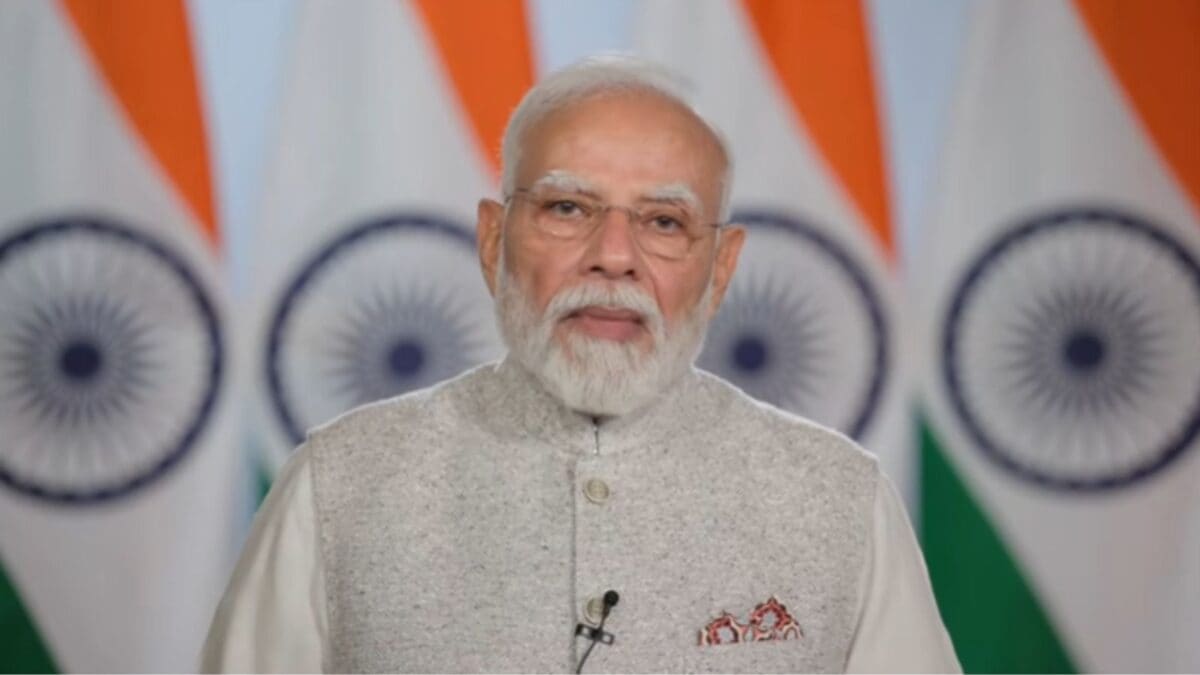
In a significant political development resonating across India, Prime Minister Narendra Modi enthusiastically lauded the Bharatiya Janata Party’s (BJP) stellar performance in the recent Rajasthan Civic Polls. The results, unveiled earlier this week, paint a vivid picture of public sentiment, with the Prime Minister himself asserting that the mandate unequivocally demonstrates robust popular support for the BJP’s governing principles of robust governance and proactive development, particularly under the much-touted ‘double-engine’ government.
Taking to X (formerly Twitter), a platform frequently utilized for direct public engagement, Prime Minister Modi extended his profound gratitude to the electorate of Rajasthan. “Heartfelt thanks to the people of Rajasthan for delivering a resounding victory to the BJP in the municipal elections,” he penned, adding a poignant observation, “This is a testament to the triumph of truth over the echo of lies.” His statement underscores a prevailing narrative within the party, suggesting that the public has decisively rejected opposition criticisms in favor of the BJP’s developmental agenda.
BJP’s Strong Showing in Rajasthan Civic Polls
The ‘double-engine’ analogy, a cornerstone of the BJP’s electoral strategy, implies that when the same party governs both at the state and central levels, a synergy is created that accelerates progress and streamlines developmental projects. This victory in the Rajasthan Civic Polls is, therefore, more than just a local triumph; it’s perceived as a validation of this very governance model. The Prime Minister further articulated that this renewed mandate would not only catapult the state to unprecedented heights of progress but also fortify the BJP’s collective resolve to enhance the lives and prosperity of every single individual residing within its diverse boundaries.
Digging deeper into the electoral arithmetic, the BJP undeniably emerged as the single largest political entity. Out of a staggering 10,245 wards spread across 309 urban local bodies, the saffron party clinched an impressive 4,179. The Indian National Congress, the traditional rival, secured 3,613 wards, a respectable figure but one that leaves them trailing the BJP. However, the true narrative twist, perhaps the most intriguing aspect of these elections, lies in the formidable ascent of Independent candidates, who collectively secured a remarkable 2,273 wards. This strong showing by individual, unaffiliated contenders has sent ripples through the political landscape, fundamentally altering the calculus for board formations in numerous crucial urban centers.
The BJP’s dominance was particularly evident in key municipal corporations. They are poised to establish governing boards in four significant urban hubs: Jaipur, Kota, Udaipur, and Bhilwara. Jaipur, the state capital, saw the BJP securing a comfortable majority with 78 out of 150 wards, leaving the Congress with 53 and Independents with 15. Conversely, the Congress managed to secure a clear majority in the Bikaner Municipal Corporation, offering a counterpoint to the BJP’s sweeping successes. Yet, the situation in Jodhpur presented a tantalizing stalemate, with both the BJP and Congress finding themselves deadlocked at 44 wards each, thereby thrusting the Independents into the critical role of kingmakers.
Independents Hold Key to Urban Governance
The influence of Independent candidates extends far beyond individual wards. Across the state’s municipal councils, the BJP garnered majorities in 12 out of 47, while the Congress managed eight. Significantly, the remaining 21 councils produced no clear majority, placing Independents at the negotiation table. Similarly, among the 252 municipalities, the BJP secured a majority in 66, and the Congress in 38. A staggering 121 municipalities found themselves in a similar predicament, where neither major party could claim an outright majority. This fragmented mandate underscores a growing trend of voter discernment at the local level, where local issues and individual candidate appeal often transcend party affiliations. The democratic processes of the nation, particularly at the local level, reveal a vibrant and often unpredictable electoral landscape, reflecting the diverse aspirations of its citizens. For a deeper understanding of India’s development trajectory, one might consider the ongoing discussions around the nation’s new growth story and the vision of a self-reliant India.
This unprecedented surge in support for Independents means that post-election alliances and strategic negotiations will be paramount in determining who ultimately forms the governing bodies in these critical local administrations. Their collective power to sway the balance in an estimated 142 local bodies (21 municipal councils and 121 municipalities, plus Jodhpur Municipal Corporation) makes them a force that neither the BJP nor the Congress can afford to ignore. These results in the Rajasthan Civic Polls offer a fascinating glimpse into the evolving dynamics of Indian electoral politics, where local grievances and aspirations can coalesce to empower non-partisan voices. It also serves as a crucial barometer for the upcoming state assembly and general elections, providing both major parties with invaluable insights into voter sentiment and the effectiveness of their respective campaigns.
As political analysts dissect these outcomes, the message from Rajasthan is clear: while the BJP enjoys significant momentum and public trust in its ‘double-engine’ development narrative, the voice of the independent voter is growing louder and more decisive. This necessitates a nuanced approach from established parties, emphasizing localized strategies and genuine community engagement to secure future mandates. The intricacies of Indian electoral politics are indeed complex and ever-changing, often shaped by regional specificities and localized issues, as thoroughly covered by various credible news organizations, such as The Hindu, for decades.