
Where did Eurovision go wrong?
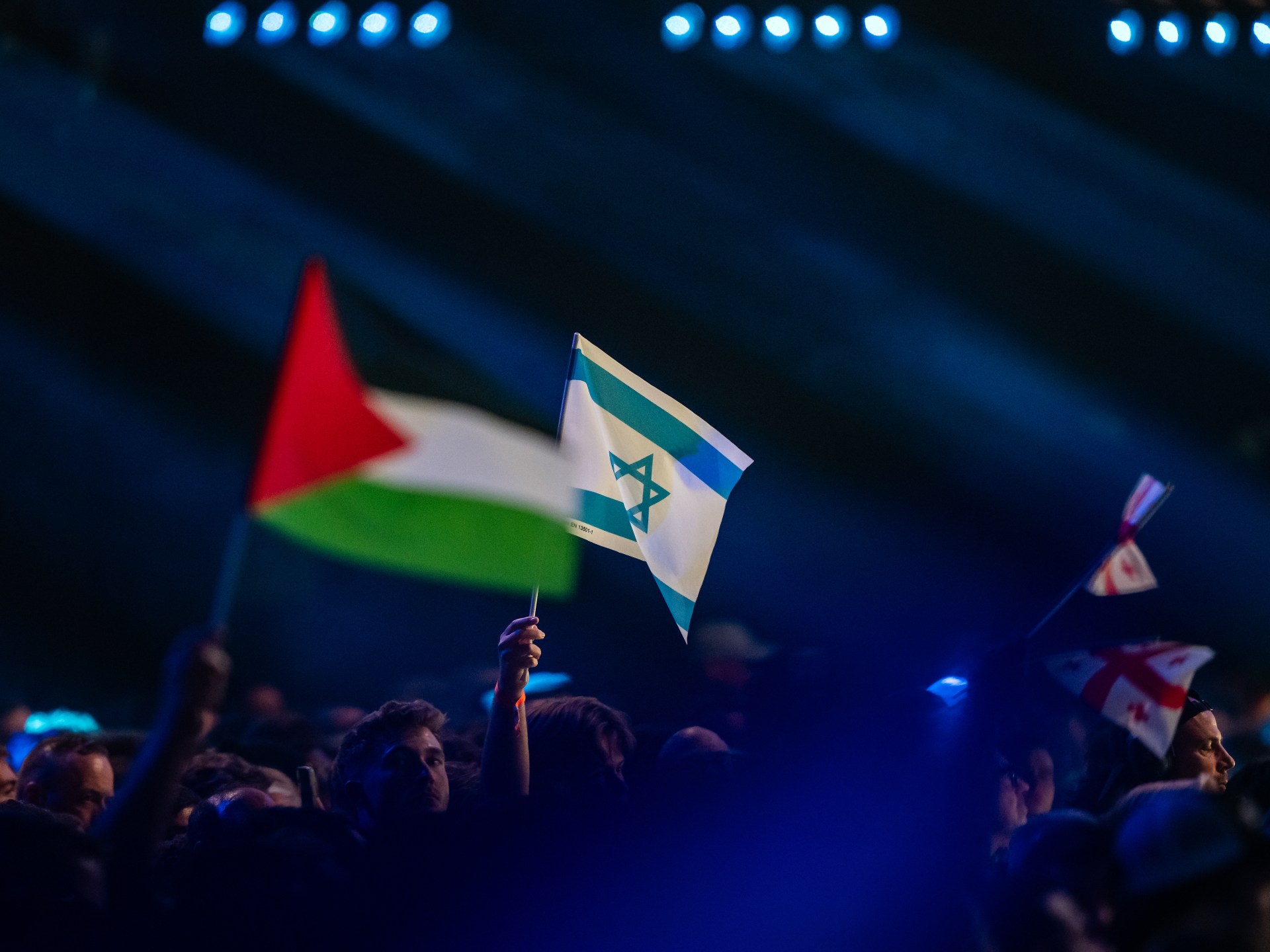
The stage lights may dazzle, and the glitter may fly, but beneath the surface of the world’s most flamboyant music competition lies a deep and divisive current: the Eurovision controversy. Long championed as a bastion of apolitical musical celebration, the Eurovision Song Contest now finds itself embroiled in a geopolitical maelstrom, its foundational claims of neutrality shattered by recent events. For millions tuning in to the annual spectacle, the question isn’t just who will win, but whether the very spirit of the contest can survive the intense scrutiny of its organizers’ principles.
For decades, Eurovision has offered a kaleidoscope of kitsch, a tongue-in-cheek ode to Europop where flamboyant costumes and theatrical performances reign supreme. The European Broadcasting Union (EBU), the contest’s organizer, steadfastly insists on its role as a promoter of music and unity, a sphere entirely separate from political machinations. Yet, this year, Israel’s participation amid its ongoing conflict in Gaza has placed that assertion under unparalleled strain, sparking widespread boycotts from artists and broadcasters alike. Critics loudly accuse the EBU of applying starkly different standards compared to its swift ban on Russia following the 2022 invasion of Ukraine.
Navigating the Eurovision Controversy
Eurovision is far more than a mere televised concert; it’s a colossal global entertainment event, drawing over 160 million viewers annually. It serves as an undeniable platform for nations to wield soft power and project geopolitical messages. This underlying power dynamic explains why, as reported, Israeli President Isaac Herzog reportedly invested months in lobbying European broadcasters and political figures to secure Israel’s spot. Furthermore, a recent New York Times investigation revealed Israel allocated a substantial $800,000 to advertising around the 2024 contest in Malmö, Sweden, despite being less than a year into its war on Gaza. State channels, including those linked to Prime Minister Benjamin Netanyahu, even launched digital campaigns urging viewers across Europe to cast the maximum allowed 20 votes for Israel in 2025.
These concerted efforts arguably paid off. Despite a notably subpar jury score, Israel garnered the highest public televote, rocketing them to second place overall. This outcome was hailed as a significant geopolitical triumph for Israel, though it simultaneously triggered a barrage of accusations regarding voting manipulation. While the EBU ultimately stated it found no evidence of systemic fraud, it has since reduced the maximum votes per person to ten, a quiet acknowledgment of the palpable unease surrounding these results.
The cultural repercussions are profound. Molly Nilsson, a Berlin-based musician, passionately described Israel’s campaign as a form of “cultural whitewashing” in an interview with Al Jazeera. She is among thousands of artists who signed the “No Music for Genocide” open letter, urging a complete boycott of Eurovision until Israel’s exclusion. Nilsson, like many peers, vehemently rejects the notion that art can remain apolitical. “If art just becomes entertainment, where we don’t talk about what’s happening in the world, then I don’t even know what the point is,” she asserted, emphasizing that Israel’s presence forces every participating nation to take an implicit, if not explicit, political stance.
The wave of dissent extended to national broadcasters. After the EBU confirmed Israel’s participation last December, television networks in the Netherlands, Slovenia, Spain, Iceland, and Ireland announced their withdrawal. For many, this was a difficult decision, sacrificing an event known for its high ratings. Natalija Goracak, president of RTV Slovenia, explained that their boycott stemmed from appeals by Slovenian artists, public sentiment, and a profound desire to demonstrate “human compassion” in the face of suffering. RTV Slovenia even replaced its scheduled Eurovision broadcast with “Voices of Palestine,” aligning with its tradition of honoring victims of atrocities. Dutch broadcaster AVROTROS, representing the Netherlands, explicitly cited Israel’s “proven interference” in last year’s contest and its “serious violation of press freedom” in Gaza as reasons for their principled withdrawal.
The financial impact of these boycotts is not insignificant. Spain alone contributes over 300,000 euros in participation fees. The combined withdrawal of five broadcasters could drain nearly one million euros from the contest’s coffers. Moreover, the lingering Eurovision controversy has deterred many prominent artists from participating, fearing their involvement might inadvertently signal political allegiances. William Lee Adams, founder of Wiwibloggs, pointed to Portugal’s Festival da Canção, where 13 of 16 entrants withdrew after Israel’s confirmation, as a stark example.
The EBU’s critics highlight what they view as a glaring double standard. Russia was swiftly banned from Eurovision mere days after its full-scale invasion of Ukraine, with the EBU citing concerns that its representation would “bring the competition into disrepute.” Yet, the organization maintains that Israeli broadcaster Kan is distinct from the state, unlike Russia’s state broadcasters. This argument, however, fails to convince many, including Goracak, who notes that Kan itself was established by Netanyahu’s government. Adding to the friction, while flags of participating nations, rainbow, and pride flags are permitted, Palestinian flags and pro-Palestinian symbols are explicitly prohibited at the event, a policy widely seen as discriminatory. Palestinians, accustomed to facing cultural appropriation and a perceived cultural genocide since the Nakba in 1948, find this glaring hypocrisy particularly enraging and unjust, as described by Eleni Mustaklem of the Edward Said National Conservatory of Music. It’s a painful spectacle: a global audience witnessing suffering on news feeds, then watching Israel perform on those very same screens.
The atmosphere at recent Eurovision events has reflected this deep-seated tension. Incidents during semifinals in Vienna, including security removing audience members and a protester’s “Stop the genocide” chant piercing the live broadcast, underscored the palpable unease. While not as overtly fractious as the 2024 event in Malmö, where pro-Palestinian sentiment and Danish protestors fueled clashes with police, a “sense of malaise” undeniably pervades this year’s competition. This unsettling undercurrent among fans, artists, and delegations has, regrettably, diluted the traditionally joyous and unified spirit of the Eurovision Song Contest, leaving its future as a truly apolitical celebration in question. The Eurovision controversy casts a long shadow over the glitter and glam.