
Zelensky says he expects war to continue into winter after talks with US envoys
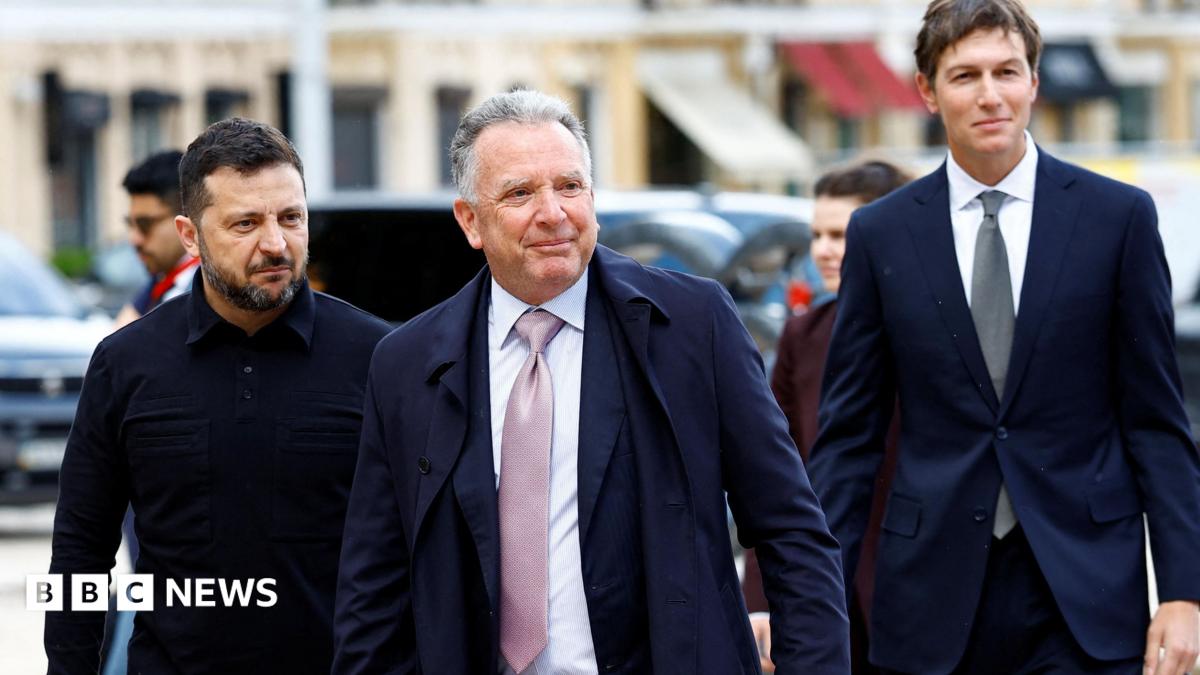
Ukrainian President Volodymyr Zelensky has issued a sobering prediction, stating that he fully anticipates the devastating war with Russia to persist into the brutal winter months. This grim forecast followed a high-stakes round of Ukraine peace talks in Kyiv with Donald Trump’s top envoys, Steve Witkoff and Jared Kushner. While both American officials expressed encouragement and described the discussions as “substantive,” the meetings concluded without the announcement of any immediate, significant breakthrough, underscoring the deep chasm that remains between the warring nations.
The diplomatic mission, notable for its unusual itinerary, saw Witkoff and Kushner travel to Kyiv for the first time since Russia’s full-scale invasion, arriving by train after flying into Poland. Their visit to the Ukrainian capital came immediately after a pivotal meeting with Russian President Vladimir Putin in Moscow the previous day. This unique two-pronged approach by envoys associated with a former U.S. president adds a fascinating layer to the complex tapestry of international diplomacy surrounding the conflict. It signals a potential shift in the broader geopolitical landscape, or at least a distinct, parallel channel of communication.
Ukraine Peace Talks: Zelensky’s Steadfast Demands and Winter Warfare Fears
President Zelensky, ever the resolute leader, reiterated Ukraine’s unwavering demand for a just peace—a peace that leaves no opening for renewed Russian aggression. His emphasis on achieving a lasting resolution, one that genuinely addresses the root causes and prevents future hostilities, remains central to Kyiv’s negotiating position. Critically, he underscored that if the conflict stretches into winter, as he now believes it will, Ukraine would require substantial and immediate support in the form of robust air defense systems and crucial energy provisions. The previous winter saw Russia relentlessly target Ukrainian energy infrastructure, plunging millions into darkness and extreme cold; the prospect of a repeat scenario is a paramount concern for Kyiv.
The logistical challenges of sustaining a nation under siege through winter are immense, requiring not just military hardware but also extensive humanitarian aid and resilience in the face of relentless bombardment. Ukrainian officials are keenly aware of the strategic implications of these needs, especially as the ground war often slows, making aerial assaults even more potent. This call for aid is a consistent theme from Ukraine, reflecting the immense pressure on its resources and the profound impact the war has had on civilian life and infrastructure, particularly as we’ve seen in ongoing internal discussions about governance during wartime.
Navigating the Moscow Dialogue and Broader Context
Before their arrival in Kyiv, Witkoff and Kushner engaged in a three-hour, closed-door session with Vladimir Putin in his official Moscow residence. Russian state media characterized these discussions as “constructive” and “extremely frank,” according to Putin’s adviser Yuri Ushakov. He revealed that the talks delved beyond merely resolving the Ukrainian crisis, touching upon economic issues and potential “mutually beneficial Russian-American projects.” Ushakov also mentioned an acknowledgement that any durable peace must address the “root causes of the conflict,” a phrase often employed by Moscow to justify its initial aggression and subsequent territorial claims.
The US envoys’ decision to meet Putin first was strategic, allowing them to gauge his position directly. Kushner remarked that the team “went through a lot of the ideas that hadn’t worked to date” and sought to identify elements essential for a “durable peace.” This echoes the arduous nature of Ukraine peace talks, where entrenched positions and historical grievances often overshadow immediate cessation of hostilities. The discussions highlight the multifaceted nature of the conflict, extending beyond mere battlefield maneuvers to encompass economic leverage and geopolitical narratives, often with implications for broader European security concerns.
As a gesture during the envoys’ sensitive trip, both Putin and Zelensky reportedly agreed to a three-day halt on strikes against each other’s capitals. However, the fragile truce did little to stem the tide of violence elsewhere. Just before the Kyiv talks, a Russian drone struck the headquarters of Ukraine’s security services, a stark reminder of the ever-present threat. Overnight, Russian and Ukrainian forces continued to exchange devastating blows, with Ukraine claiming strikes on a Ryazan oil refinery (a critical supplier to the Russian army), an airfield in Rostov-on-Don, and two air defense systems. Russia, in turn, unleashed a barrage of 108 long-range drones and small cruise missiles, 82 of which were intercepted by Ukrainian air defenses, but 11 locations sustained hits.
Despite heavy losses and slow ground advances, Russia continues to occupy approximately one-fifth of Ukrainian territory, seized since the 2022 invasion. Ukraine, meanwhile, has voiced its struggle to repel increasingly sophisticated ballistic missile attacks due to a shortage of interceptor missiles, compelling Kyiv to focus its retaliatory strikes on Russian economic infrastructure. These relentless exchanges underscore the brutal reality of the protracted conflict.
The upcoming meetings involving officials from Ukraine, Europe, and America will be crucial in determining if the seeds of progress sown by these recent Ukraine peace talks can blossom into a genuine path towards de-escalation. Yet, as Zelensky’s winter warning hangs heavy in the air, the world watches with bated breath, knowing that the journey towards a durable peace in Ukraine remains fraught with immense challenges.