
Bangladesh holds presidential election in first contested vote in 35 years
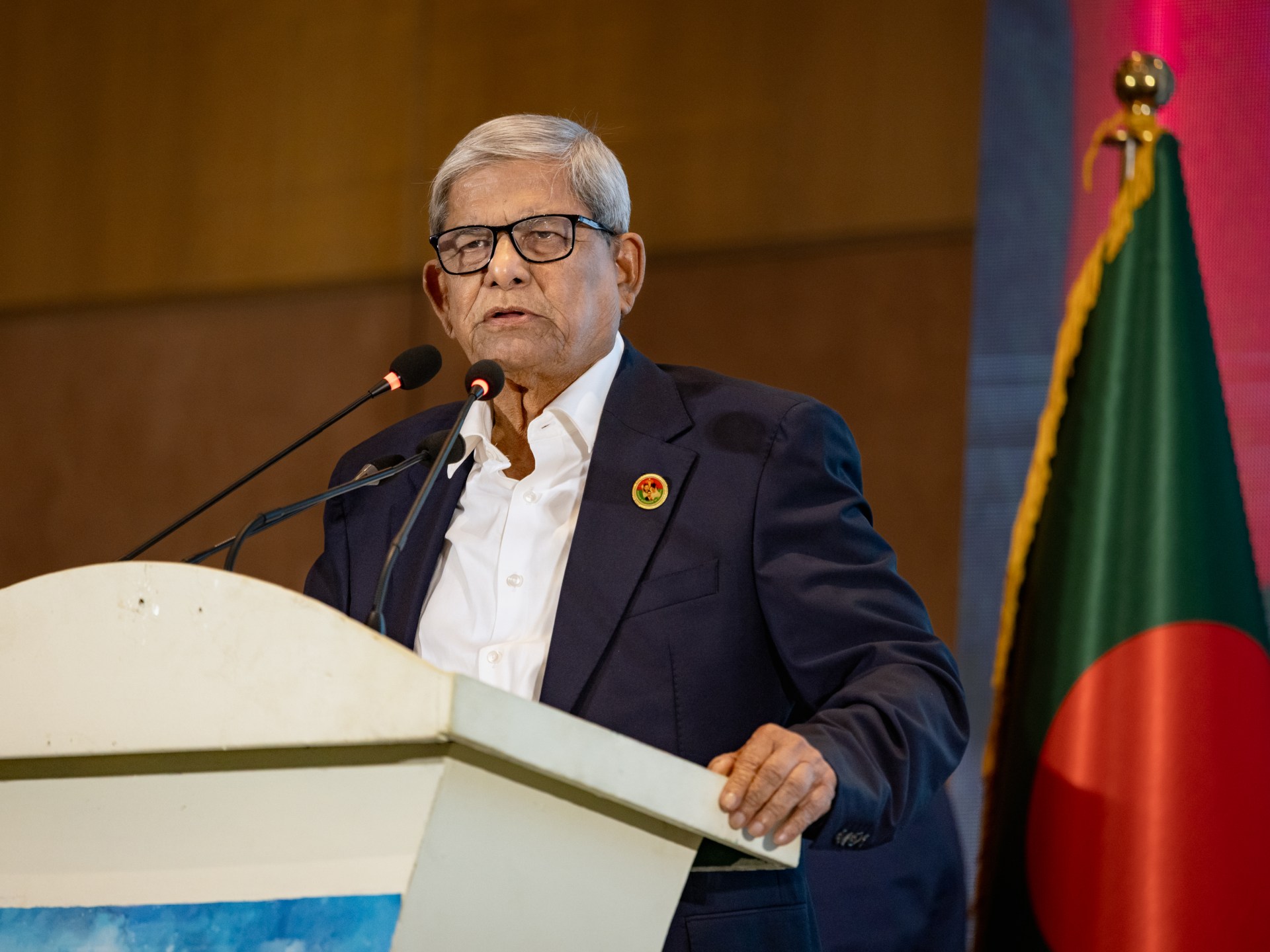
Dhaka, Bangladesh – In a rare display of democratic contest, Bangladesh is currently witnessing its first contested presidential election in 35 years, a moment of profound symbolic significance for a nation still navigating the tumultuous currents of its recent political history. The vote pits Mirza Fakhrul Islam Alamgir, the stalwart candidate of the ruling Bangladesh Nationalist Party (BNP), against the formidable figure of former army officer Oli Ahmad, who stands as the nominee of the Jamaat-e-Islami-led 11-party opposition alliance. This **Bangladesh Presidential Election**, though widely considered a foregone conclusion due to parliamentary arithmetic, nonetheless represents a critical juncture in the country’s institutional reshaping following the dramatic events of 2024.
A total of 349 members of parliament, comprising the electoral college, are casting their ballots in the parliamentary chamber, with the Bangladesh Election Commission anticipating results within hours of the polls closing. The stage for this extraordinary election was set by the resignation last month of Mohammed Shahabuddin, who had been elected unopposed in 2023. Shahabuddin’s truncated five-year term saw him serve through the dramatic ousting of Prime Minister Sheikh Hasina in August 2024, the subsequent interim administration led by Nobel laureate Muhammad Yunus, and ultimately, the BNP’s return to power in February of the current year.
The End of an Uncontested Era: A New Chapter for Bangladesh Presidential Election
For more than three decades, the presidency in Bangladesh has been determined without a competitive vote. The last time two names appeared on the ballot was in October 1991, when BNP candidate Abdur Rahman Biswas secured victory over Awami League (AL) nominee Badrul Haider Chowdhury. Since that time, every single presidential election has been uncontested, reflecting periods of strong single-party dominance or political consensus that precluded a direct contest. This year’s election, therefore, breaks a long-standing pattern, even if its ultimate outcome is largely predictable.
The numbers speak volumes: out of the 349 lawmakers eligible to vote, 247 hail from the BNP, while the Jamaat-led opposition alliance accounts for 90. This significant numerical advantage effectively assures Alamgir of a comfortable victory. Yet, despite the predictable arithmetic, the mere act of holding a contested vote imbues the proceedings with a certain weight, underlining a commitment to at least the optics of democratic process as the country re-calibrates the nation’s political landscape.
Profiles of the Contenders: Experience and Ideology Collide
Mirza Fakhrul Islam Alamgir, 78, stands as one of the BNP’s most recognizable and influential figures. Having served as acting secretary-general since 2011 and formally appointed to the post in 2016, he became a primary public voice for the party during its protracted period in opposition under Sheikh Hasina’s rule. Following the BNP’s landslide victory in this year’s election, Alamgir took on the critical portfolio of Minister for Local Government, Rural Development, and Cooperatives. At a recent BNP parliamentary party meeting, he expressed gratitude to Prime Minister Tarique Rahman for the nomination and vowed unwavering commitment to Bangladesh’s independence and sovereignty.
His opponent, retired Colonel Oli Ahmad, 85, brings a vastly different, yet equally distinguished, background to the race. A decorated veteran of Bangladesh’s pivotal 1971 Liberation War and chairman of the Liberal Democratic Party (LDP), Ahmad has served an impressive six terms as a member of parliament. His political journey saw him align closely with former President Ziaur Rahman, father of the current Prime Minister Tarique Rahman, before joining the BNP in 1980 after his military service. He held the position of communications minister under former Prime Minister Khaleda Zia and founded the LDP in 2006. What makes Ahmad’s nomination particularly intriguing is the backing he receives from the Jamaat-e-Islami, a party that historically opposed Bangladesh’s independence in 1971—a stark contrast to Ahmad’s own heroic role in the Liberation War. Despite his long odds, the opposition alliance has championed Ahmad as an experienced and broadly acceptable candidate, ensuring the presidency is decided by a vote rather than acclamation.
Public sentiment regarding the two candidates is varied. Anwarul Islam, a former Bangladesh Bank official, lauded Alamgir’s personal integrity, stating, “His integrity is rare among Bangladeshi politicians.” Conversely, Abdul Baten, a construction site manager in Dhaka, expressed a preference for Ahmad, citing his seasoned political experience and perceived shortcomings in the BNP’s promises on state reforms. Such sentiments highlight the nuanced and often deeply personal lens through which citizens view their leaders, even in an election where the outcome seems predetermined.
The President’s Constitutional Role: Symbolism Over Substance?
Under Bangladesh’s constitutional framework, the president is designated as the head of state, yet the office carries remarkably little independent executive authority. Article 48(3) unequivocally stipulates that the president must act on the prime minister’s advice in all matters, with the only exceptions being the appointments of the prime minister and the chief justice. This structural arrangement largely relegates the presidency to a ceremonial role, akin to that in many parliamentary democracies. Consequently, the practical impact of this **Bangladesh Presidential Election** on day-to-day governance is expected to be minimal, a sentiment echoed by political analysts.
Ali Riaz, a political scientist who played a role in the National Consensus Commission on state reforms, acknowledges the welcome return of a contested election but cautions against overstating its practical significance. “It’s good to see that someone who has been at the forefront of the democratic movement and fought against a fascist regime will be occupying the office of the president,” Riaz told Al Jazeera. However, he added, “the presidential election has very little significance due to the limited powers of the president.” Riaz also highlighted the proposals within the July National Charter on key reforms, agreed upon after the 2024 uprising and ratified by referendum. These proposals advocated for the president to be elected by members of both houses of parliament, alongside a plan for an upper chamber with substantial powers to balance constitutional and statutory bodies—a vision yet to be fully realized. Examining other significant political developments across the globe often reveals similar debates about the balance of power.
Questions and Critiques of the Electoral Process
For the families of the over 1,400 individuals tragically killed by security forces during the 2024 uprising, the departure of Shahabuddin and the election of a new president are long overdue steps towards accountability and renewal. Sanjida Khan Deepti, whose 17-year-old son Shahriar Khan Anas was among those killed, voiced her perspective: “It should have happened much earlier, but it is still good to see it happening now.” Yet, Deepti, like many others, raised pertinent questions about the fundamental fairness of a system where MPs are largely bound by their party’s directive.
This critical debate centers around Article 70 of the constitution, a provision that can lead to lawmakers forfeiting their parliamentary seats should they vote against their party. The question of whether this article should apply to a presidential election, especially one framed as a democratic contest, remains a contentious point. Critics argue that such party-line voting undermines the very essence of a free and fair election, irrespective of the constitutional role of the office. Despite these lingering questions and the predictable arithmetic, Thursday’s vote undeniably marks a rare and historic occasion in Bangladesh’s political narrative: for the first time in over three decades, lawmakers had a clear choice between two candidates for the nation’s next head of state, offering a glimmer of renewed democratic vibrancy.