
Zelensky says airlines should avoid Russian airspace as Ukraine escalates drone operations
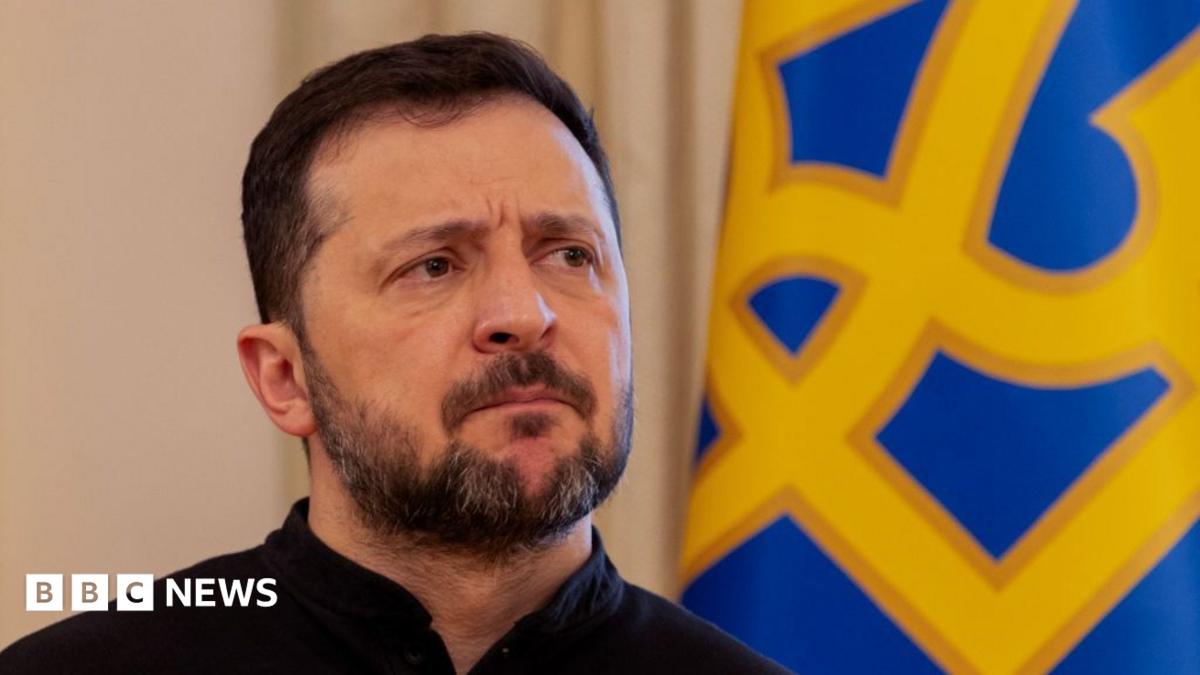
In a move that sends tremors through the global aviation industry, Ukrainian President Volodymyr Zelensky has issued a stark, unequivocal warning to airlines worldwide: steer clear of Russian airspace. His pronouncement underscores a dramatic escalation in Ukraine’s drone operations, asserting that the ‘Russian sky is becoming completely dangerous.’ This declaration elevates concerns about civilian air travel, pushing the invisible battle lines of the conflict into the very fabric of international aviation routes.
Speaking with a resolute gravity in his nightly video address, President Zelensky did not mince words. He called upon ‘every airline that uses Russian airspace, every insurer, everyone who still uses key Russian airports’ to heed his caution. While many Western carriers have, for the most part, ceased operations over Russia since the full-scale invasion began in February 2022, a significant number of airlines from nations like China, Turkey, and various Gulf states continue to utilize these routes, primarily for the valuable savings in flight time and fuel on journeys between Asia and Europe. The gravity of Zelensky’s statement lies in its implicit threat: civilian aircraft operating in areas increasingly targeted by Ukrainian drones could inadvertently become caught in the crossfire.
Escalation of Russian Airspace Risk
The Ukrainian president meticulously clarified that his nation harbors no intent to threaten civilian aviation directly. ‘Ukraine does not threaten civilian aviation as such – not a single civilian aircraft,’ he affirmed. Instead, the looming danger emanates from the sheer volume and unpredictable nature of drone activity. ‘There will simply be drones in Russia’s skies on a scale that has to be taken into account,’ he warned, emphasizing that ‘the war started by Russia is closing its skies.’ This isn’t merely rhetoric; it’s a direct response to Russia’s ongoing aggression, transforming Russian territory, particularly around major hubs like Moscow and St. Petersburg, into an active, unpredictable conflict zone.
Ukraine’s strategic shift involves increasingly targeting infrastructure deep within Russian territory. Beyond military installations, energy facilities and large retailers have become objectives, signaling a broader campaign to disrupt Russia’s war-making capabilities and inflict economic pressure. Aviation risk advisory firm Osprey Flight Solutions has corroborated this assessment, alerting clients that while many strikes remain within 300km of the border, daily attacks further inland are projected to intensify throughout the year. The firm’s alert further suggests a ‘realistic possibility that the frequency of Ukrainian strikes will continue to increase in the short term deep inside Russian territory,’ noting that ‘miscalculation and/or misidentification is likely in areas related to the Ukraine conflict.’ This dire assessment highlights the inherent dangers for any civilian aircraft traversing these now-contested skies.
The Geopolitical Chessboard and Aviation Safety
The immediate reaction from the Kremlin was predictably sharp. Russian President Vladimir Putin, speaking at the Shanghai Co-operation Organisation summit in Kyrgyzstan, denounced Zelensky’s comments as nothing short of a ‘declaration of state terrorism.’ Putin’s harsh words came amidst Russia’s continued brutal attacks on Ukraine, including heavy strikes that claimed 12 lives recently. He also affirmed Russia’s commitment to further intensifying its own attacks on Ukrainian power stations, revealing a grim tit-for-tat escalation. This exchange underscores the perilous environment surrounding international efforts to manage conflict zones, especially concerning civilian transport.
The specter of past tragedies looms large over this latest warning. The 2014 downing of Malaysia Airlines Flight MH17 over eastern Ukraine remains a harrowing reminder of the devastating consequences when civilian aircraft and active conflict converge. Last year, the UN aviation agency, the International Civil Aviation Organization (ICAO), formally attributed responsibility for that catastrophe, which killed all 298 people aboard, to Russia. Though the Kremlin has consistently denied culpability, the incident fundamentally altered perceptions of safety over contested regions. Even more recently, in 2024, Putin himself offered an apology to Azerbaijan following the downing of a commercial airliner in Russian airspace, an incident he attributed to Russian air defense systems repelling Ukrainian drones, resulting in 38 fatalities. These precedents reinforce the critical nature of Zelensky’s warning regarding the current Russian Airspace Risk.
Navigating the Skies of Uncertainty
For airlines, the decision to continue using Russian airspace is a complex calculus involving economic incentives, insurance liabilities, and passenger safety. While fuel and time savings are significant, the potential for a catastrophic incident presents an unimaginable cost, both in human lives and corporate reputation. The global aviation community operates under stringent safety protocols, but active war zones introduce an unpredictable element that challenges even the most robust risk assessments. Given the current geopolitical climate, exploring alternative routes, even if less economical, may soon become an unavoidable imperative for carriers prioritising the safety of their crews and passengers.
As the conflict grinds on, the international community watches with bated breath. The implications of this escalating drone warfare for global commerce and travel are profound. The ongoing threats highlight the desperate need for de-escalation, even as both sides dig in for a protracted struggle. It serves as a grim reminder that in modern warfare, the ripple effects extend far beyond the immediate battlefields, impacting everything from energy prices to the very pathways traversed by civilian aircraft. For instance, the escalating drone activity, while focused on Russia, can also prompt broader discussions on aerial security, echoing concerns seen in other global incidents, such as when Germany accused Russia of a drone attack on Leipzig airport.
The call to avoid Russian airspace is more than a warning; it is a declaration of intent, a strategic move by Ukraine to further pressure Russia and disrupt its operational comfort. How airlines, insurers, and international aviation bodies respond will shape not only the immediate future of air travel but also set precedents for navigating civilian aviation amidst increasingly complex and digitized conflicts.