
South African airline defends dramatic low-level flyby before rugby union clash
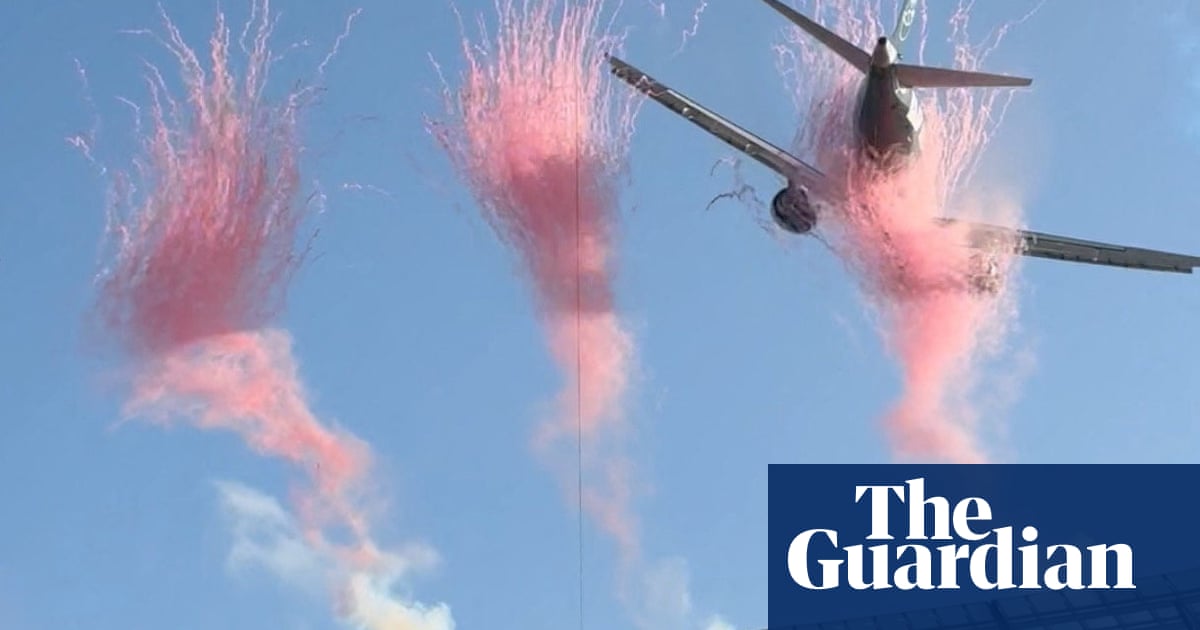
A truly spectacular and undeniably dramatic pre-game demonstration involving two commercial passenger jets performing an astonishingly low-level **stadium flyby** over Cape Town Stadium has ignited a fervent debate across South Africa and the global aviation community. While thousands of fervent rugby fans erupted in cheers, utterly captivated by the audacious aerial display, a storm of serious safety concerns has quickly gathered, prompting a vigorous defense from the airline responsible.
The incident unfolded on a Saturday, just moments before the eagerly anticipated second rugby union Test between the formidable South Africa and New Zealand teams in Cape Town. Two Embraer jets, operated by local carrier Airlink, swooped down with breathtaking proximity to the 56,000-strong crowd, creating a truly unforgettable spectacle that has since gone viral across social media platforms and sparked countless discussions.
According to Flightradar24, a widely respected flight tracking service, the lead aircraft executed its maneuver at an astonishingly low altitude, reportedly just 41-46 feet (12-14 metres) above the stadium’s roof. Imagine that — mere dozens of feet separating the roaring jet engines from the structural integrity of the venue, with the world’s elite rugby gladiators poised below. The second jet, in a daring formation, followed almost immediately, piercing through a cloud of vibrant pink dust that erupted from the stadium roof as part of the choreographed show. It was a visual feast, an aerial ballet that left an indelible mark on all who witnessed it, yet simultaneously raised very serious questions.
The Heart of the **Stadium Flyby** Controversy: Safety Protocols Under Scrutiny
Airlink, a proud sponsor of the South Africa national rugby union team, swiftly moved to allay fears, issuing a statement insisting that the flyby was meticulously planned and executed in strict adherence to all applicable safety regulations. The airline detailed that the aircraft maintained a speed of approximately 150 knots (172 mph) during their stadium traversal. Crucially, each jet was commanded by a seasoned team of three senior captains, fulfilling the distinct roles of commander, co-pilot, and an additional safety officer. No passengers were aboard either aircraft, a detail emphasized to underscore the controlled nature of the operation.
“Airlink acknowledges the concerns voiced across various social media and online forums regarding yesterday’s formation flyby over Cape Town’s DHL Stadium,” the airline stated on Sunday. “This flight required extensive planning and rigorous rehearsal, particularly given the necessity of navigating at low altitude, maintaining approximately 150 knots. We received invaluable guidance, explicit approval, and unwavering support from both the South African Civil Aviation Authority (SACAA) and Air Traffic Navigation Services (ATNS) to ensure the flyby was conducted with utmost safety and precision.” Indeed, the intricacies of obtaining such approvals for a public aerial display are formidable, demanding exhaustive risk assessments and detailed flight plans.
Aviation Experts Sound the Alarm
Despite Airlink’s reassurances, several seasoned aviation experts have publicly voiced profound unease, questioning whether the margin for error was simply too narrow for such an intricate, low-altitude maneuver. Chris Martinus, the distinguished president of the Aircraft Owners and Pilots Association South Africa, articulated his discomfort succinctly: “Basically, that lead aircraft … was kind of like dodging over the roof and climbing over the one side and dipping below and then climbing over the other side. That was a little bit uncomfortable.” His primary concern was the dire lack of options available to pilots should an unforeseen adverse event, however improbable, suddenly manifest at such unforgiving altitudes. The sheer kinetic energy of a large aircraft, even a regional jet, means any deviation from planned parameters can have catastrophic consequences.
Echoing these sentiments, Keith Tonkin, a highly respected Australian aviation consultant and former military and commercial pilot, emphasized on Monday that the Embraer passenger jets – designed primarily for regional passenger transport – were emphatically not conceived or intended for such audacious low-level operations. He warned gravely against the perilous precedent being set. “The bigger picture is that a benchmark has been established and others may expect to do something similar, and that’s not going to end well,” Tonkin predicted with palpable concern. He underscored that potential hazards such as sudden turbulence or an unexpected bird strike at such incredibly low altitudes could strip pilots of critical maneuvering space, leading to an uncontrollable situation before impact. While Airlink maintains that flight data confirmed adherence to civil aviation safety limits, the debate over risk appetite remains fiercely contested.
This is not, of course, the first time South African rugby union has incorporated a dramatic pre-game flyby into its major events. The tradition dates back to the iconic 1995 Rugby World Cup final in Johannesburg, when a majestic Boeing 747 soared over the stadium before the very same fierce rivals clashed. However, the recent Cape Town **stadium flyby** was distinguished by its exceptionally low altitude and aggressive proximity, captivating a global audience through live broadcasts and countless spectator videos. For a recent match summary, see this Guardian report. This particular display pushed the boundaries of what is typically considered acceptable for civil aircraft in close proximity to dense populations.
The controversy in Cape Town highlights a fascinating, yet dangerous, tension between the desire for breathtaking spectacle and the paramount importance of public safety. While fans adore such displays, regulatory bodies worldwide are typically conservative when it comes to permitting maneuvers that carry even a remote risk. The balance is delicate, and the consequences of misjudgment are unthinkable. Such high-profile events often lead to increased scrutiny on overall regional safety, as demonstrated by other newsworthy happenings, like the report on South African police arresting individuals for alleged smuggling of parrot eggs, reminding us that local affairs always remain under the international lens.
As the dust settles, both metaphorically and literally, from the Cape Town Stadium, the conversation continues. Was this a masterclass in precision flying, meticulously planned and executed with ultimate professionalism, or an unacceptably risky stunt that flirted with disaster? The answer likely lies in the perspective of the beholder, but the broader implications for international aviation standards and how such displays are regulated in the future will undoubtedly be a topic of continued discussion, influencing decisions far beyond the rugby pitch. Even as discussions about aviation safety continue, it’s a stark reminder of the various challenges faced across the continent, from aviation regulation to public health crises, as evidenced by a recent report on the Ebola outbreak in the Democratic Republic of Congo.