
‘Spectacular’: PM Modi Attends ‘Bhajan Clubbing’ On Deendayal Upadhyaya’s Birth Anniversary | Watch
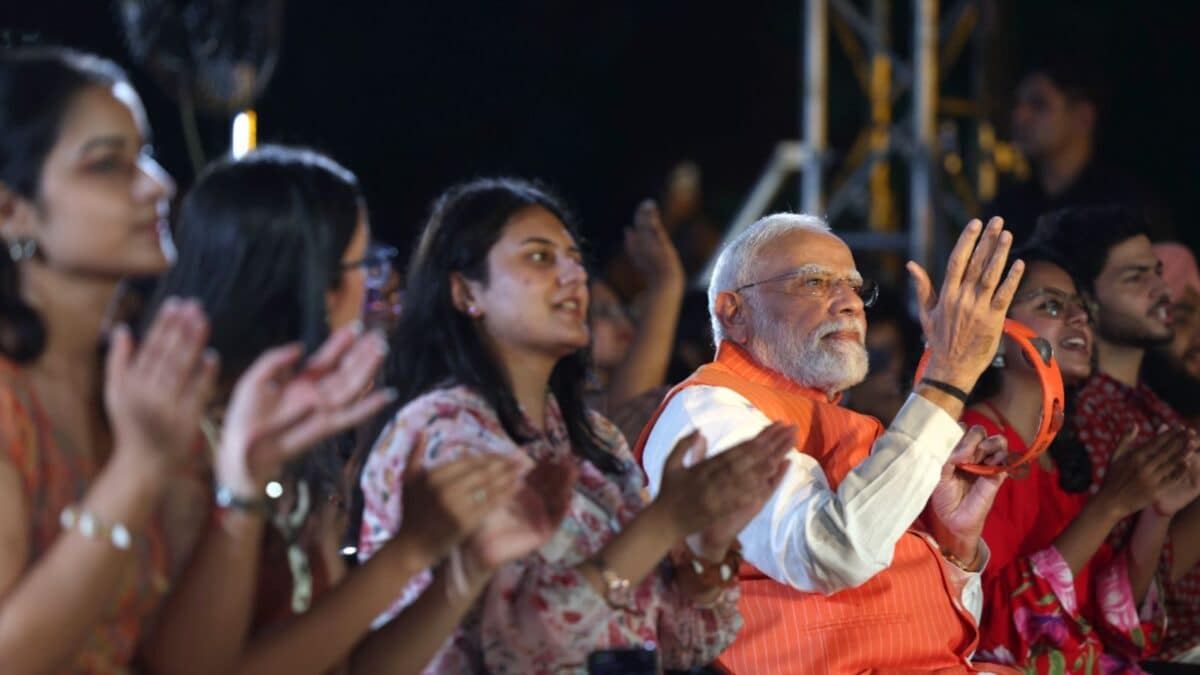
In an unexpected and spirited turn of events in New Delhi, Prime Minister Narendra Modi recently made a headline-grabbing appearance at a unique cultural gathering known as Bhajan Clubbing. The event, held at the Deen Dayal Upadhyaya Park, was organized to commemorate the 110th birth anniversary of Pandit Deendayal Upadhyaya, a revered ideologue and leader of the Bharatiya Jana Sangh. Rather than a traditional, quiet commemorative ceremony, the venue was transformed into a high-energy, concert-style atmosphere that showcased how modern youth are engaging with ancient devotional practices.
As the Prime Minister arrived, he was greeted by an enthusiastic crowd predominantly composed of Gen Z participants. The atmosphere was palpable, characterized by rhythmic clapping, live instrumentation, and communal singing. PM Modi, seemingly at ease in the vibrant setting, sat among the attendees to participate in the proceedings. In a display of genuine engagement, he was seen playing a small, tambourine-like instrument during a rendition of a bhajan dedicated to Lord Ram. It was a scene that bridged the gap between traditional spirituality and the contemporary youth culture that is rapidly evolving in urban India.
Understanding the Bhajan Clubbing Phenomenon
So, what exactly is Bhajan Clubbing, and why is it capturing the attention of the nation’s political elite? At its core, the concept strips away the rigid formality associated with conventional devotional gatherings. Instead, it adopts the aesthetic and energy of a live musical concert. Think professional sound systems, dynamic stage lighting, and skilled bands that reimagine traditional hymns with modern musical arrangements. Crucially, these events are entirely alcohol-free, providing a clean and safe environment for younger generations to express their devotion without the pressures or social hazards associated with traditional nightlife clubs.
This cultural shift is not merely a localized trend in Delhi but a growing movement across major Indian cities. For many, these events provide a way to stay connected to their cultural heritage while embracing a lifestyle that values modern musical expression. It is a unique hybridization of the old and the new, where the sacred meets the secular energy of a stadium show. The rapid adoption of such formats suggests that spirituality in the 21st century can be just as dynamic and electrifying as any global entertainment event.
Reflecting on the significance of the trend, the Prime Minister has previously lauded this movement, most notably during his ‘Mann Ki Baat’ address earlier this year. He observed that the surging interest among the youth for Bhajan Clubbing is a testament to a healthy, forward-looking society. By blending spirituality, deep-rooted culture, and modern lifestyle preferences, these gatherings seem to have found a winning formula that resonates with people who might otherwise feel disconnected from traditional worship settings.
The event served as a poignant reminder that leaders often seek out cultural touchpoints to connect with the populace. Whether through formal addresses or by participating in local community activities, these moments of public presence often signal the direction of cultural discourse. As the nation continues to navigate the complexities of identity in a digital age, it appears that the fusion of traditional music with modern presentation is here to stay, offering a new space where the country can come together, sing, and celebrate its heritage in ways that feel both current and timeless.