
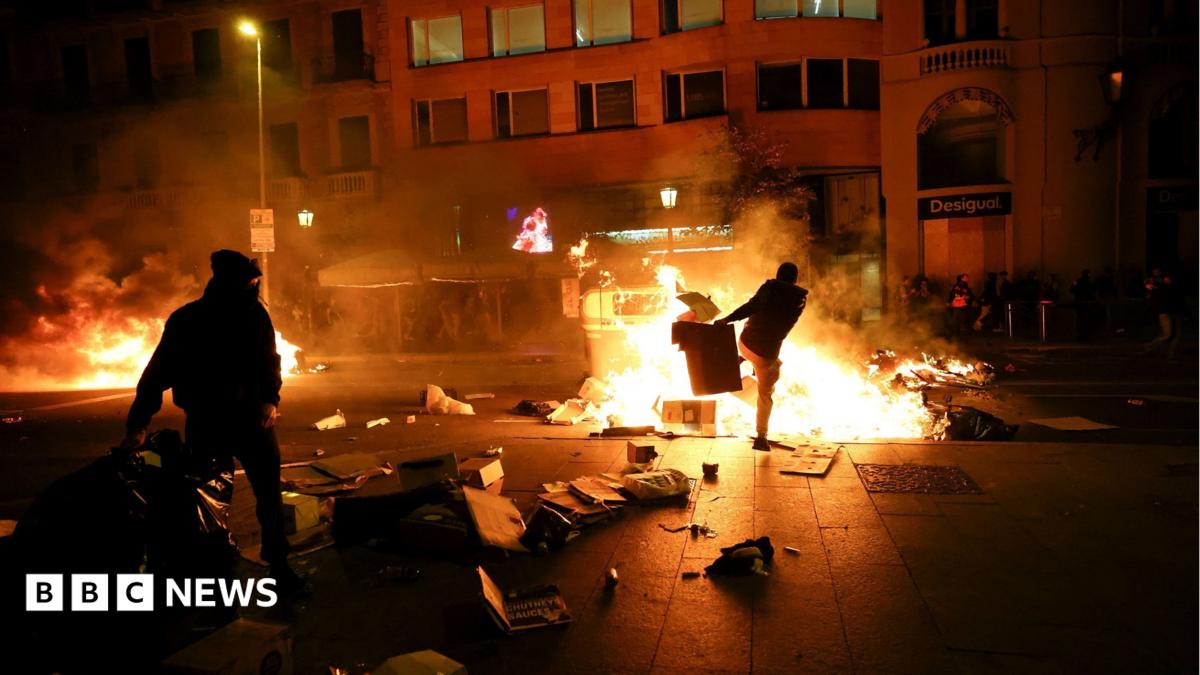
Clashes erupt in Barcelona after thousands join Spain general strike
Introduction & Key Takeaways
Spain recently witnessed its most significant labor disruption in over a decade, as tens of thousands of citizens took to the streets during a massive general strike. This event, driven by a boiling point over affordable housing and the crushing cost of living, serves as a litmus test for the nation ahead of critical upcoming parliamentary elections. As the Spain general strike mobilizes labor unions and frustrated citizens, the political atmosphere has become increasingly polarized, creating a strategic challenge for the current administration.
- Tens of thousands demonstrated in Madrid and Barcelona to protest unsustainable housing costs.
- The strike, the first of its kind in 14 years, reflects deep-seated socioeconomic grievances.
- Political friction is high, with the opposition accusing the government of weaponizing the movement for electoral gain.
- The eviction of a long-term elderly tenant became a symbolic catalyst for the national outcry.
Background & Context
What just happened in Spain is a manifestation of years of compounding economic pressure. While the headlines focus on the visual spectacle of clashes in Barcelona, the root of the movement lies in the daily struggle of the average Spanish household. The spark for this recent unrest was the tragic eviction of 87-year-old Maricarmen Abascal, who was forced from her home of seven decades, eventually passing away in the aftermath. This incident served as a visceral reminder of a broken system, highlighting the lack of protection for vulnerable tenants in a market dominated by soaring rent prices.
Root Cause & Deep Dive Analysis
The core of the issue is a mathematical impossibility for many working-class Spaniards. Currently, a 50-square-meter apartment in Madrid commands an average rent of over 1,100 euros, while the national average gross monthly salary remains around 2,460 euros. When essential costs such as electricity, water, and food are added, the financial burden surpasses recommended affordability thresholds. This systemic failure, where housing consumes nearly half of a household’s income, has pushed the middle and working classes to the brink. For more context on why economic stability is fragile across Europe, one can read further on the housing and wage crisis.
Strategic Implications & Future Impact
The Spain general strike is not merely a labor dispute but a high-stakes political battlefield. With parliamentary elections scheduled for November 29, the timing of these protests has forced a confrontation between the government and the conservative opposition. Prime Minister Pedro Sanchez has attempted to align his administration with the plight of the workers, framing the strike as a defense of collective rights. Conversely, the People’s Party has labeled the movement a political stunt, further deepening the divide in a country where institutional trust is already waning.
The geopolitical and internal stability of the nation depends on how these tensions are managed. If the government fails to implement meaningful housing reform, the likelihood of a right-wing shift in the upcoming election increases significantly. Businesses have already expressed frustration, arguing that the strikes are politically motivated rather than labor-focused, which could stifle economic confidence in the short term.
Conclusion & What to Watch Next
As the nation moves closer to the November 29 polls, all eyes will be on the potential for further industrial action and the government’s response to the protestors’ demands. The current situation suggests that Spain is at a crossroads. Whether the administration can successfully bridge the gap between economic policy and the reality faced by the public will determine the outcome of the election and the future of social cohesion in Spain.