
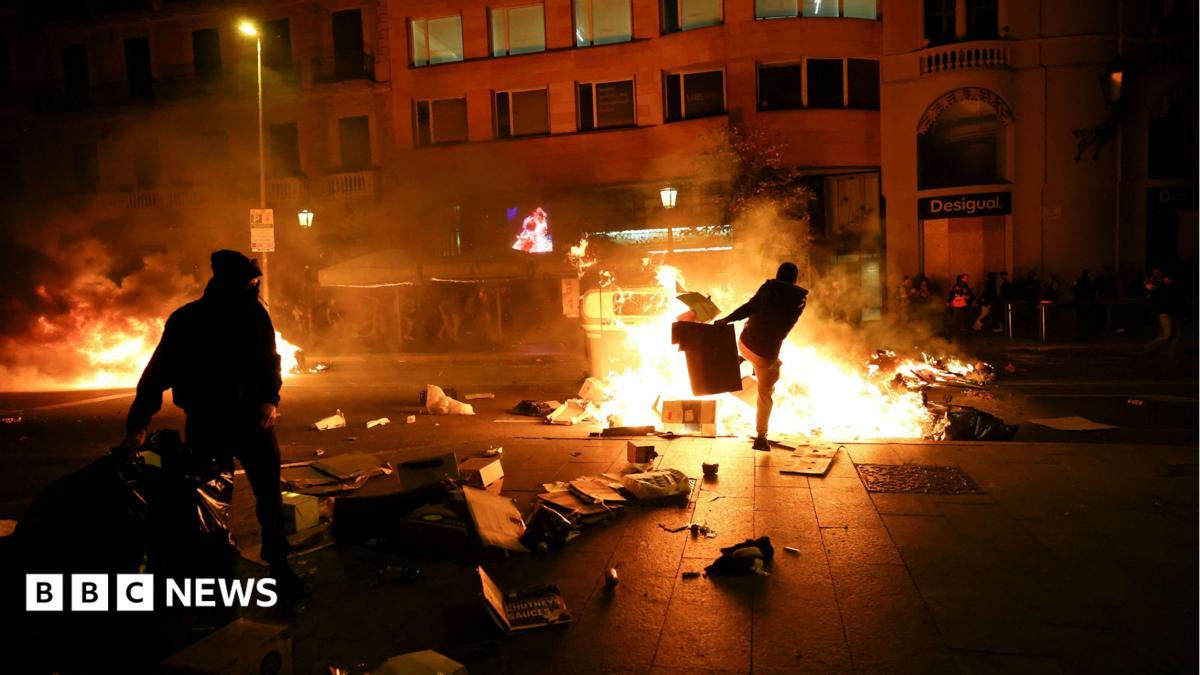
Clashes in Barcelona as thousands join Spain general strike
Introduction & Key Takeaways
Spain recently witnessed its first national general strike in over a decade, as thousands of citizens took to the streets to demand urgent action on housing and the surging cost of living. This Spain general strike marks a pivotal moment in the nation’s contemporary socio-political climate, reflecting deep-seated frustration with the current economic trajectory. As infrastructure faces major disruptions, the event serves as a warning sign for policymakers approaching the upcoming 29 November parliamentary elections.
- Tens of thousands demonstrated in Madrid and Barcelona to protest astronomical rental costs.
- The movement was catalyzed by the tragic eviction of a vulnerable 87-year-old resident.
- The government and opposition are clashing over the legitimacy of the strike, raising questions about political motivation.
- Economic data reveals a massive strain on household budgets, with housing costs frequently exceeding recommended limits.
Background & Context
To understand the current tension, one must look at the structural housing crisis gripping the country. For many years, urban centers like Madrid and Barcelona have seen rental prices skyrocket while stagnant wage growth failed to keep pace. The catalyst for this recent unrest was the heartbreaking case of Maricarmen Abascal, an 87-year-old woman evicted from her long-term apartment, who later passed away. This incident served as a flashpoint for a public already struggling with the daily reality of housing insecurity. For further background on the broader economic pressures currently affecting various regions, you can explore the challenges within the Spanish labor and housing markets.
Root Cause & Deep Dive Analysis
The core of this Spain general strike is not merely about labor rights in a traditional sense, but about the fundamental inability of the average citizen to secure a stable home. Data from property portals confirms that in major cities, renting a modest apartment consumes nearly half of the average gross monthly salary. This far exceeds the standard affordability threshold of 30 percent, which experts typically cite as the maximum for healthy financial management. When basic needs like food, energy, and housing become unsustainable, the resulting civic unrest is often inevitable.
Furthermore, the government’s active encouragement of the strike, contrasted by opposition claims of political weaponization, highlights the deep polarization in Spanish politics. While Prime Minister Pedro Sánchez frames this as a necessary defense of collective worker rights, the People’s Party views the disruption as a strategic distraction ahead of the November election. For more insight into how modern political landscapes are shaped by similar economic and social tensions, it is useful to track how global protest movements have historically influenced government policy during volatile periods.
Strategic Implications & Future Impact
The Spain general strike carries significant weight for the upcoming national vote. With both the industrial sector and public transport experiencing notable shutdowns, the economic impact is clear. Businesses argue that the housing crisis is a systemic issue far beyond their control, while unions and activists contend that the state has abandoned its duty to protect citizens from aggressive market forces. If the current administration fails to present a credible, long-term housing reform package, the electoral consequences could be severe.
The situation also sets a precedent for how future labor actions may be conducted in Europe. By linking labor disputes directly to quality-of-life issues like housing, unions are broadening their appeal to younger demographics who are increasingly alienated from the traditional homeownership ladder. The reliance on this strategy suggests that we may see more frequent, politically charged demonstrations if the cost-of-living crisis remains unaddressed.
Conclusion & What to Watch Next
As Spain approaches its November 29 elections, all eyes will be on whether this surge in public sentiment forces a shift in political rhetoric. The disruption has undoubtedly placed housing at the center of the national conversation, leaving politicians little choice but to address the issue head-on. Watch for potential changes in rent control legislation or tax incentives for first-time buyers in the coming months, as parties scramble to gain favor with an increasingly vocal and aggrieved electorate.