Pune bore witness to a significant strategic review this week as Chief of the Army Staff (COAS) General Dhiraj Seth arrived at the headquarters of the Indian Army’s Southern Command. His crucial visit, laden with implications for national security, underscored a forceful commitment to fortifying the nation’s defenses and shaping a truly Future-Ready Army. General Seth’s agenda was clear: to meticulously assess operational preparedness, champion technology absorption, and ensure that every soldier is primed for the complex, ever-evolving landscape of modern warfare.
The Southern Command, a vital strategic asset, presented its detailed operational insights to General Seth. Lieutenant General Rajesh Pushkar, General Officer Commanding-in-Chief, meticulously briefed the COAS on the prevailing operational environment, outlining the command’s strategic posture and the array of training and capability enhancement measures currently underway. This comprehensive overview delved into initiatives designed to sharpen combat effectiveness, ensuring that personnel remain at the absolute apex of readiness against any emerging challenge.
Forging a Technologically Empowered, Future-Ready Army
During his candid interactions with commanders and troops, General Seth did not mince words. He emphasized the paramount importance of maintaining an exceptionally high level of operational readiness, a state that demands continuous adaptation to the kaleidoscopic array of emerging threats and groundbreaking technologies. The General articulated a vision where realistic and relentlessly demanding training regimes converge with the swift absorption of new technological advancements. This includes the imperative for a regular, precise refinement of warfighting skills, Techniques, Tactics, and Procedures (TTPs) to maintain a decisive edge.
Modern warfare, General Seth acknowledged, transcends traditional battlefields. It now encompasses a multi-domain environment where cyber warfare, artificial intelligence, drone technology, and advanced data analytics are not futuristic concepts but present-day realities. The Indian Army’s embrace of these innovations is not merely an upgrade; it’s a fundamental re-imagination of its operational doctrine. Such technological integration promises to transform India’s ground forces into an agile, data-driven entity capable of precise, decisive action. For instance, enhanced surveillance capabilities, predictive analytics for logistics, and advanced communication networks are no longer luxuries but necessities in safeguarding the nation’s expansive borders, particularly in light of ongoing geopolitical dynamics and high-level discussions on border de-escalation.
The Imperative of Jointness and Indigenous Prowess
A cornerstone of General Seth’s strategic discourse was the fervent call for greater jointness across all branches of the armed forces – Army, Navy, and Air Force. This unified approach, he argued, is not just about coordination but about seamless integration of capabilities, resources, and command structures to maximize synergistic effect. A truly agile and technologically empowered India’s ground forces capable of responding effectively to the multifaceted security challenges of tomorrow will depend heavily on this cohesive operational philosophy.
Equally critical is the relentless focus on indigenous capability development. General Seth underscored the ‘Make in India’ initiative within the defense sector, advocating for self-reliance in military hardware, software, and critical technologies. This thrust towards indigenization not only boosts national industry but also secures strategic autonomy, reducing dependence on foreign suppliers and ensuring that future defense requirements are met with bespoke, cutting-edge solutions developed on home soil. The Ministry of Defence, India (defense initiatives) has consistently emphasized this critical aspect.
Honoring Our Pillars: The Enduring Bond with Veterans
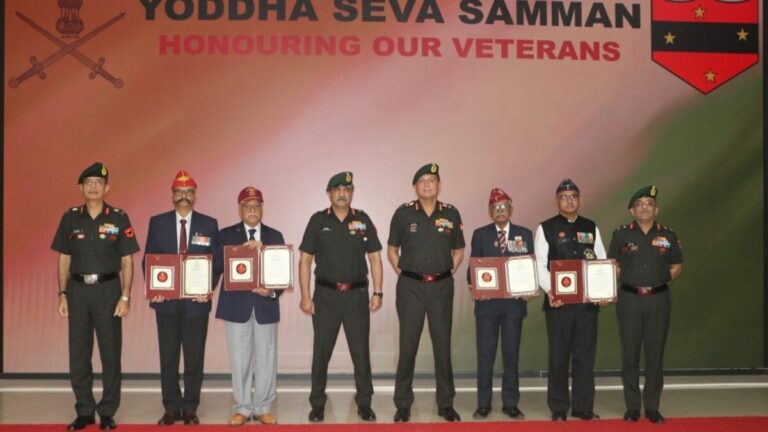
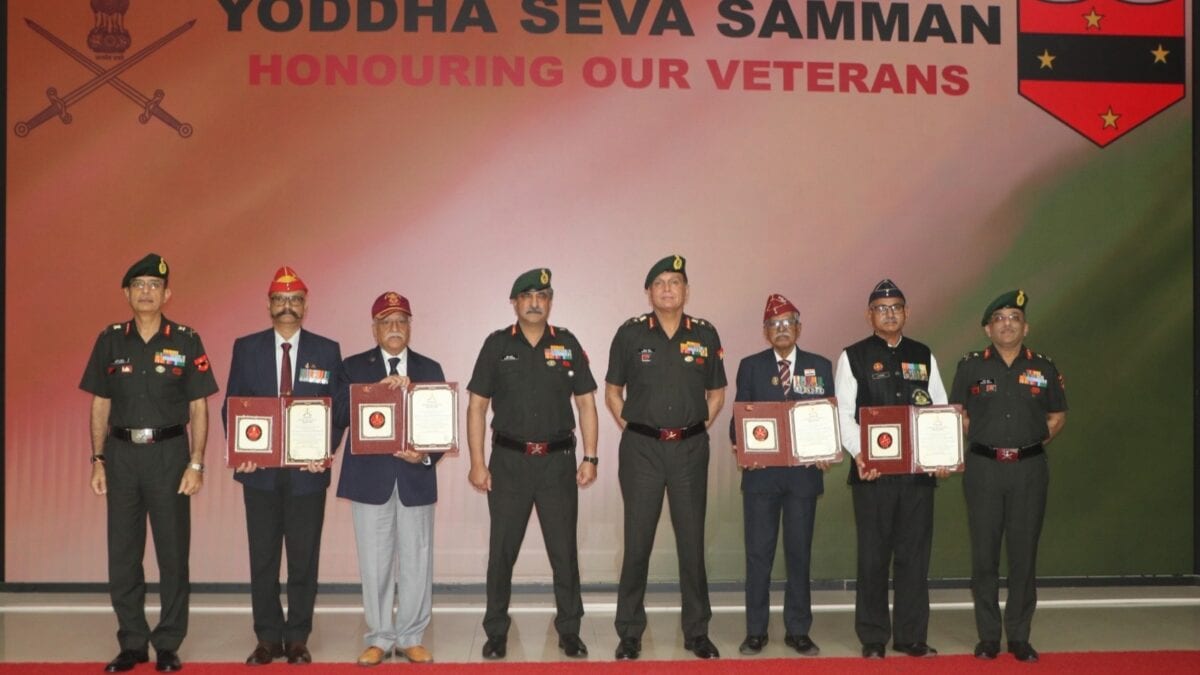
Beyond the strategic and technological deliberations, General Seth’s visit included a profoundly human element: a special focus on the Army’s enduring relationship with its veterans. In a poignant ceremony, he felicitated distinguished veterans with the Yoddha Seva Samman. This prestigious honor acknowledged their continued, invaluable contributions to society across diverse fields, including veteran welfare, youth empowerment, environmental conservation, and broader community service.
These veterans, even after hanging up their uniforms, remain vital pillars of the nation. Their continued commitment exemplifies a profound sense of duty that transcends active service. The Army Chief passionately articulated that the bond between the Army and its veterans is not merely transactional; it is a lifelong commitment, a testament to shared sacrifice and an unwavering dedication to nation-building. Such recognition reinforces the military’s deep-seated values and its respect for those who have served.
General Dhiraj Seth’s visit to Pune underscores a transformative phase for the Indian Army. It is a period defined by ambitious modernization, a concerted push for inter-service joint operations, and a proactive adaptation of training and operational doctrines to meet the complex character of future warfare head-on. For the Southern Command, this strategic review serves as a powerful opportunity to fine-tune its preparedness and reinforce the indelible importance of maintaining an operational edge through continuous training, technology adoption, innovation, and robust indigenous capability development. The journey to a truly Future-Ready Army is not just a vision; it is a tangible, ongoing mission.
About the Author