Sikh activist Parmjit Singh Pamma has vehemently rebuffed a series of death threats, allegedly conveyed through a recently leaked audio recording. His unwavering defiance emerges amidst heightened global scrutiny surrounding the audacious assassination of Hardeep Singh Nijjar, a prominent Khalistani figure in Canada. Pamma, speaking exclusively, asserted that he remains entirely unbowed by these attempts at intimidation, boldly challenging those he believes are behind the veiled warnings and dismissing their tactics as nothing more than an act of profound cowardice. This development adds another intricate layer to the already complex and politically charged narrative surrounding the Nijjar Murder Case, an event that has sent diplomatic ripples across continents.
The contentious audio recording, reportedly dated July 12, explicitly targeted Parmjit Singh Pamma, articulating stark warnings and threats against his life. Rather than retreating into silence, Pamma chose to confront the allegations head-on, publicly stating that such efforts to terrorize him would prove utterly futile. He didn’t mince words, lambasting the purported extortion tactics as a pitiable display of weakness, diametrically opposed to any genuine show of force or conviction. This forthright rejection underscores a long-standing pattern of defiance observed in figures associated with the Khalistan movement, who often present themselves as champions against perceived oppression. Pamma’s outspokenness aims to dismantle the psychological impact intended by such threats, asserting moral superiority over his unidentified adversaries.
A Martyr’s Legacy: Pamma’s Solemn Tribute to Nijjar
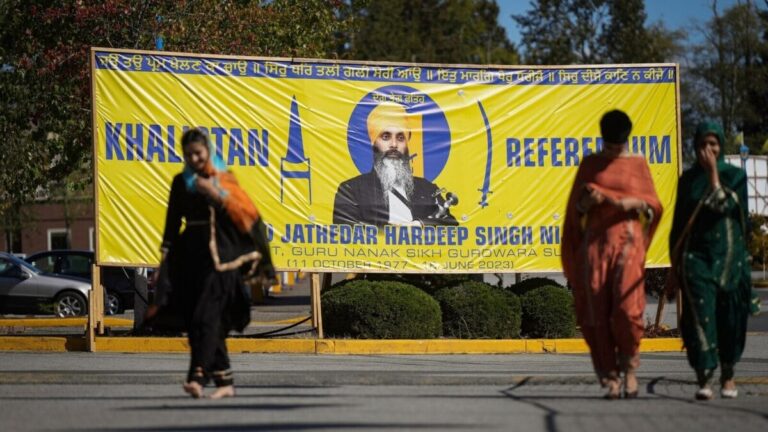
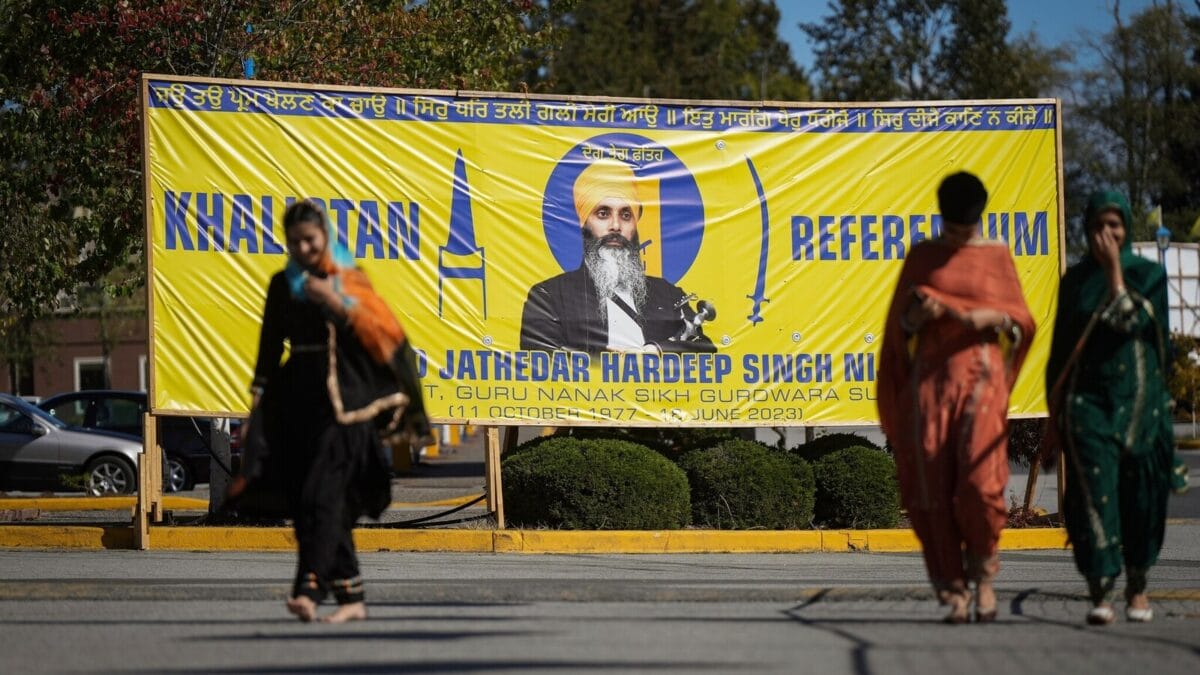
In a poignant portion of his public address, Parmjit Singh Pamma delivered a heartfelt tribute to the late Hardeep Singh Nijjar, whose brutal killing in June 2023 dramatically escalated tensions between India and Canada. Pamma eulogized Nijjar as a revered “martyr” for the Sikh community and a symbol for the aspiration of Khalsa Raj, a sovereign Sikh state. This rhetoric is deeply embedded in the historical grievances and political aspirations that fuel certain segments of the Sikh diaspora. Furthermore, Pamma issued a stern admonition to those he holds accountable for Nijjar’s untimely demise, asserting unequivocally that their actions have not only brought indelible dishonour upon themselves but have also cast a shadow over their families for generations to come. He resolutely stated that any threats, particularly those with arbitrary deadlines, would utterly fail to compel him to withdraw from his activism. On the contrary, he prophesied that individuals targeted by “international investigations” would ultimately face the grim consequences of their deeds. The reference to “international investigations” hints at the ongoing diplomatic and intelligence probes that have followed Nijjar’s death, elevating the stakes of this high-profile case.
The Weight of Allegations Against Parmjit Singh Pamma
Beyond the current exchange of threats and counter-challenges, the figure of Parmjit Singh Pamma carries a significant dossier of allegations from Indian authorities. According to highly placed Indian intelligence sources, Pamma has been formally designated a terrorist under India’s stringent Unlawful Activities (Prevention) Act (UAPA). This legal classification marks him as a high-priority target and places him firmly on the National Investigation Agency’s (NIA) most-wanted list, a testament to the gravity with which his alleged activities are viewed.
Pamma’s purported engagement in anti-India activities from foreign soil stretches back decades, with sources tracing his involvement to Pakistan in the 1990s. During that tumultuous period, he reportedly commenced his journey as a fundraiser for the Babbar Khalsa International (BKI), an organization proscribed as a terrorist entity by several nations, operating under the patronage of its then-leader, Wadhawa Singh. This early association highlights a deep-rooted connection to militant Sikh separatist movements.
Over time, Pamma’s operational loyalties reportedly shifted. He transitioned to the Khalistan Tiger Force (KTF), aligning himself with prominent figures like Jagtar Singh Tara and, crucially, the late Hardeep Singh Nijjar, who founded the KTF. This trajectory paints a picture of a militant operative deeply embedded within the network of groups advocating for an independent Khalistan. Security agencies in India have ascribed responsibility to Pamma for a spate of significant violent incidents within Punjab, the most notable being the alleged orchestration of the 2009 assassination of Rashtriya Sikh Sangat head Rulda Singh. The killing of a prominent leader of a Hindu nationalist-aligned Sikh organization was a highly provocative act. Furthermore, he stands accused of masterminding the twin bomb blasts that rocked Patiala and Ambala in 2010, incidents that caused widespread panic and casualties. These detailed accusations underscore the formidable legal and security challenges Pamma faces, irrespective of the ongoing threats against him. The Khalistan movement, a contentious and often violent separatist ideology, seeks to establish a sovereign state for Sikhs in their historical homeland of Punjab. Its proponents operate from various global locations, frequently drawing the ire of Indian authorities who view such activities as a direct threat to national integrity. For more details on the context surrounding such incidents, one might refer to a previous report: Nijjar Killing: News18 Raised Gang-War Theory In 2024. Goldy Brar Claim Revives It.
Defiance Amidst International Scrutiny
The latest comments from Parmjit Singh Pamma serve as a potent refusal to cower under alleged threats, turning the tables on his detractors with a counter-challenge. His unwavering posture not only rejects the premise of intimidation but also emphatically reaffirms his commitment to the broader Khalistan-linked dispute, a cause for which Hardeep Singh Nijjar, in his view, gave his life. The ongoing investigations into Nijjar’s death, particularly with the involvement of international intelligence bodies, have brought an unprecedented level of attention to these separatist circles and their operations abroad. Pamma’s public statements are not merely personal defiance; they are a calculated maneuver within a larger geopolitical chessboard, where allegiances are fluid and stakes are astronomically high.
The Broader Geopolitical Ripple Effect
The saga surrounding Parmjit Singh Pamma and the deeper implications of the Nijjar murder case are not confined to the individual actors or the immediate threats. This volatile situation continues to exert significant pressure on diplomatic relations between India and Canada, highlighting the complexities of dealing with transnational activism and alleged terrorism. The accusations leveled by India against Canada regarding insufficient action against Khalistani elements operating on its soil have fueled a diplomatic firestorm, leading to expulsions of diplomats and a chilling effect on bilateral ties. Meanwhile, the legal framework of UAPA, under which Pamma is designated, represents India’s firm stance against individuals perceived to be undermining national security from beyond its borders. The global Sikh diaspora watches these developments keenly, divided between those who advocate for a separate homeland and those who seek integration and peace within their resident countries. The narrative of threats, defiance, and accusations underscores a profound ideological clash with tangible, real-world consequences. For context on such diplomatic intricacies, a look at broader international diplomacy might prove insightful.
In conclusion, Parmjit Singh Pamma’s outspoken rejection of death threats signifies a critical juncture in the ongoing, multifaceted narrative surrounding the Nijjar Murder Case and the broader Khalistan movement. His defiant stance, coupled with the serious allegations leveled against him by Indian intelligence, illuminates the precarious and often dangerous landscape inhabited by individuals deeply entrenched in separatist ideologies. As international investigations continue to unfurl the layers of this complex saga, Pamma’s insistence on confronting his intimidators head-on promises further revelations and continued geopolitical ramifications. The world watches, gripped by the unfolding drama, as the interplay of activism, alleged terrorism, and sovereign claims shapes the future of these contentious issues.
About the Author