
Devastating European wildfires in maps – and how they’re being tackled
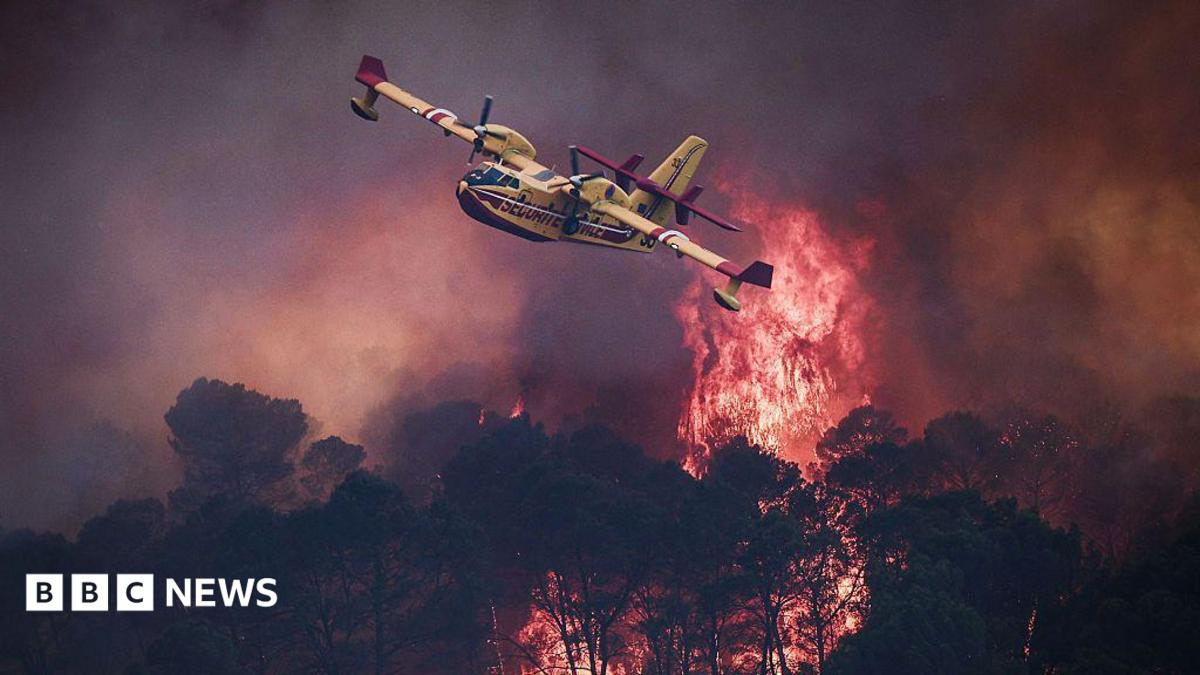
A relentless inferno rages across Western Europe, devastating vast swathes of land in France and Spain. These European wildfires have already forced more than 300,000 distraught residents from their homes, painting a grim picture of environmental catastrophe.
France, in particular, has endured its most destructive year for land burnt this entire century, a harrowing testament to the sheer scale of the blazes. Meanwhile, officials in the Spanish capital, Madrid, grimly describe the ongoing fires as the worst the region has ever witnessed. This calamity follows a summer of unprecedented heatwaves, with temperatures routinely soaring past 40 degrees Celsius (104F) across much of the continent, baking the landscape to a tinder-dry crisp.
The Gironde region, near the famed French city of Bordeaux, remains a critical hotspot. Here, over 200,000 individuals have been displaced as the conflagration tears through picturesque forests and fields. In a mere four days, an astounding 162 square miles (420 sq km) — an area roughly four times the size of Paris — has been consumed. The fire, now a mere nine miles (15km) from Bordeaux’s southern edge, threatens not only homes but also sensitive military and industrial facilities, including sites associated with ballistic missiles and hazardous chemical processing.
Battling the European Wildfires: A Herculian Effort
The sheer intensity of these blazes has even spawned a terrifying natural phenomenon: pyrocumulonimbus clouds. These “fire thunderstorms,” a rare and unpredictable weather event, form when the immense heat from a wildfire forces air, smoke, ash, and water vapor rapidly upwards. As this column ascends, it cools, condensing into a massive cloud. If the conditions are right, this can evolve into a cumulonimbus cloud capable of generating its own lightning, which, disturbingly, can ignite new fires. Such extreme conditions make containment efforts monumentally challenging.
French firefighting teams are deploying every available resource. This includes planes laden with fire retardant, alongside specialized aircraft like the Canadair, which can deftly scoop 6,000 liters of water from lakes or the sea in a mere 12 seconds before unleashing it directly onto the flames. On particularly hazardous days, these aircraft patrol high-risk zones preemptively, ready to strike within minutes of a new sighting. Ground crews work in conjunction, establishing critical firebreaks with bulldozers and mechanical shovels – clearing vegetation to starve the advancing fire of fuel.
In the Gironde region alone, a formidable force of approximately 2,500 firefighters, 1,500 military personnel, and 1,200 police and gendarmes are tirelessly engaged in this desperate struggle against the European wildfires. Spanish teams are employing similar, valiant strategies, battling what a government delegate in Madrid has called “undoubtedly the largest fire in the history of the Madrid region.”
Experts widely agree that this summer’s infernos are amplified by the hotter, drier conditions directly attributable to global environmental shifts. These altered patterns enable fires to spread faster and burn with greater ferocity. As a high-pressure system promises continued dry, settled, and increasingly hot weather, many on the ground in both Spain and France brace themselves for what could be an even more dire week ahead.