
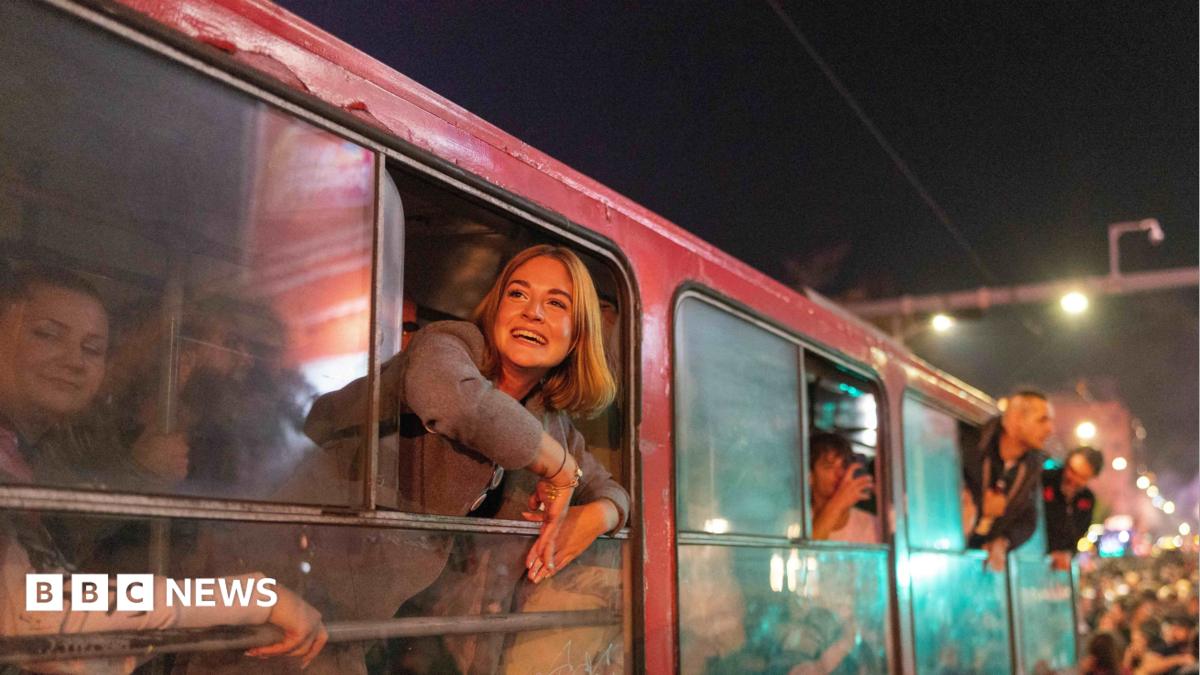
Elation across Serbia after veteran ruler Vučić concedes to student-led protest movement
Introduction & Key Takeaways
In a historic political shift that has reverberated across the Balkans, Serbia has witnessed the unexpected concession of long-standing leader Aleksandar Vučić. The recent parliamentary election has concluded with a clear mandate for change, driven by a grassroots, student-led protest movement. This Serbia election result marks the end of an era for the Serbian Progressive Party (SNS) and signals a potential departure from the populist trajectory that has defined the nation for nearly a decade.
- Aleksandar Vučić conceded defeat following record-high voter turnout.
- The uprising was sparked by systemic negligence, specifically the fatal Novi Sad train station collapse.
- A diverse, non-traditional coalition of students, academics, and professionals, known as the Student List, secured victory.
- The new political force aims to dismantle institutional corruption and restore media independence.
Background & Context
The events leading up to this political earthquake began with a tragedy in the city of Novi Sad. The collapse of a train station canopy, which claimed the lives of sixteen people, became a potent symbol for the electorate, reflecting broader grievances regarding state-level negligence and deep-rooted corruption. For two years, citizens had marched through the streets, demanding accountability. This democratic transition represents the culmination of that persistent public pressure.
Root Cause & Deep Dive Analysis
Why did the Serbia election produce such a definitive outcome? Analysts point to the rise of a horizontal political structure. Unlike traditional parties, the Student List lacked a singular, top-down hierarchy. Instead, it united doctors, athletes, and intellectuals under a common manifesto of transparency. By focusing on purging officials involved in the misuse of public funds and calling for the liberation of the state broadcaster from political control, the movement tapped into the frustrations of a populace exhausted by perceived cronyism. The record turnout, reaching nearly 65 percent by late afternoon, confirms that the appetite for reform was not limited to urban centers but reflected a national consensus.
Strategic Implications & Future Impact
The geopolitical ramifications are significant. Vučić had maintained a complex balancing act, pursuing European Union candidacy while refusing to align fully with Western sanctions against Russia. A shift in government could potentially recalibrate Belgrade’s foreign policy, leaning closer to European democratic standards. The international community, often cautious regarding the stability of the Western Balkans, will be watching to see how this new leadership manages the state economy and judicial reforms. Furthermore, this victory serves as a case study for grassroots movements worldwide, demonstrating that even entrenched populism can be successfully challenged through civic engagement.
Conclusion & What to Watch Next
As the initial elation settles, the real work for the victors begins. The Serbia election has undeniably cleared a path for a new political reality, but the path toward institutional stabilization is fraught with challenges. The Student List must now navigate the intricacies of governance, move beyond the momentum of protest, and translate their anti-corruption platform into actionable legislation. Observers should keep a close eye on the transition process, specifically regarding how the departing administration handles the transfer of power and whether the new coalition can maintain its unity amidst the complexities of legislative negotiation.