
Will Netanyahu lose this time?
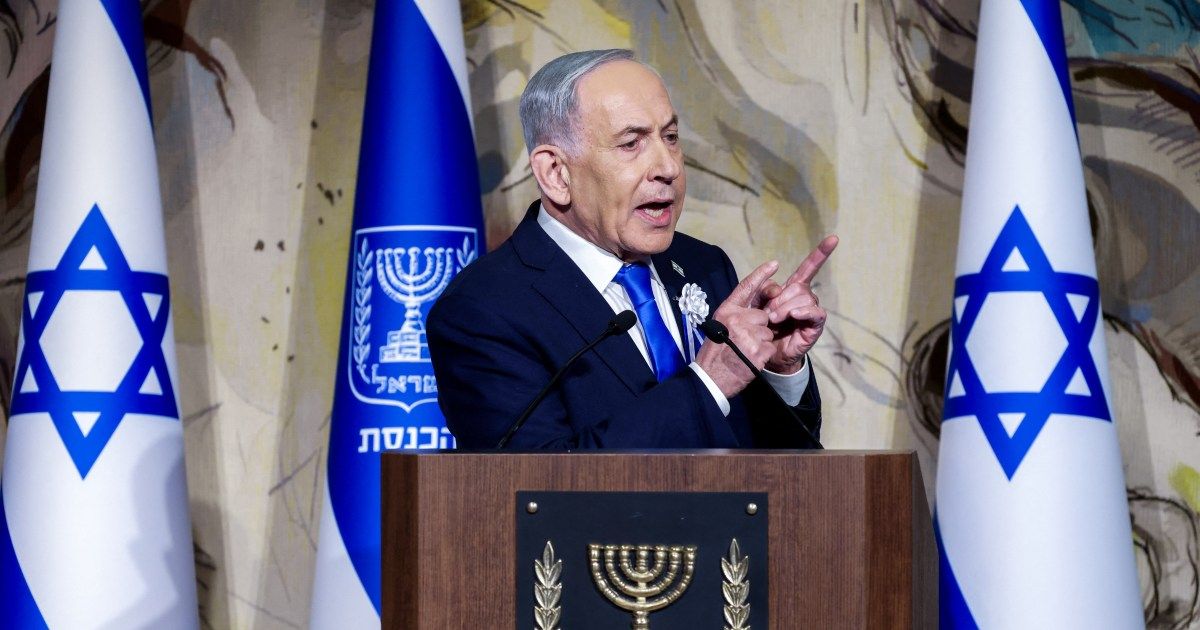
Introduction & Key Takeaways
As Israel enters a period of profound legislative uncertainty, the focus of the international community remains fixed on the survival of its longest serving prime minister. Benjamin Netanyahu now faces a precarious reality that challenges his legendary ability to navigate political crises. Following recent electoral results, his bloc failed to secure a parliamentary majority, handing the initiative to his rival, Gadi Eisenkot. This analysis explores the strategic maneuvers employed by Netanyahu to retain power as he confronts a potential end to his lengthy tenure.
- Netanyahu lacks the parliamentary majority needed to form a government, currently sitting at 53 seats.
- The political situation is existential for the prime minister, as he faces an active corruption trial and calls for a state inquiry into the October 7 security failures.
- Opposition leader Gadi Eisenkot has 42 days to negotiate a coalition, a timeline that Netanyahu is actively attempting to disrupt through various political levers.
Background & Context: What Just Happened?
The Israeli Knesset, the nation’s parliament, recently opened its doors following a contentious election cycle. The numbers are statistically unforgiving for the incumbent, as 67 members of the new Knesset recommended Gadi Eisenkot, the leader of the Yashar party, to lead the government. Netanyahu, who has historically utilized his position to navigate legal challenges and maintain public support, now finds himself in a position of defensive isolation. For a deeper look at the volatility of regional politics, one might examine how volatile security environments continue to shape the Middle Eastern landscape.
Root Cause & Deep Dive Analysis: Why Did This Happen?
The struggle for Benjamin Netanyahu is deeply rooted in the intersection of personal legal jeopardy and national policy. His corruption trial, ongoing since May 2020, looms large over his political calculations. A sitting prime minister possesses significant leverage, including the ability to influence justice proceedings and stall hearings, which would vanish upon his exit from office. Consequently, the prime ministerial chair has transformed from a political role into a personal lifeline. By resisting term limits and stalling a formal inquiry into the October 7 attacks, he hopes to protect his legacy and his freedom.
To stall the formation of an alternative government, Netanyahu is deploying a sophisticated three-part strategy. First, he advocates for a national unity government while excluding Arab representation, effectively attempting to split his opposition. Second, he utilizes incendiary rhetoric to frame his opponents as illegitimate, specifically targeting parties that represent 21 percent of the Israeli population. Third, he allegedly pushes for geopolitical escalation, betting that a renewed regional conflict would force an emergency government and prevent a political transition. While these strategies are designed to buy time, they face internal and international resistance, including signals from the United States that a prolonged war is not the preferred path.
Strategic Implications & Future Impact
The implications of this standoff extend beyond the walls of the Knesset. If Netanyahu succeeds in dragging Israel toward another election, the seventh since 2019, he risks deepening the societal fractures that already divide the electorate. For an understanding of how institutional shifts affect local stability, consider the broader lessons found in studies of parliamentary democracy and executive power. The current path taken by Eisenkot involves complex compromises, such as navigating the demands of Haredi parties regarding military service exemptions, which remain a flashpoint in Israeli society.
Should the current administration fall, the transition will likely signal a shift away from the polarizing policies that defined the latter half of the Netanyahu era. However, the opposition must resolve its own internal contradictions, as parties in the Eisenkot bloc disagree on core issues like minority government viability and the role of Arab-Israeli lawmakers in a governing coalition.
Conclusion & What to Watch Next
The next 42 days will be the most consequential for Benjamin Netanyahu in his three-decade career. The success of the opposition hinges on whether they can form a functional coalition despite their disparate ideological origins. As the clock ticks down, the potential for civil unrest grows, reminiscent of the volatile atmosphere that preceded the historic political shifts of the 1990s. Observers must watch for any signs of fracturing within the Likud party, which currently remains loyal but may reconsider its position as the prospects for a viable Netanyahu-led government diminish. The survival of the state, in the eyes of many voters, now depends on whether the nation can move past its current impasse toward a stable, inclusive governance model.