
Firefighters battle wildfire as tens of thousands evacuated near Bordeaux
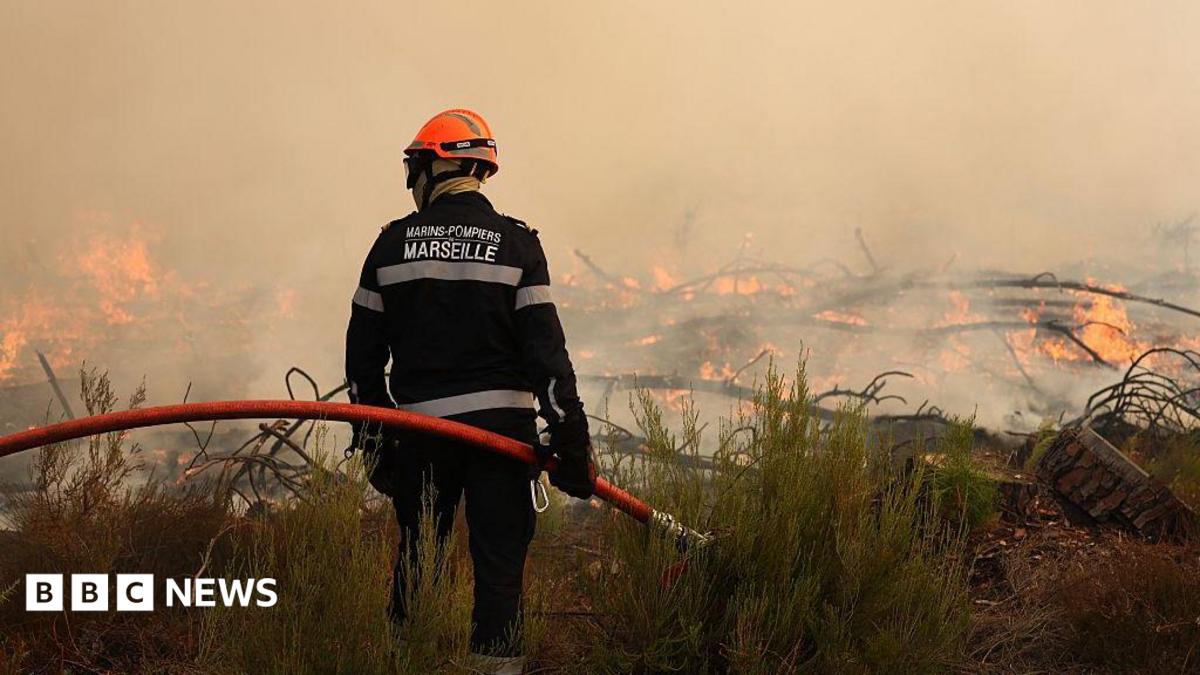
The picturesque landscapes surrounding Bordeaux have been consumed by a raging inferno, as firefighters grapple with colossal Bordeaux wildfires that have forced tens of thousands to flee their homes. This past week has seen entire villages evacuated, vineyards threatened, and communities scrambling for safety amidst one of France’s most significant forest fires since World War Two.
France’s Interior Minister, Laurent Nuñez, starkly described the situation as “very unfavourable,” noting the fire’s “erratic” movement towards Bordeaux. Though officials initially downplayed immediate evacuation of the city itself, the urgency for surrounding areas escalated dramatically. Overnight into Sunday, approximately 55,000 residents from the famed Gironde wine region were rapidly displaced, leaving behind cherished properties and livelihoods.
Battling Unmanageable Bordeaux Wildfires
Across the continent, a grim picture unfolds: over 330,000 individuals have been evacuated in France and Spain alone. France, in particular, bears a heavy scar, with 42,000 hectares incinerated in the south-west in a single week – contributing to a staggering 98,000 hectares burnt nationwide since the year began. Captain Nicolas Braz, a leader in the colossal firefighting operation, lamented the blaze’s terrifying autonomy, stating it had generated “its own winds—complete with whirlwinds,” rendering it “erratic and unmanageable.”
In the beleaguered coastal town of Le Porge, where more than 150 homes lie in ruins, residents have courageously established an impromptu volunteer network. Nathalie Augonnet, one such volunteer, expressed profound devastation for the town’s forests and wildlife. Yet, she emphasized, “Right now, we’re focused on taking action… The difficult part will come afterwards, during the reconstruction.”
The crisis isn’t confined to France. Spain is wrestling with its own unprecedented blazes. Over 90,000 people have evacuated regions around Madrid and Ávila, with Minister for Ecological Transition Sara Aagesen reporting 77,000 hectares affected. The Ávila fire, she declared, stands as the largest in Spain’s recent memory. Residents like Olga Congacha, 50, recounted the panic of hastily fleeing her village near Madrid, returning only briefly to a home shrouded in ash.
Even tourists in Madrid have reported the acrid smell of smoke permeating the air, a stark reminder of the widespread devastation. A new front erupted near Valencia, where regional President Juanfran Pérez Llorca admitted the fire was “beyond our capacity to extinguish.” Conditions were expected to worsen, with high temperatures and low humidity fueling the inferno.
Tragically, the human cost is mounting. One civilian perished in Valencia, following the earlier deaths of two brave firefighters battling the Bordeaux wildfires in France. Prime Minister Pedro Sanchez of Spain, visiting a ravaged area west of Madrid, spoke of “difficult hours ahead” but also noted “positive” signs of containment. He stressed the urgent need for “a major public pact on the climate emergency,” a sentiment echoed globally as nations grapple with increasingly severe weather patterns. For more information on broader climate concerns, visit the European Environment Agency.
Emergency services are stretched thin. In France’s Gironde region, a combined force of 2,500 firefighters, 1,500 military personnel, and nearly 1,200 police and gendarmes are coordinating evacuations and rescue efforts. The intensity of the fires even impacted daily life dramatically: the A63 motorway, a crucial link to Spain, saw a 60km section closed. Bordeaux Airport experienced significant flight delays and cancellations, as air traffic control restrictions were implemented to aid emergency operations. Even the final stage of the prestigious Tour de France was shortened, enabling security forces to join the firefighting battalions. President Emmanuel Macron vowed that France would “rebuild,” assuring citizens his government would “be there for as long as is needed.”