
How a Democrat in Michigan rocked the party days before the US midterms
Introduction & Key Takeaways
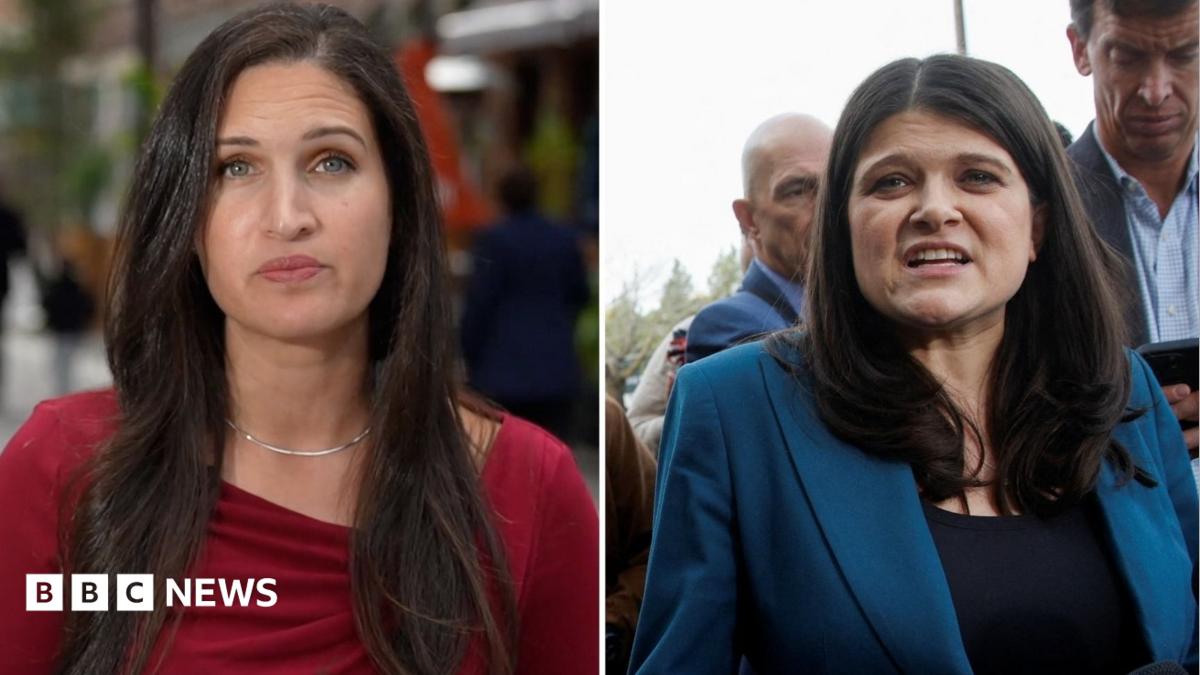
In a political development that has stunned observers, Haley Stevens, a prominent Democratic congresswoman, recently delivered a significant blow to her party. Just days before the pivotal US midterms, Stevens made a surprise appearance to endorse Mike Rogers, the Republican Senate candidate in Michigan. This act of political defiance, opting for a cross-party endorsement over her fellow Democratic nominee, Abdul El-Sayed, signals deep fractures within the party infrastructure as the nation heads to the polls. The Haley Stevens endorsement serves as a case study in how individual candidate strategy can clash with party loyalty in modern American politics.
Key Takeaways:
- Haley Stevens publicly endorsed Republican Mike Rogers in a high-stakes Michigan Senate race.
- The move undermines the Democratic party unity narrative during the final stretch of the midterms.
- The decision highlights broader ideological tensions and the volatility of current election cycles.
- Internal party dynamics are increasingly shifting away from traditional solidarity in favor of localized, individual political calculations.
Background & Context (What Just Happened?)
The political landscape of Michigan has long been a bellwether for national trends, yet this latest event marks an unprecedented departure from standard partisan behavior. On a Sunday leading up to the election, Stevens, a sitting representative known for her influence in the state, appeared alongside Rogers to offer her support. This event was not merely a subtle nod of approval, but a public, televised demonstration that caught the DNC establishment off guard. For context, the race for the Senate seat is exceptionally tight, and every percentage point is vital for both parties. As reported in recent coverage of party tensions, the backlash against such moves can be immediate and severe.
Root Cause & Deep Dive Analysis (Why Did This Happen?)
Why would a seasoned politician risk her standing within her own caucus? To understand the root cause, one must look at the shifting ideological landscape. The Democratic Party, like many modern institutions, is struggling to reconcile its progressive wing with moderate members who feel increasingly alienated by the party platform. Haley Stevens likely perceives her district, and the broader Michigan electorate, as leaning toward a more pragmatic or moderate stance, which may be at odds with the current nominee, Abdul El-Sayed. This behavior reflects a trend where politicians are prioritizing their survival and personal political brand over the collective party identity. This phenomenon is similar to the challenges observed in other political landscapes, such as historical election shifts where internal party conflict often precedes major power realignments.
Strategic Implications & Future Impact (What Does This Mean Globally?)
The strategic implications of this endorsement are far-reaching. By breaking ranks, Stevens has effectively weakened the Democratic “united front” that is typically essential for driving voter turnout. If voters perceive that even the party insiders are skeptical of their own nominee, it provides an opening for Republican messaging to capitalize on the chaos. Furthermore, this move forces voters in Michigan to reconsider their traditional voting patterns. In a polarized climate, such public displays of bipartisanship, whether genuine or strategic, can influence undecided voters, potentially tipping the scales in a race that is decided by the thinnest of margins. The volatility of the 2026 election cycle suggests that we are witnessing a transition period where party labels mean less than the specific alignment of a candidate with their local constituency.
Conclusion & What to Watch Next
As the final hours before the midterms approach, all eyes remain on the Michigan Senate race. The ramifications of the Haley Stevens decision will be debated long after the final votes are tallied. Analysts are questioning whether this is an isolated incident or the beginning of a broader trend where congresspeople act as free agents in the electoral process. Observers should continue to monitor local polling data and the intensity of the backlash from Democratic leadership. As citizens prepare to cast their ballots, they must weigh the importance of party platform continuity against the reality of individual political decision-making. The future of party politics in the US may hinge on whether these cracks in the foundation are repaired or if they lead to an entirely new political landscape.