
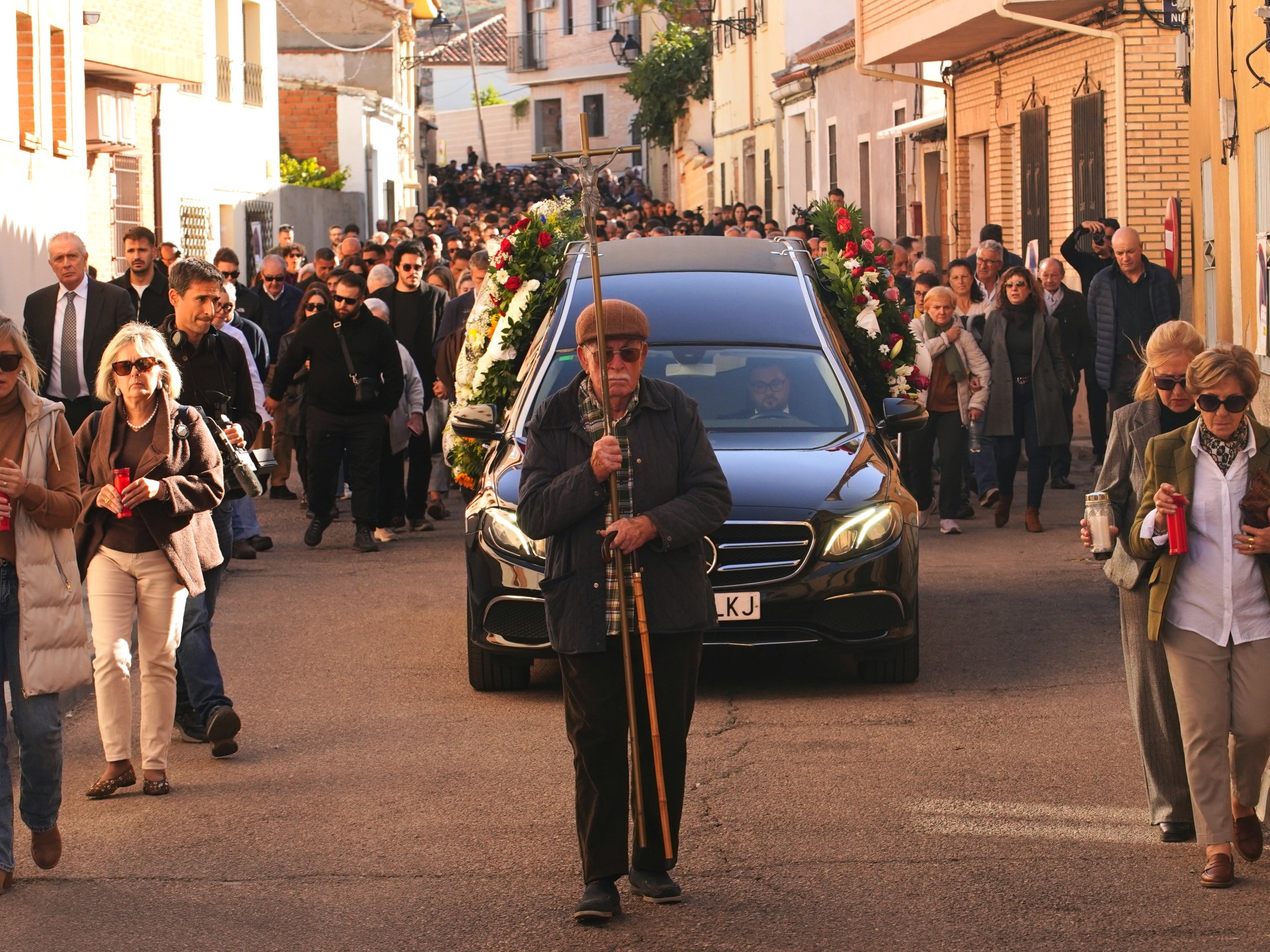
Photos: Spain mourns Jesus de Miguel, who died after on-pitch collision
Introduction and Key Takeaways
The sudden and tragic death of Jesús de Miguel, a professional footballer for CD Tenerife, has left the sporting world in deep mourning. The 30-year-old athlete passed away following a mid-game collision, an event that has sparked international reflection on safety, resilience, and the inherent risks of professional athletics. As the Spanish football community grapples with this loss, the focus remains on honoring a life cut short while scrutinizing the protocols governing high-stakes physical contact.
- Jesús de Miguel died following a cardiac event triggered by an on-pitch collision during a second-division match.
- The funeral in Navahermosa saw an outpouring of support from national team leadership and elite club officials.
- Spanish authorities have launched a standard procedural investigation to determine if the collision exceeded normal bounds of competition.
- The incident highlights the rare but catastrophic risks present in modern sports and the importance of medical preparedness.
Background and Context: What Just Happened?
The tragedy unfolded on a Monday night during a standard second-division match in Spain. Jesús de Miguel, competing for Tenerife, was engaged in a challenge for a high ball when he collided with Andorra goalkeeper Jesus Owono. The impact resulted in a cardiac arrest on the pitch, despite the immediate response from medical teams present at the stadium. Tragically, De Miguel died in the hospital the following day, sending shockwaves through the sport. Professional football leagues have long maintained safety protocols, yet this incident serves as a grim reminder that even in highly regulated environments, the intersection of physical momentum and biology can yield unpredictable, fatal outcomes.
Root Cause and Deep Dive Analysis: Why Did This Happen?
To understand why this occurred, we must look at the physics and medical reality of contact sports. Football, while not as collision-heavy as rugby or American football, involves high-velocity movements that carry significant kinetic energy. When two players collide in the air, the forces involved can cause blunt force trauma to the chest, potentially triggering commotio cordis, an electrical disturbance in the heart. While medical investigations into the specific cause are ongoing, the incident has reignited debates about player safety. We often see athletes push their physical limits, much like the dedication seen in other high-stakes environments, such as the resilience documented in stories of legendary sports figures who overcame adversity. Here, however, the adversity was a physiological failure that no amount of training could predict or prevent.
Strategic Implications and Future Impact
The death of Jesús de Miguel carries broader implications for the governance of professional sports. Spanish authorities have initiated an investigation into potential involuntary manslaughter. While this is a standard legal procedure in cases of death involving physical contact, it puts pressure on governing bodies to re-evaluate what constitutes an acceptable challenge. Globally, football leagues may look to upgrade on-pitch cardiac monitoring and emergency response times to ensure that the window between injury and intervention is minimized. Furthermore, the presence of figures like national coach Luis de la Fuente and Real Madrid President Florentino Perez at the funeral signals that this is not merely a regional concern but a matter of national sporting policy. Organizations are likely to prioritize long-term welfare over pure competition intensity in upcoming season reviews.
Conclusion and What to Watch Next
The coming weeks will be defined by the outcome of the police investigation and the potential administrative changes to match play regulations. While we await the final reports, the immediate future will see clubs across Europe holding moments of silence, reflecting the shared humanity that exists beyond club rivalries. Fans and analysts alike should keep a close watch on official statements from the Spanish Football Federation regarding any new mandatory safety mandates. As we move forward, the memory of Jesús de Miguel will serve as a somber guide for the evolution of safety in the sport, ensuring that every effort is made to protect the players who define the game we love. The industry must balance the passion of the fans with the preservation of the lives that provide the spectacle.