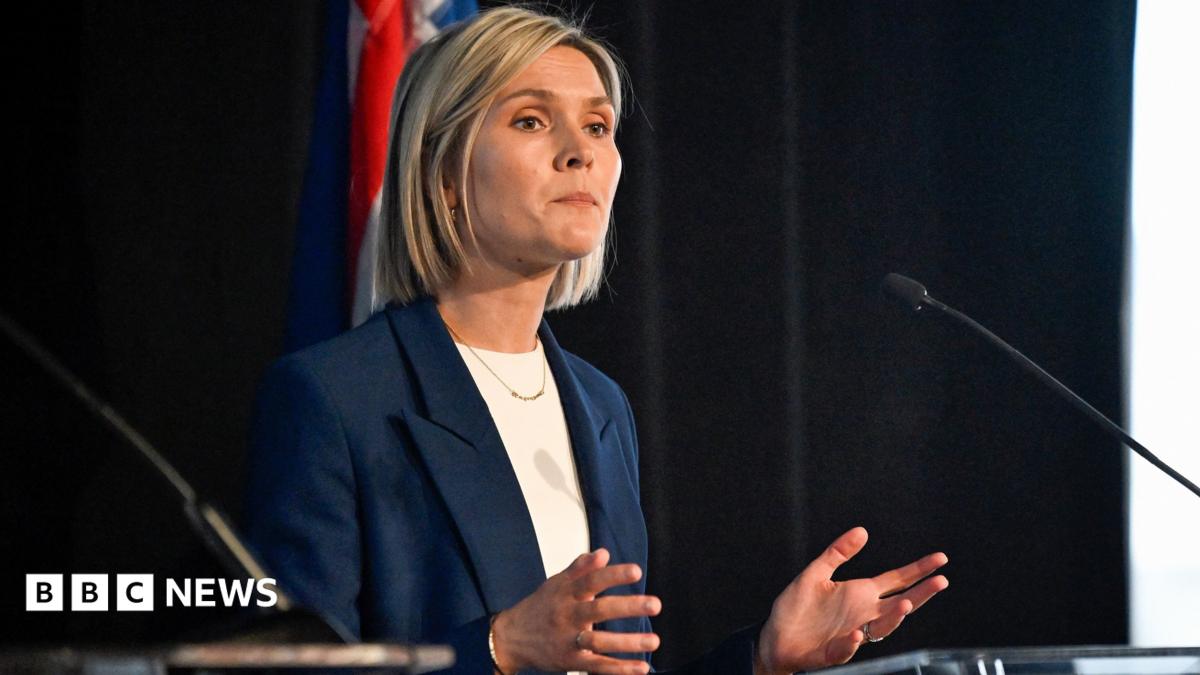
In a pivotal moment for its future, Iceland has decisively rejected proposals to restart talks on Iceland EU Membership. Public broadcaster RUV reported that 52.8% of voters opposed resuming negotiations, thirteen years after initial discussions were suspended. This resounding ‘No’ underscores enduring concerns regarding closer integration with the European bloc. Prime Minister Kristrún Frostadóttir’s centre-left government accelerated the referendum from its 2027 schedule, citing international tensions, including contentious remarks by US President Donald Trump concerning Greenland. Yet, for many of the nearly 400,000 residents, the debate pivoted less on geopolitics and more profoundly on deeply ingrained economic interests and national identity. The impressive 82.5% turnout, the highest since 2009, reflected the profound importance Icelanders attach to their nation’s future.
Fishing Rights: The Unwavering Obstacle to Iceland EU Membership
The bedrock of Iceland’s economy and national pride lies unequivocally in its vibrant fishing industry. Contributing nearly 40% of the country’s total exports, this sector sustains countless livelihoods and shapes its cultural fabric. The legacy of the 1970s “Cod Wars” with the UK, where Iceland fiercely defended its territorial rights, remains a powerful symbol of its determination to protect marine resources. For many ‘No’ voters, the prospect of Iceland EU Membership triggered an immediate fear: ceding control over these immensely valuable fishing grounds to the EU’s Common Fisheries Policy. This framework, dictating catch quotas and access rights, is widely perceived as an existential threat to their sovereign control of the seas.
Iceland’s initial pursuit of EU integration began in 2009, spurred by the devastating fallout of the 2008 global financial crisis. Accession talks progressed considerably but were abruptly halted in 2013 when a eurosceptic government took power. Throughout that period, and today, fundamental disagreement over fishing rights remained the paramount obstacle. Prime Minister Frostadóttir, speaking after the results, declared EU membership would not be revisited during her government’s tenure. One minister downplayed any ‘setback,’ highlighting the robust democratic engagement indicated by the exceptionally high voter turnout.
A Nation’s Voice: Geographical Divides and Future Considerations
An intriguing geographical schism emerged in the voting patterns. Reykjavík, the capital, leaned towards supporting EU accession talks, potentially reflecting a more globalized perspective. Conversely, rural, traditionally fishing-dependent regions overwhelmingly voted against the proposal. This stark divide underscores deep-seated apprehension in communities whose livelihoods are directly tied to unhindered control of their territorial waters. It is crucial to understand the referendum’s question: “Should Iceland resume accession negotiations with the European Union?” A ‘Yes’ vote would merely have initiated renewed dialogue, leading to a potential accession agreement requiring a second, definitive referendum. The ‘No’ vote simply closes this specific chapter, leaving the possibility open for future generations to reconsider.
Geopolitical Undercurrents and Defense Strategies
While economic concerns dominated, security concerns also featured. As a founding NATO member, Iceland has no standing army and relies heavily on allies. Full EU membership would have granted access to the bloc’s joint defense infrastructure. The nation has steadfastly supported Ukraine against Russia’s invasion, with officials expressing alarm over Russia’s escalating maritime activities near the island. More recently, former US President Donald Trump’s stated interest in purchasing Greenland added to geopolitical intrigue, highlighting the vulnerabilities of smaller nations. Foreign Minister Katrín Gunnarsdóttir announced intentions to strengthen defense relations with other countries, signaling a proactive national security approach. Our previous reporting on Trump’s foreign policy maneuvers underscores the ripple effects of such geopolitical shifts on global alliances.
The outcome sent ripples across Europe, eliciting praise from prominent eurosceptic voices. Nigel Farage lauded Icelanders’ vote “to keep their independence,” while Marine Le Pen asserted that the result highlighted an “obvious truth: membership in the European Union is not the natural horizon for every European democracy.” An EU diplomat conceded a “clear setback for Brussels,” acknowledging that fishing rights and national independence were decisive. This decision reaffirms the potent pull of national interests and sovereign control over crucial resources, even in an interconnected world.
About the Author