
‘In Times Of Division And Conflict, Gandhi’s Lessons Speak With Renewed Urgency’: UN Chief
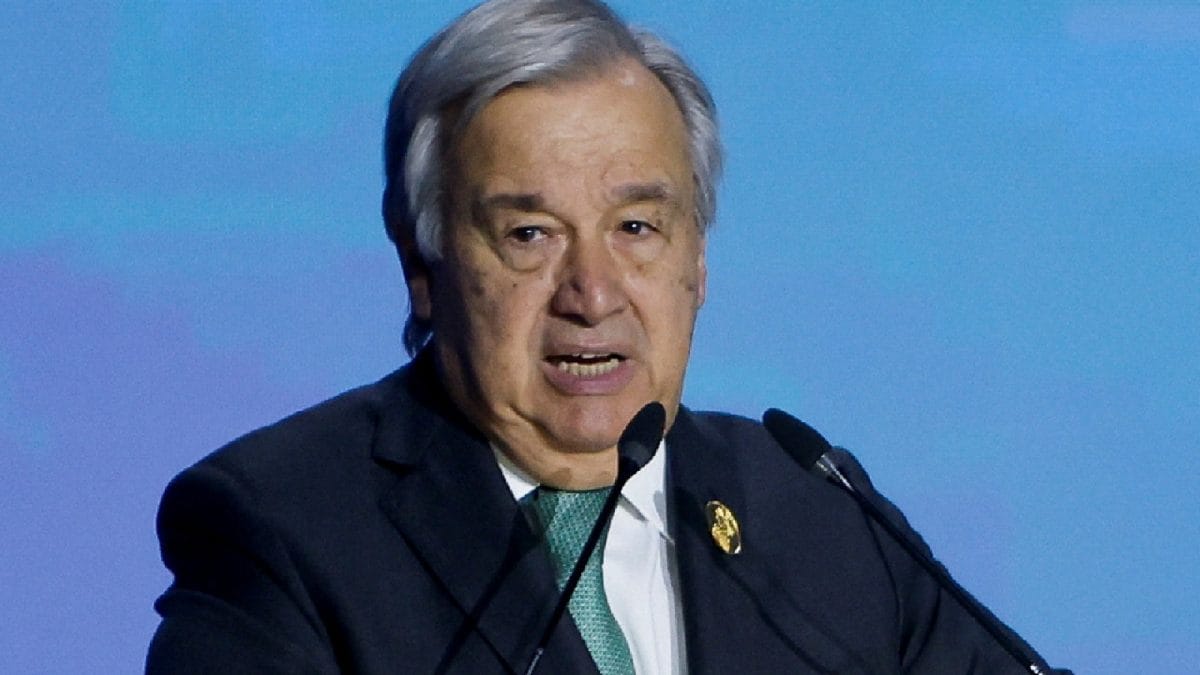
In an era defined by profound geopolitical shifts and deepening social fractures, the timeless teachings of Mahatma Gandhi have emerged as a beacon of hope for a fractured global order. During the International Day of Non-Violence, marked on October 2, United Nations Secretary-General Antonio Guterres emphasized that Gandhi’s lessons carry a renewed urgency that the international community cannot afford to overlook. As world leaders grapple with persistent conflicts, the Gandhi legacy serves as an essential framework for fostering reconciliation and lasting stability.
Guterres highlighted that modern society is currently navigating a landscape where the fundamental pillars of peace, including the UN Charter and international law, are being frequently bypassed. By invoking the life of the Mahatma, the UN chief encouraged nations to replace the cycle of retaliation with genuine dialogue. The core of this message lies in the belief that true strength is found in empathy and dignity rather than in the amplification of violence. He urged global powers to look past immediate strategic gains and instead embrace the shared humanity that once defined Gandhi’s transformative approach to civil rights and colonial liberation.
The Enduring Power of the Gandhi Legacy
The relevance of this Gandhi legacy is perhaps most visible in how modern institutions attempt to address extreme polarization. Whether it is managing diplomatic standoffs or civil unrest, the principles of non-violent resistance provide a roadmap for de-escalating tensions. As noted in recent reports on societal friction, the demand for peaceful resolution strategies is reaching a breaking point in many nations. Guterres warned that unless global actors commit to these values, the gaps between communities will only continue to widen, leading to further instability.
India’s Permanent Representative to the UN, Ambassador Harish Parvathaneni, further expanded on these themes by linking the philosophy of Sarvodaya to contemporary challenges such as climate change and systemic inequality. He pointed out that the Mahatma’s warning regarding greed versus need is more pertinent now than ever before. In a world where environmental sustainability has become a prerequisite for survival, the concept of responsible stewardship acts as a vital bridge between economic development and ecological preservation.
Applying Principles to a Disruptive World
Beyond abstract diplomacy, the Gandhi legacy offers pragmatic solutions for individual and collective resilience. Parvathaneni noted that the emphasis on self-reliance is not merely a historical footnote but a functional strategy for societies dealing with frequent supply chain shocks and global market volatility. By fostering internal capacity and local stability, nations can better withstand the pressures of an unpredictable global economy.
Furthermore, the vision of an open society—where cultures can coexist without losing their distinct identities—provides a sophisticated model for modern multicultural states. In an age of digital echo chambers and nationalist surges, this perspective encourages a more inclusive dialogue. It invites a departure from rigid, exclusionary politics in favor of a more flexible, human-centric diplomacy. Ultimately, the observations shared at the UN event remind us that the tools for a more stable future were forged decades ago. Reconnecting with these principles might be the only way to heal the deep divisions threatening our global cohesion today.