
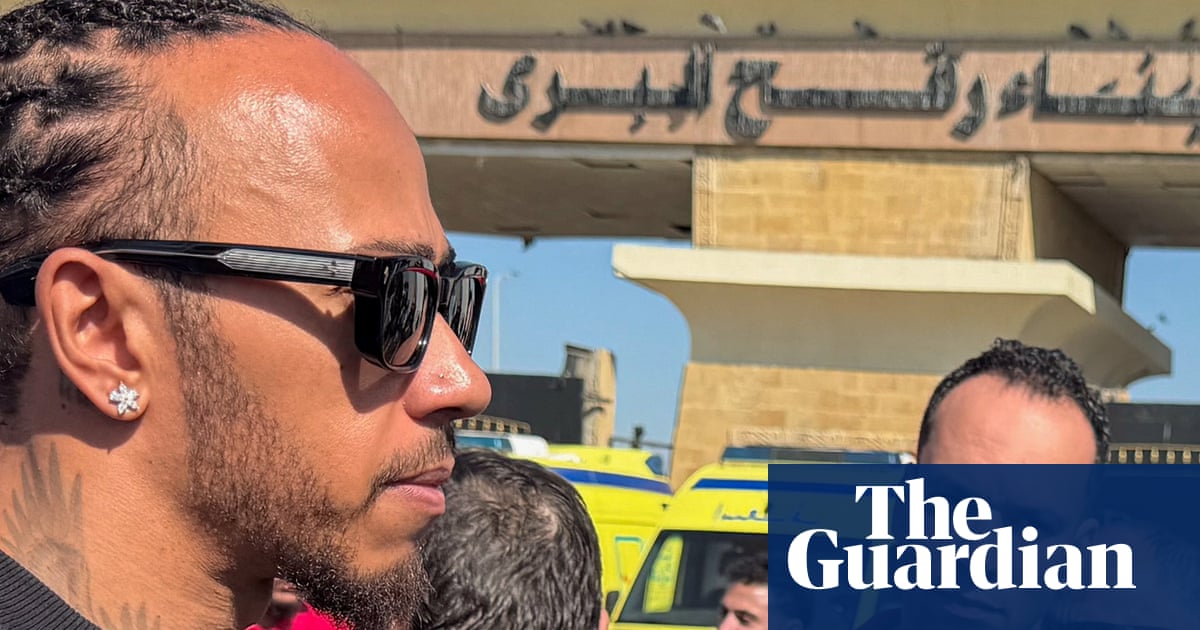
Lewis Hamilton visits Egypt’s Rafah crossing and Gaza aid facilities
Introduction & Key Takeaways
In an act of high profile advocacy, seven-time Formula One champion Lewis Hamilton recently visited the Rafah border crossing between Egypt and the Gaza Strip. This visit, which highlights the urgent humanitarian needs in the region, serves as a poignant reminder of the athlete’s evolving role as a global activist. Beyond the racetrack, where he recently celebrated his 400th career start, Hamilton has leveraged his immense social media influence to draw attention to displaced families and the ongoing systemic challenges facing civilians in conflict zones.
- Hamilton conducted a high-profile tour of humanitarian logistics warehouses in Al-Arish.
- The visit focuses on the critical, and often insufficient, delivery of aid to Gaza.
- The champion continues to advocate for broad peace initiatives, echoing sentiments regarding conflicts in Sudan, Syria, and Congo.
- Despite a regional ceasefire agreement, aid delivery remains significantly below the target of 600 daily trucks.
Background & Context (What Just Happened?)
The situation at the Rafah border remains a focal point for international organizations working to mitigate a catastrophic humanitarian disaster. While major combat operations officially ceased following a regional agreement, the reality on the ground remains dire. The logistical bottleneck created by ongoing administrative and security hurdles means that essential supplies are not reaching those who need them most. Lewis Hamilton, utilizing his visibility, engaged with the Egyptian Red Crescent to gain firsthand insights into how these goods are processed and dispatched. This effort is not merely symbolic, as his presence brings renewed media attention to a crisis that has, in some quarters, slipped from the daily news cycle.
Root Cause & Deep Dive Analysis (Why Did This Happen?)
The core of the issue lies in the complex interplay between territorial control and humanitarian access. According to recent reports from an independent commission of UN experts, Israeli military influence has expanded to cover roughly 60% of the Gaza territory, complicating the distribution networks for non-governmental organizations. The infrastructure required to move aid—roads, safe zones, and communication lines—is frequently compromised, leading to a bottleneck that prevents the realization of a daily 600-truck threshold. The systemic instability is compounded by the fact that even in a post-conflict, or quasi-conflict, phase, the absence of a comprehensive political resolution leaves civilian populations in a state of perpetual uncertainty, often resulting in severe resource shortages.
Strategic Implications & Future Impact (What Does This Mean Globally?)
Celebrity activism on this scale is a double-edged sword. While it keeps the spotlight on humanitarian suffering, it also highlights the limitations of individual influence in the face of entrenched geopolitical stalemates. Hamilton’s broader call to action, which encompasses concerns about global instability, reflects a shift in how modern icons define their legacy. As seen in ongoing geopolitical discourse regarding international crises, public pressure is becoming a necessary component of forcing diplomatic transparency. However, the path to peace remains obstructed by deep-seated tensions that demand state-level negotiations rather than just awareness campaigns.
Conclusion & What to Watch Next
Lewis Hamilton’s visit to the Rafah border is a significant moment that underscores the persistence of the humanitarian crisis despite the existence of ceasefire agreements. Moving forward, observers should monitor the actual volume of aid trucks entering Gaza, as this remains the most concrete metric for measuring the efficacy of international relief efforts. The intersection of sports, global policy, and human rights will continue to be a space where influencers challenge the status quo, even if the progress on the ground remains agonizingly slow. The world watches not only the results of the next Grand Prix but also the continued efforts to provide basic dignity to those trapped in the middle of a shifting territorial landscape.