
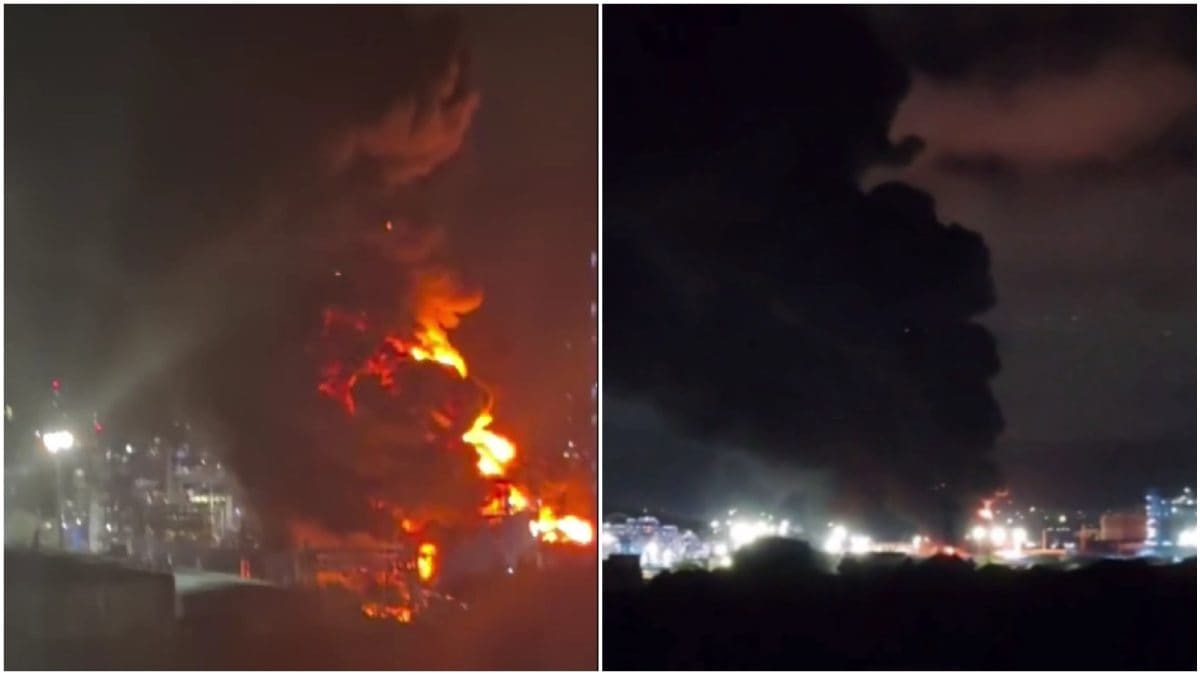
Massive Fire Breaks Out At Vizag HPCL Facility, Towering Flames Light Up Night Sky | Video
Introduction & Key Takeaways
A massive, frightening blaze recently erupted at the Hindustan Petroleum Corporation Limited (HPCL) facility in Visakhapatnam, casting long shadows of concern over the city’s industrial landscape. The event serves as a stark reminder of the inherent risks associated with high-stakes chemical refining. While authorities quickly confirmed that no injuries or casualties resulted from the fire, the incident has reignited urgent debates regarding industrial safety protocols in India. Key takeaways include:
- The fire originated in a pitch intermediate storage tank, following an initial, startling blast.
- Remarkably, there were zero casualties, a outcome attributed to effective and rapid emergency response teams.
- The incident is currently undergoing a formal investigation to determine the root cause, with a heavy emphasis on safety compliance.
- Nearby residential and port areas were briefly alarmed by the spectacle, raising questions about urban proximity to such volatile refining centers.
Background & Context (What Just Happened?)
On the night of November 2, 2026, the quiet skyline of Visakhapatnam was suddenly transformed as the HPCL refinery became the site of a significant emergency. Reports confirm that the fire broke out at approximately 10:00 PM. Eyewitnesses describe a loud explosion near a large tower, which served as the precursor to the massive, visible flames that dominated the night. The incident triggered an immediate mobilization of fire and safety personnel stationed at the plant. While local media outlets provided live coverage, the rapid response, as detailed in our earlier reporting on the fragile stability in global conflict zones, highlights the necessity for constant vigilance in industrial operations.
Root Cause & Deep Dive Analysis (Why Did This Happen?)
The Vizag HPCL fire is currently under microscopic investigation. At the core of the issue is the behavior of pitch, a complex hydrocarbon product, within storage tanks. Such substances require precise temperature management and containment systems. Any malfunction in these systems, or perhaps a mechanical failure leading to the reported blast, can escalate rapidly. While the company stated that the fire remained localized, industrial safety experts emphasize that the mere occurrence of an explosion suggests a potential gap in proactive maintenance or early warning detection systems. Investigating why these safety nets did not prevent the initial blast will be the primary objective of the incoming commission.
Strategic Implications & Future Impact (What Does This Mean Globally?)
The Vizag HPCL fire has implications that ripple far beyond the port city of Visakhapatnam. Globally, energy security is inextricably linked to the operational continuity of major refineries. When a critical facility faces an incident, it does not merely affect local production quotas, but sends a message of vulnerability to investors and trade partners. Furthermore, this event forces a reckoning for the Indian energy sector, which is increasingly focused on sustainable growth. The incident brings the debate on how to balance industrial expansion with the strict enforcement of safety regulations into the foreground. Investors are watching closely to see if this leads to stricter regulatory oversight, which could impact the capital expenditure requirements for future energy projects.
Conclusion & What to Watch Next
As the site enters the post-incident phase, the recovery and investigation will be the key indicators of long-term stability. The Vizag HPCL fire will likely lead to a mandatory overhaul of safety audit protocols. For local residents, the focus remains on transparency, with authorities needing to explain not just what went wrong, but how they intend to prevent similar occurrences in the future. We will continue to monitor the official inquiry reports, as they hold the key to understanding the structural integrity and management efficacy of one of India’s most significant petroleum assets.