
‘Nothing Wrong In Seeking Regime Change’: Neha Bora In Delhi HC; Verdict On AISA Chief’s Plea Today
Introduction & Key Takeaways
The recent legal standoff involving All India Students’ Association (AISA) president Neha Bora has ignited a critical national conversation regarding the boundaries of democratic dissent. Challenging a Delhi Police notice that mandates a peace bond of ten thousand rupees, Bora has pushed the judiciary to define the limits of state-imposed preventive measures against activists. The core of this legal dispute touches upon the intersection of constitutional freedom and the state’s mandate to maintain public order.
- The Delhi High Court is currently deliberating on the validity of preventive peace bonds issued to student leaders.
- The legal team for Neha Bora argues that seeking regime change and political transition is a protected right under the Constitution of India.
- The State, through the Additional Solicitor General, contends that such political shifts must be contained within the electoral process rather than street protests.
- The court has expressed concern over the potential social and legal stigma attached to such administrative notices.
Background & Context (What Just Happened?)
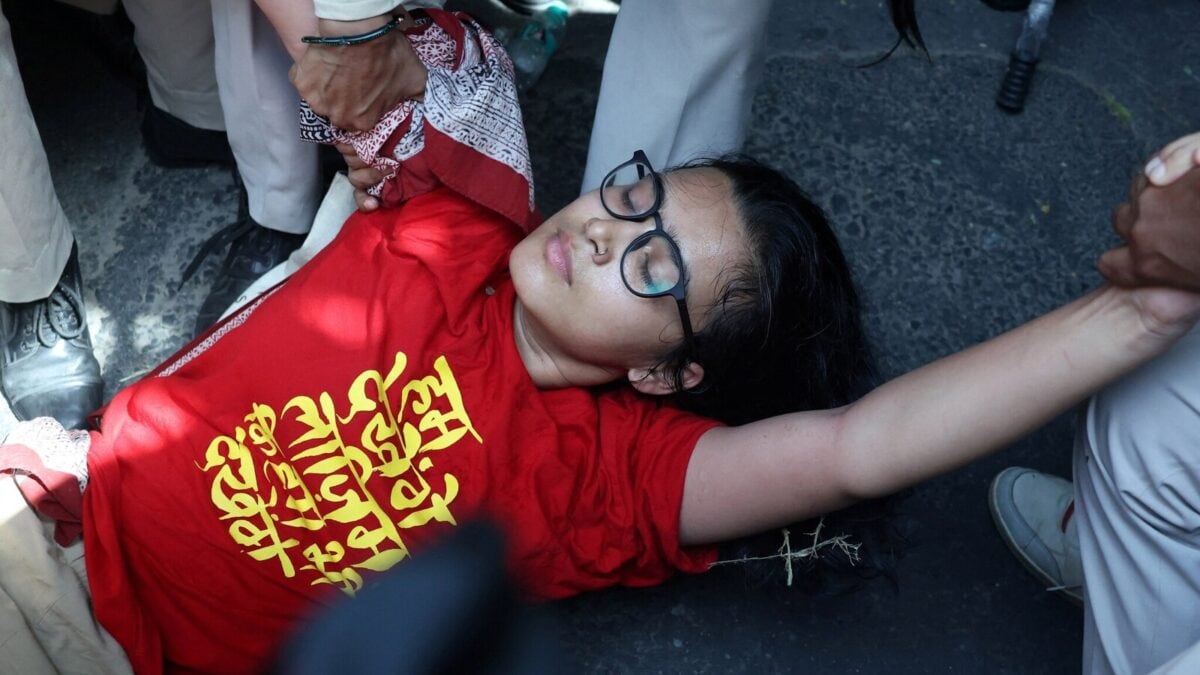
The controversy stems from an incident where student activists, including Neha Bora, were subjected to preventive detention following a protest march. In the aftermath, the Delhi Police issued a formal notice requiring Bora to sign a peace bond. This administrative tool is frequently utilized by law enforcement to ensure that individuals do not engage in activities that could disturb public peace. However, this specific application has been challenged as an overreach, raising questions about whether the state is effectively criminalizing political expression.
As noted in a recent judicial review of government surveillance operations, the balance between safety and liberty remains a global point of contention. In this case, the student leader refused to comply, leading to the current High Court petition, which pits the executive’s power to maintain order against the fundamental freedoms of assembly and speech.
Root Cause & Deep Dive Analysis (Why Did This Happen?)
At the heart of the case is the constitutional interpretation of regime change as a form of political discourse. The defense has centered their argument on Articles 19 and 21 of the Indian Constitution, asserting that dissatisfaction with the government is the bedrock of a functioning democracy. They argue that if citizens are not permitted to call for change, the very nature of democratic engagement is compromised.
Conversely, the Delhi Police, represented by Additional Solicitor General Chetan Sharma, emphasized that the notice was a necessary response to repeated violations of prohibitory orders. The state argues that regime change rhetoric, when manifested in public spaces during sensitive periods, risks escalating into disorder. This highlights a broader tension between the state’s preference for institutional political transitions via the ballot box and the activist tradition of street-level political pressure.
Furthermore, the judiciary raised a significant observation during the proceedings regarding the stigma associated with these bonds. By compelling a citizen to guarantee their own good behavior, the state implicitly marks the individual as a potential threat before any formal charges are even established. As discussed in reports on administrative accountability, the use of preemptive measures can often lead to the unintended consequence of silencing legitimate civic engagement.
Strategic Implications & Future Impact (What Does This Mean Globally?)
The implications of the final verdict extend far beyond the case of one student leader. Should the court uphold the validity of these bonds in the context of political protests, it would likely set a precedent that could embolden law enforcement to issue such notices more frequently against various dissenters. If, however, the court sides with the petitioner, it would reaffirm that regime change advocacy is a protected component of public life, potentially narrowing the scope for police intervention in future student movements.
Globally, democratic nations are grappling with similar challenges where populist sentiments and government oversight frequently collide. The outcome in Delhi serves as a case study for how legal systems handle the friction between security, surveillance, and the right to protest.
Conclusion & What to Watch Next
As the High Court reserves its final judgment, eyes are fixed on the upcoming Friday pronouncement. This decision will serve as a bellwether for the future of student activism and the threshold for preventive police action. Observers and legal experts will be closely analyzing the court’s reasoning to see if it establishes a high bar for the state when it chooses to intervene in political assembly. The verdict will likely impact how student unions and other civil society organizations plan their protests, signaling either a space for expanded expression or a more cautious approach to avoid potential legal entanglements.