A tense, critical operation is unfolding deep within Iranian territory as an elite US Air Force team presses on with a harrowing US rescue mission to locate a missing crew member. This comes after reports surfaced earlier today of a US F-15 fighter jet being downed. While one pilot has reportedly been recovered, the fate of a second remains uncertain, casting a stark spotlight on the profoundly dangerous world of combat search and rescue operations.
Sources indicate the search, deep within Iran, is for a second individual from the downed aircraft. Combat Search and Rescue (CSAR) missions, by their very nature, are among the most intricate and time-sensitive endeavors militaries undertake. These specialized teams, often pre-positioned near potential conflict zones, are rigorously trained for scenarios precisely like this.
Understanding the Peril of a US Rescue Mission
At its core, a CSAR mission aims to find, assist, and extract personnel in dire straits – be it a downed pilot or isolated troops. The key differentiator from conventional humanitarian search and rescue? CSAR unfolds amidst hostile or contested environments. Friday’s reported recovery effort in Iran exemplifies this, potentially occurring deep in adversary territory.
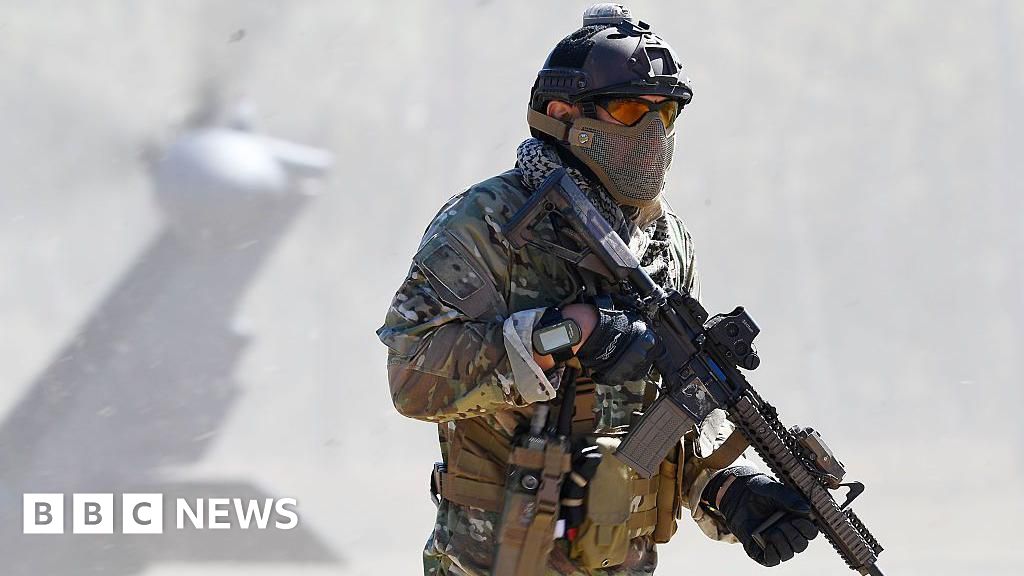
Such operations frequently involve fleets of helicopters, supported by refueling aircraft, with additional military assets on standby for strikes or area patrol. A former pararescue squadron commander, speaking to CBS News, indicated that an undertaking of this magnitude in Iran would demand at least two dozen pararescue jumpers, sweeping the area via Black Hawk helicopters. Their readiness to parachute if necessary is paramount, with the immediate priority upon landing being to establish contact with the missing crew member.
Upon location, medical aid is administered, evasion tactics are employed, and extraction to safety becomes the singular focus. “Harrowing and massively dangerous is an understatement,” the commander stressed. “This is what they train to do, all over the world. They are known as the Swiss Army knives of the Air Force.”
Verified video footage emerging from Iran on Friday appeared to depict US military helicopters and at least one refueling aircraft operating over Khuzestan province. The urgency is immense; enemy forces undoubtedly converge on the same area, seeking the very personnel the CSAR teams strive to save. Iranian officials, according to state media, have even offered rewards for the capture of the missing US crew member.
Laurel Rapp, director of the US and North America programme at Chatham House, told BBC Radio 4 that capturing the crew member would present Iran with a “huge prize” and a “very powerful bargaining chip.” A former US Marine Corps Special Operations specialist, Jonathan Hackett, emphasized that a US rescue mission team’s primary objective is to detect signs of life. “They’re trying to work backwards from the last point they knew that person was, and fan out based on the speed that person could move under different circumstances in this really difficult terrain,” Hackett elaborated.
The Storied Legacy of Combat Search and Rescue
The lineage of airborne wartime rescue missions stretches back to the audacious impromptu landings of World War One pilots in France. Modern pararescue units trace their origins to a 1943 mission in then-Burma. A year later, a US lieutenant conducted the world’s first helicopter rescue, extracting four soldiers from behind Japanese lines – an incident chronicled by a seminal aviation history publication. This also marked the helicopter’s inaugural combat deployment.
While formal search-and-rescue units emerged post-World War Two, contemporary CSAR truly began taking shape during the Vietnam War. Missions like “Bat 21” underscored the inherent risks and complexities, yet the conflict spurred an unparalleled expansion of CSAR, refining the tactics and procedures that form the bedrock of today’s rescue operations.
The US Air Force bears primary responsibility for the military-wide search and recovery of personnel. This critical task falls to pararescue jumpers, an integral part of the special-operations community. Their solemn motto, “These Things We Do, That Others May Live,” underscores a profound commitment: no service member left behind. These individuals endure an intensely rigorous, two-year selection and training pipeline, encompassing parachute, dive, underwater demolition, survival, resistance, and escape training, alongside a full civilian paramedic course. They are also masters of battlefield medicine, complex recovery, and weaponry.
Pararescue teams saw extensive deployment throughout the Iraq and Afghanistan wars, executing thousands of missions. Notable historical incidents include the 2005 recovery of a wounded US Navy SEAL (the basis for the film “Lone Survivor”), the rescue of an F-117 stealth fighter pilot in Serbia in 1999, and the highly publicized 1995 extraction of US pilot Scott O’Grady in Bosnia, after six days of evasion. Each US rescue mission exemplifies the unwavering dedication and unparalleled skill of these elite forces, battling not only the enemy but also unforgiving terrain and the relentless ticking clock.
About the Author