
US envoys meet Putin in Moscow for Ukraine talks
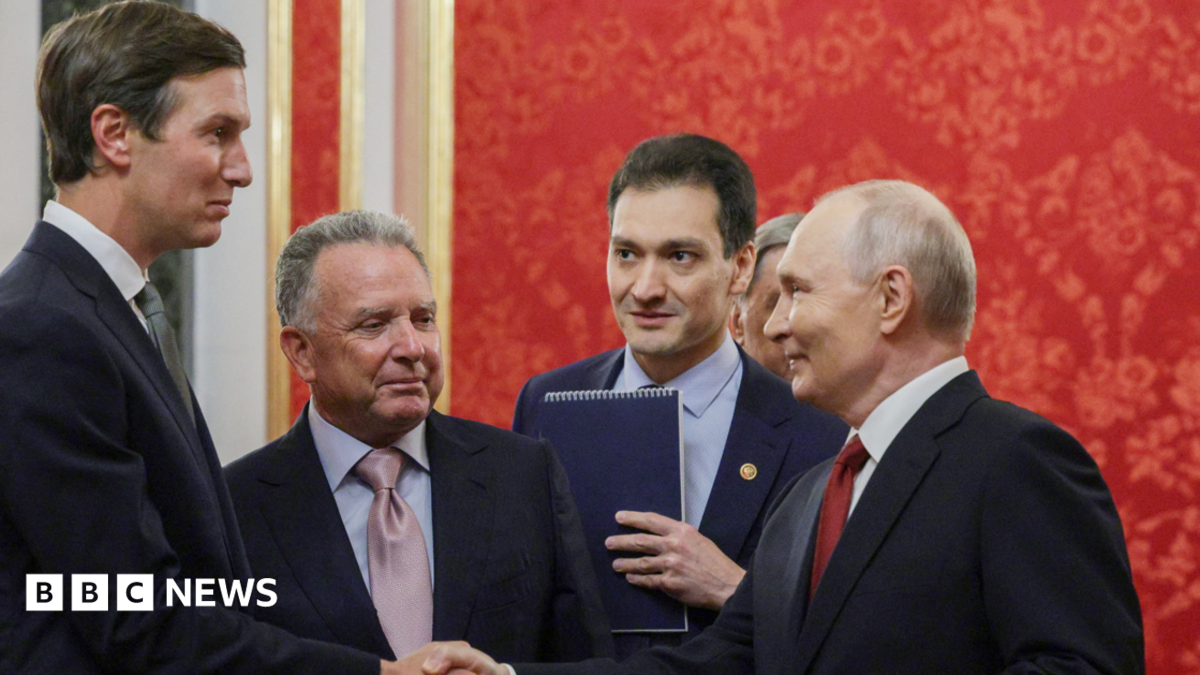
In a diplomatic maneuver of significant global consequence, top negotiators dispatched by US President Donald Trump have converged upon Moscow for pivotal discussions with Russian President Vladimir Putin. These crucial US Envoys Peace Talks represent a renewed, and perhaps more urgent, effort to de-escalate and ultimately end the protracted conflict in Ukraine, a war that has gripped the world’s attention for years. The high-stakes visit by Steve Witkoff and Jared Kushner underscores the enduring American commitment to finding a peaceful resolution, even amidst the intricate tapestry of geopolitical rivalries.
The atmosphere at the Kremlin, as depicted in rare footage released by the Russian state, was one of cautious formality. President Putin extended a welcome to the American delegates, acknowledging the inherent difficulty of the current situation. “This is not so easy,” Putin reportedly stated, signaling the deep-seated complexities both nations face in brokering a viable peace. He further committed that Russia would articulate its perspective on the ongoing hostilities, laying the groundwork for what promised to be a frank and potentially arduous dialogue. Witkoff, for his part, expressed gratitude for the agreement between Russia and Ukraine to institute a three-day moratorium on strikes targeting each other’s capitals, a gesture of goodwill preceding the talks.
The Diplomatic Gambit: US Envoys Peace Talks and Kyiv’s Role
The Moscow meeting serves as the prelude to another critical leg of their diplomatic journey: a planned visit to Kyiv on Sunday for further discussions with Ukrainian President Volodymyr Zelensky. President Trump had, on Friday, revealed that Witkoff and Kushner were arriving armed with a specific “proposal to end the war.” This revelation immediately amplified global anticipation, considering numerous prior attempts by the US and its allies to facilitate a peace agreement have, regrettably, floundered.
During the closed-door discussions in the opulent confines of Putin’s official residence within the Russian capital, the Russian leader underscored the value of such direct contact. “In any case, whatever happens, such contacts are undoubtedly always useful,” Putin remarked, also extending appreciation for Trump’s personal peacemaking endeavors. This sentiment, though guarded, offered a glimmer of hope that a channel for productive negotiation remains open despite the profound disagreements that have defined the conflict.
Ukrainian President Zelensky confirmed his prior communication with the American envoys, noting that they had already commenced their work with the Russian side. His administration had approved the plan for diplomatic engagements in Kyiv and expressed readiness for a “substantive conversation.” Crucially, Zelensky pledged Ukraine’s commitment to refrain from strikes on Moscow from Saturday through Monday, reciprocally expecting Russia to extend the same courtesy to Kyiv. This mutual cessation of hostilities in metropolitan areas, reportedly ordered by Putin himself for Kyiv, temporarily diffused a layer of immediate military tension, creating a fragile window for the US Envoys Peace Talks to proceed.
Navigating a War-Torn Landscape and Lingering Skepticism
The logistics of these high-level diplomatic missions are not without their challenges. While Kushner and Witkoff have previously visited Russia, their impending trip to Ukraine marks a first. Ukraine’s airspace has been closed since Russia launched its full-scale invasion in February 2022, raising questions about their travel arrangements from Moscow to Kyiv. Compounding these concerns, President Zelensky revealed that Russia had launched “demonstrative” strikes on Kyiv and Boryspil airports overnight, just ahead of the US team’s arrival. He interpreted these as a direct reaction to discussions regarding the possibility of the US delegation utilizing an aircraft for their travel, underscoring the deep mistrust and continued military posturing.
Zelensky had, just a day earlier, guaranteed the safety of Russian airspace for the envoys’ visit, urging Moscow to reciprocate for Ukraine. The ongoing conflict continues to exact a horrific toll; an overnight Russian strike on a civilian building in the Dnipro region tragically claimed four lives and injured five others, a stark reminder of the human cost of the unresolved war. The visit by Witkoff and Kushner also follows a rare trip to Moscow by CIA head John Ratcliffe a week prior, a meeting that Washington dismissed as “semi-routine” but undoubtedly part of a larger, complex web of international diplomacy (learn more).
Previous diplomatic overtures, including those brokered by American officials and European allies in Paris, ultimately failed to yield a breakthrough. Persistent disagreements over territorial integrity and robust security guarantees for Ukraine remain formidable obstacles. As both Russia and Ukraine have intensified their aerial campaigns in recent months, with Kyiv particularly struggling against ballistic missile attacks due to a lack of interceptors and focusing its counter-strikes on Russian economic infrastructure, the imperative for peace has never been more acute. These current US Envoys Peace Talks therefore carry the weight of immense global expectation, navigating not only the immediate crisis but also the broader geopolitical landscape (read more) that is often shadowed by the simmering tensions that permeate the continent. Europe targeted by spiralling campaign of sabotage – and Russia is the chief suspect is a stark testament to this fragility.