
Why is Kenya cracking down on foreign traders and small retailers?
A significant shift is underway in Kenya’s economic policy as President William Ruto’s administration initiates a robust crackdown on Kenya foreign traders operating small-scale retail businesses and hawking. This bold move, announced on September 2 and set to commence its enforcement on September 7, underscores a fervent commitment to protecting indigenous enterprises and ensuring that certain economic sectors are exclusively reserved for Kenyan citizens. The President’s directive has ignited a national conversation about economic sovereignty, local job creation, and the delicate balance between attracting foreign investment and nurturing domestic entrepreneurship.
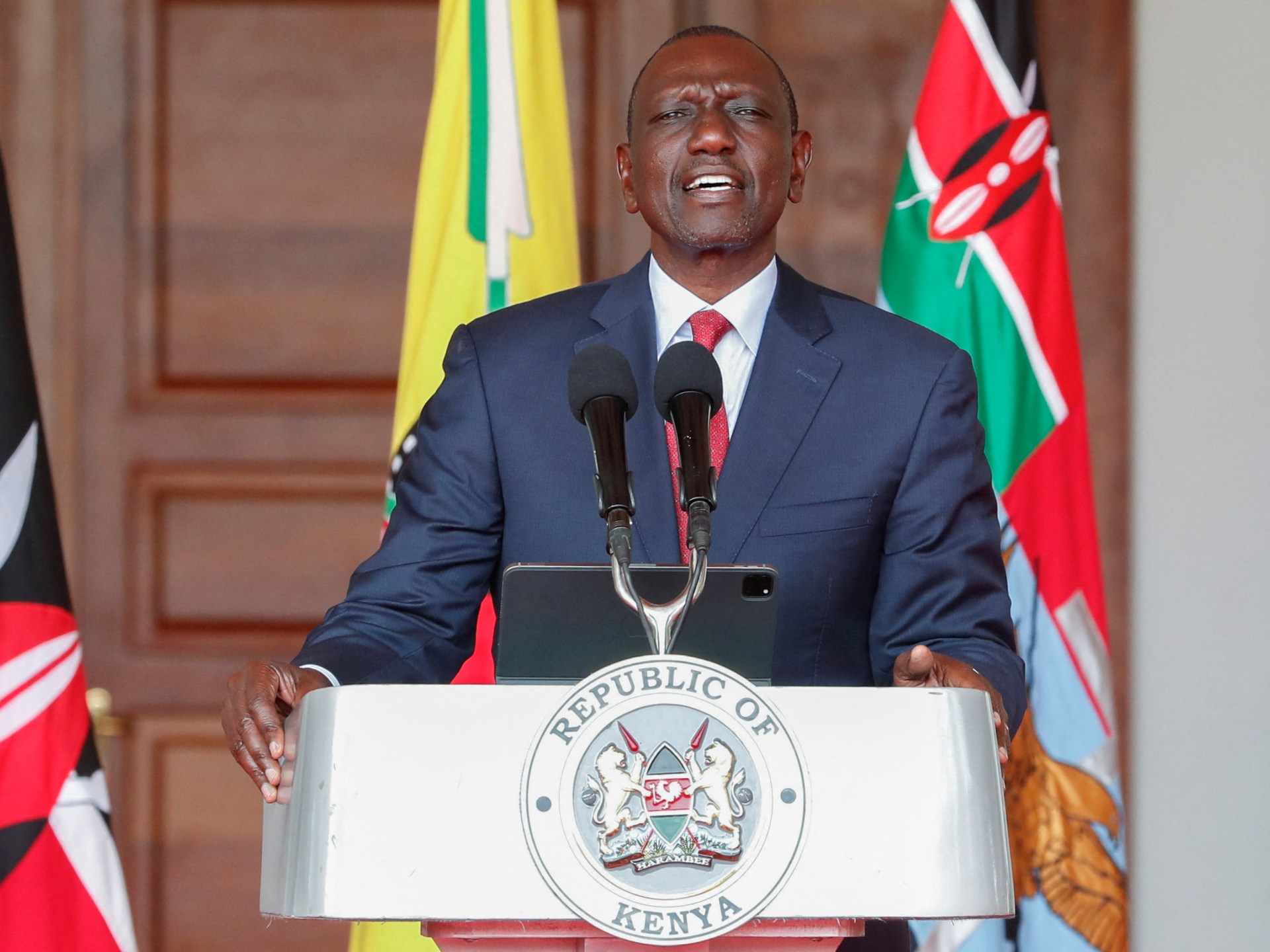
President Ruto, while addressing micro, small, and medium-sized enterprise (MSME) traders at State House in Nairobi, articulated a clear vision: foreign investment is unequivocally welcome in ventures demanding substantial capital and fostering significant economic development. However, he drew an unmistakable line, asserting that foreign nationals should not engage in activities traditionally performed by small-scale Kenyan traders. This firm stance aims to re-reserve segments of the economy for its citizens, drawing a clear line between welcome large-scale foreign investment and small-scale operations often conducted by Kenya foreign traders.
Protecting Local Markets: The Rationale Behind the Kenya Foreign Traders Directive
The President’s directive is not merely an arbitrary decree but is rooted in a broader strategy to shield vulnerable local businesses from what the government perceives as unfair competition. Authorities have been tasked with the immediate closure of small businesses run by foreign nationals. Simultaneously, the government is pushing for the expedited passage of the proposed Local Content Bill, 2025, through the Parliament of Kenya. This legislative framework, if enacted, would mandate foreign companies to significantly increase local sourcing and employment, reinforcing the protectionist stance.
Hesbon Hansen Owilla, a distinguished professor at Aga Khan University in Nairobi, emphatically supported the policy. “Yes, this is the best way to protect Kenyan small businesses and traders,” he explained to Al Jazeera. “Kenya is trying to bring in only investors who are bringing capital that can spur economic development by creating jobs rather than allow small-time foreign traders who only stifle Kenyan small traders while enjoying the robust infrastructure that Kenya has built and social securities.” He drew an insightful parallel, noting that no sovereign nation allows expatriates into jobs where its own citizens possess the requisite expertise. This perspective highlights the principle of economic nationalism, where national interests and self-sufficiency are prioritized in economic policy.
The Scope of the Crackdown and Government Clarifications
The immediate target of this directive encompasses foreign nationals operating small retail shops and engaging in street hawking. While the micro, small, and medium-sized enterprise (MSME) sector in Kenya is vast and diverse, the government has yet to release an exhaustive list of all businesses affected or an estimate of the number of foreign nationals who will be impacted. The President also instructed National Assembly Majority Leader Kimani Ichung’wah to collaborate with the State Department for Immigration’s principal secretary to clarify the permit requirements for foreign investors and traders, adding a layer of ambiguity for those already holding valid business permits.
In a crucial clarification on September 6, Foreign Affairs Principal Secretary Korir Sing’Oei stated that foreign nationals who comply with Kenya’s legal requirements, including possessing the necessary work permits and licenses, remain fully protected to conduct business. He stressed that President Ruto’s earlier remarks, particularly those made to MSME traders, had been interpreted out of their intended context, underscoring that the policy is fundamentally linked to the impending Local Content Bill, 2025, rather than a blanket expulsion of all foreign business interests.
Foreign Investment: A Broader Economic Context
It is imperative to view this crackdown against the backdrop of Kenya’s overall foreign investment landscape. The 2024 Foreign Investment Survey by the Kenya National Bureau of Statistics (KNBS) revealed that the country’s foreign direct investment stock stood at an impressive 1.458 trillion Kenyan shillings ($11.27 billion) by the end of 2023, marking an 8.5 percent increase from the previous year. These figures, while substantial, encompass a wide spectrum of economic activities and are not confined to the small-scale trading targeted by the recent directive. Surveyed foreign-invested enterprises in Kenya employed 224,769 people by June 2024, with Kenyan nationals constituting a dominant 221,267 of that workforce. Foreign employees accounted for a mere 1.6 percent, indicating that large-scale foreign investment is already a significant employer of local talent and a crucial component of Kenya’s economic growth.
The government’s clear differentiation between substantial foreign capital investments and the operations of small-scale Kenya foreign traders is crucial. International business consultant Solomon Kinyanjui of Sols Inclinations Ltd highlighted this nuance, telling Al Jazeera, “The issue is not whether foreign capital is welcome, but what role it should play in Kenya’s economy. Foreign investment should complement Kenyan enterprise, not substitute for economic activities Kenyans can competitively undertake themselves.”
The Tata Chemicals Saga: A Distinct Case
Separate from the small-business crackdown is the ongoing dispute involving Tata Chemicals Magadi, a major soda ash producer at Lake Magadi. On July 28, the Kenyan government suspended its mining operations due to alleged non-compliance with mining laws. President Ruto, on September 3, took an even more forceful stance, ordering Tata Chemicals to leave Kenya, citing insufficient benefits to the local Kajiado County community. He announced plans to introduce two new companies for glass and chemical manufacturing in the area. Tata Chemicals, for its part, affirmed its compliance and commitment to resolving the matter through legal channels. This particular case, while involving a foreign entity, pertains to large-scale resource extraction and regulatory adherence, distinct from the broader directive targeting small-scale retail operations.
Journalist Hafsa Abdiwahab Sheikh weighed in on the potential ramifications, noting that the policy, depending on its implementation, could yield both benefits and costs. “The policy could create more jobs for Kenyans and encourage skills transfer, while helping protect local employment,” she observed. However, she cautioned, “if implemented unpredictably, it may discourage foreign investment and increase business costs, leading to higher prices. It could also affect relations with foreign communities if foreigners are blamed for unemployment.” This aspiration resonates with other developing economies striving for indigenous growth, much like India’s New Growth Story, which focuses on empowering its youth and building a self-reliant nation. Ultimately, Kenya’s administration faces the formidable task of calibrating its policies to maximize local economic participation without inadvertently stifling the very foreign investment crucial for its long-term prosperity.