
‘No One Should Run Away, Hear My Reply On Monday’: Vijay Hits Back At DMK Over Law & Order
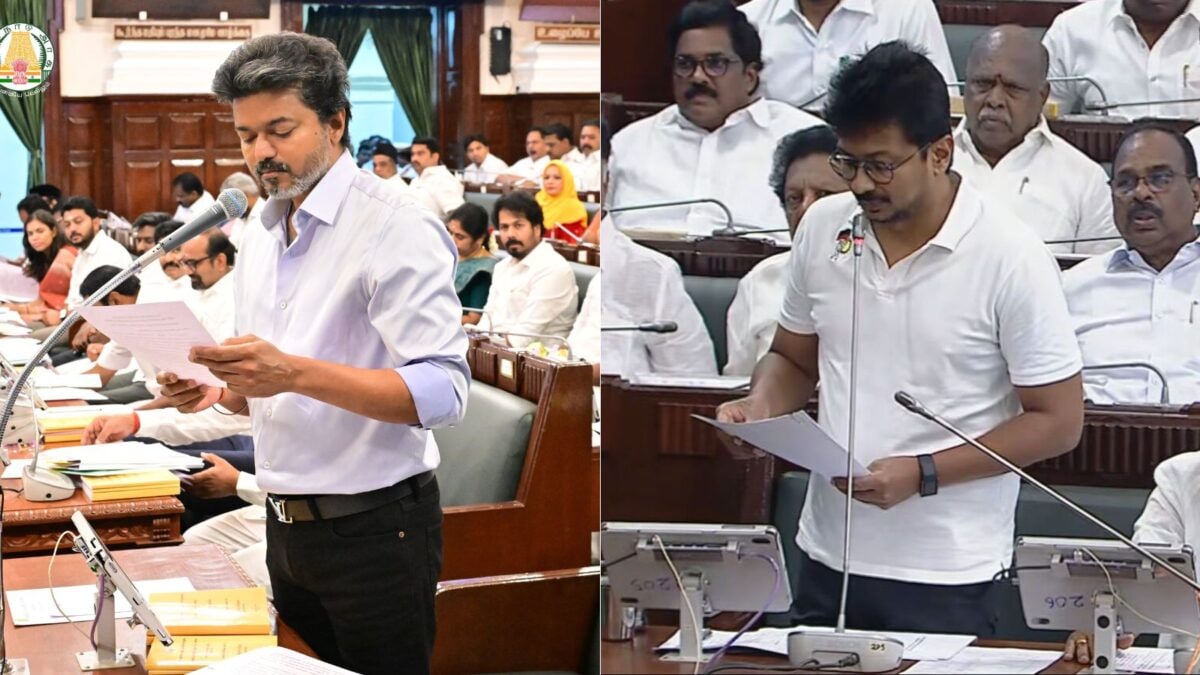
In a dramatic turn of events within the hallowed halls of the Tamil Nadu Legislative Assembly, Chief Minister C. Joseph Vijay on Thursday emphatically retorted to the opposition DMK’s scathing accusations regarding the state’s law and order situation. With an air of confidence that bordered on a direct challenge, Vijay urged members of the opposition to forgo their usual walkouts and remain seated on Monday to hear his comprehensive, point-by-point rebuttal. The political stage is now set for a high-stakes showdown, promising an intense legislative session.
The fiery exchange unfolded as Leader of the Opposition, Udhayanidhi Stalin, launched a vigorous assault on the ruling TVK government. Stalin, a prominent voice within the DMK, meticulously questioned the administration’s claims of a deteriorating law and order climate under their predecessors. His critique focused sharply on the TVK’s frequent accusations concerning the previous DMK government’s alleged ineffectiveness in combating drug proliferation. Rather ingeniously, Stalin pointed out a glaring inconsistency: if the DMK’s drug control efforts were indeed as flawed as the TVK had claimed, why then had the present government chosen to promote two senior police officers who had held key positions in those very departments during the DMK’s tenure? This strategic line of questioning suggested either a tacit admission of the previous regime’s competence or a profound contradiction in the TVK’s narrative.
CM Vijay on Law and Order Accountability
The opposition leader didn’t stop there. He further amplified his allegations by highlighting a concerning rise in Protection of Children from Sexual Offences (POCSO) cases across Tamil Nadu, alongside a general upswing in reported crimes. Stalin meticulously detailed how the previous DMK government had proactively established special committees and implemented stringent Standard Operating Procedures (SOPs) to not only support victims but also to ensure the swift dispensation of justice in such sensitive matters. His implication was clear: the current administration was falling short of these benchmarks, failing to uphold the rigorous standards set earlier.
As the debate intensified, Chief Minister Vijay, seizing a pivotal moment, intervened directly. He addressed Speaker J.C.D. Prabhakar, making an unusual and highly public request: to extract a firm promise from the DMK members that they would remain in their seats for the entirety of his upcoming address. It was a bold move, designed to corner the opposition and prevent any strategic parliamentary egress that might diminish the impact of his anticipated response. The political drama unfolded with palpable tension, demonstrating the cut and thrust of democratic discourse.
In a moment of pure political theatre, the Chief Minister rose from his seat, his voice resonating through the chamber. “Honourable Speaker,” he declared, “for all the questions raised by the honourable members, I will provide a clear explanation when I come on Monday. Even if I am not here, I will receive information about who is asking what questions. I will provide a clear answer to everything. I have one request through you – no one should get up and run away.” This direct, almost taunting challenge to the opposition underscored Vijay’s determination to address every accusation head-on, in full view of the public and the media. This highly public declaration underscores the intense scrutiny faced by political leaders, a sentiment echoed in national discussions about prominent figures and their political journeys, such as Sonia Gandhi’s political journey.
Such exchanges are a fundamental aspect of a vibrant democracy, where the opposition plays a critical role in holding the government accountable. The effectiveness of a ruling party, particularly in matters as crucial as public safety and justice, often defines its mandate and public trust. Vijay’s explicit call for the DMK to remain present not only heightened anticipation for his Monday address but also positioned him as a leader unafraid of direct confrontation and committed to transparency, at least in appearance. The intricate dance between government and opposition ensures that issues like the state’s Vijay Law and Order record are not merely debated but rigorously scrutinized, forcing leaders to articulate their strategies and defend their performance before the public eye.
The allegations of rising POCSO cases and issues surrounding drug proliferation strike at the heart of public confidence. Effective governance demands not just rhetorical defense but tangible actions and demonstrable results. The promotion of police officers, as highlighted by Stalin, raises questions about consistency and commitment to previously stated goals. It suggests a complex interplay between political rhetoric and administrative reality, where past criticisms meet current policy decisions. The general public, observing these legislative battles, ultimately seeks assurance that their safety and well-being are paramount, and that the state’s apparatus for justice is both robust and impartial. The upcoming session on Monday is therefore not just a political event but a crucial test of governance and accountability in Tamil Nadu, an essential facet of any state’s progress and stability within the nation’s legal frameworks.