
Russia and North Korea deepen relations with symbolic road bridge
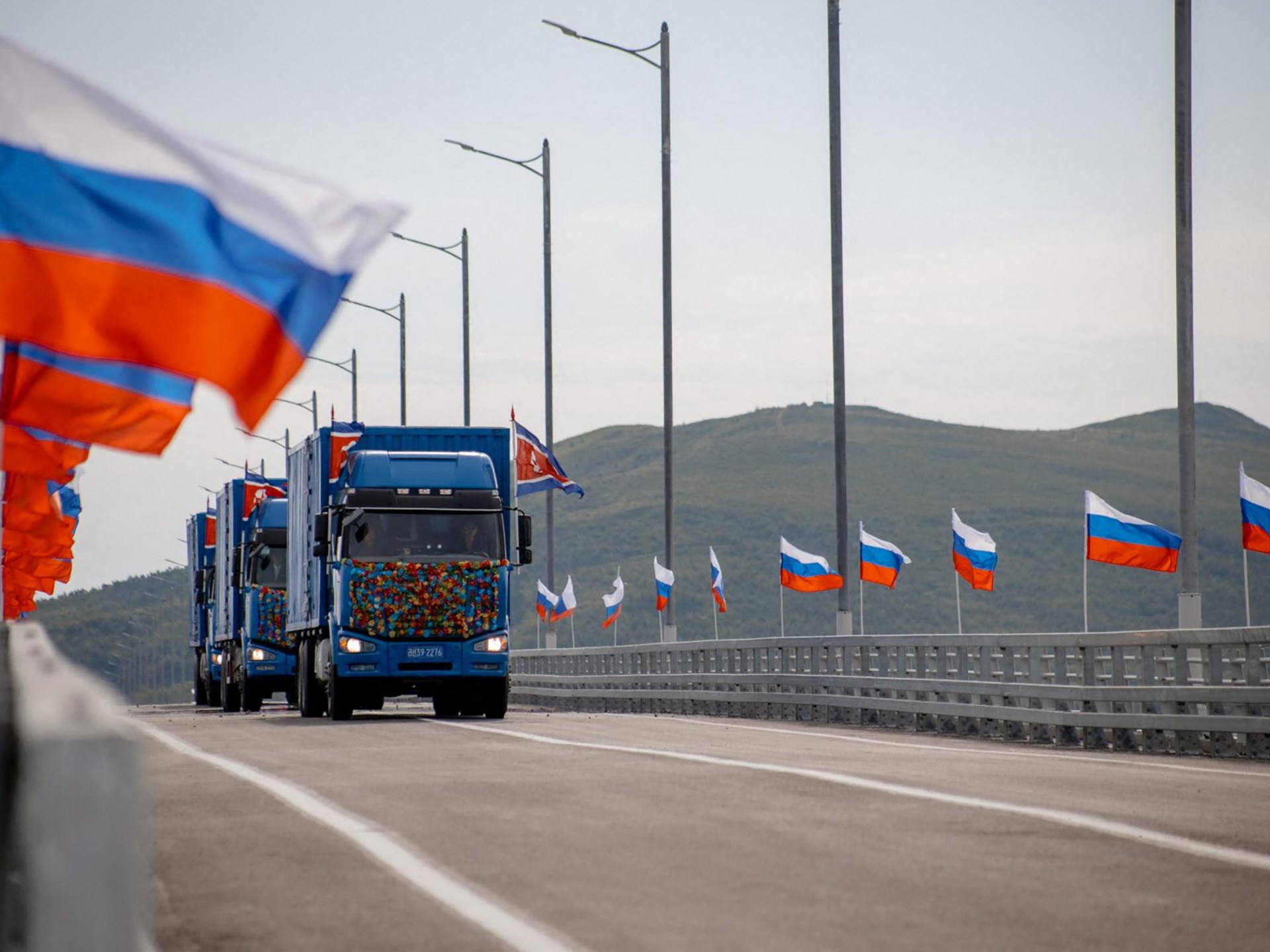
In a move that reverberates across the geopolitical landscape, a brand-new road link, christened the Russia North Korea Bridge, has officially opened, forging a tangible connection between two nations increasingly isolated by the international community. This symbolic infrastructure project, spanning the Tumen River, represents a significant deepening of relations between Moscow and Pyongyang, a bond that has grown remarkably robust since Russia’s full-scale invasion of Ukraine in February 2022. The inaugural convoy of flag-adorned trucks traversing the one-kilometer (0.6-mile) two-lane structure marks not merely an engineering feat, but a potent declaration of strategic alignment.
A New Artery for Bilateral Ties
For decades, the vast border between Russia and North Korea primarily relied on air and a single, venerable rail link known as the “Friendship Bridge,” commissioned back in 1959 following the Korean War. The newly unveiled road bridge dramatically alters this dynamic, promising to enhance cross-border movement and facilitate a broader spectrum of exchanges. Russian Prime Minister Mikhail Mishustin and North Korea’s Premier Pak Thae-song virtually presided over the opening ceremony, underscoring the high-level importance attached to this venture. Mishustin enthusiastically projected that up to 300 vehicles would be able to cross daily, seamlessly integrating into Russia’s federal road network. While immediate use is designated for cargo, the bridge is slated for full operational status, including passenger traffic, by the close of the year.
The groundwork for this ambitious project was laid during Russian President Vladimir Putin’s visit to North Korea in 2024, with construction commencing in April of last year. This rapid realization of a long-discussed plan highlights the urgent strategic imperative felt by both nations to solidify their partnership. The bridge, therefore, is more than just a logistical convenience; it is a physical manifestation of a hardening alliance, offering an alternative conduit for trade and cooperation away from the watchful eyes and restrictive policies of Western powers.
Escalating Alliance Amidst Conflict
The acceleration of cooperation between Russia and North Korea is inextricably linked to the ongoing conflict in Ukraine. As Russia faces extensive sanctions and diplomatic isolation from much of the Western world, it has sought support from nations similarly estranged. North Korea, having endured decades of international sanctions over its nuclear weapons program, finds a natural partner in Moscow. This convergence of shared isolation and perceived external threats has fostered an environment ripe for mutual strategic reinforcement. Reports indicate that Pyongyang has provided significant military support to Russia, with some sources, like the one this article is based on, even claiming North Korea sent thousands of troops to Russia’s Kursk region to help repel a 2024 Ukrainian incursion. This assertion, if widely substantiated, underscores a deeply entrenched military collaboration that transcends mere rhetoric.
During his address, Prime Minister Mishustin notably lauded “the Korean heroes who, only recently, fought shoulder to shoulder with our soldiers and defended Russian soil.” This explicit acknowledgement further cements the narrative of a robust military partnership, a development that undoubtedly raises eyebrows in Washington D.C. and European capitals. The conflict’s protracted nature, with leaders like Zelensky expecting it to continue into winter, only intensifies the need for both Russia and North Korea to secure reliable partners and supply lines, making this bridge a critical piece of that geopolitical puzzle.
Symbolism Beyond Stone and Steel
Beyond its utilitarian function, the Russia North Korea Bridge is steeped in profound symbolism. It has been named after Yakov Novichenko, a Red Army soldier credited by Pyongyang with saving the life of North Korea’s first leader, Kim Il Sung, by intercepting a grenade in 1946. This naming choice is a powerful nod to a shared historical narrative of socialist solidarity and defiance against perceived imperialist threats, carefully curated to resonate with the ideological underpinnings of both regimes. It evokes a sense of enduring camaraderie, a blood-bound bond stretching back to the Cold War era.
Indeed, Mishustin himself declared the bridge to be not merely an engineering project, but “a new symbol of friendship,” labeling its inauguration “a genuinely historic event.” Premier Pak Thae-song echoed this sentiment, noting that the bridge would further cement cooperation “which fulfills the hopes and aspirations of the peoples of both countries as they seek shared development and prosperity,” as reported by Russia’s TASS news agency. Such statements are crafted for both domestic consumption and international messaging, projecting an image of unity and strength in the face of global condemnation.
Geopolitical Ramifications and Future Prospects
The opening of this new border crossing has significant geopolitical ramifications. It provides a more robust avenue for trade and logistics, potentially complicating efforts by the United Nations and Western nations to enforce sanctions against North Korea. An enhanced road network could facilitate a greater volume of goods, including dual-use technologies or even illicit materials, between the two countries. Analysts will be closely watching for any signs that this new infrastructure is being exploited to circumvent existing international restrictions, particularly in light of ongoing concerns about global proliferation risks.
Furthermore, this deepening bond contributes to a shifting global order, challenging the unipolar dominance of Western powers. It signals a defiant axis that prioritizes mutual strategic interests over international norms, particularly concerning the Ukraine conflict and North Korea’s weapons programs. As Europe continues to grapple with escalating tensions and suspected Russian sabotage, this bridge serves as a stark reminder of Moscow’s expanding network of alliances.
Looking ahead, the full operationalization of the Russia North Korea Bridge for passenger traffic hints at aspirations for broader economic and cultural exchanges. While the immediate focus remains on strategic alignment and cargo transport, the long-term vision articulated by both leaderships suggests a desire to foster more comprehensive bilateral relations. This bridge, therefore, stands as a critical new artery, not just for goods and people, but for the lifeblood of a burgeoning, albeit controversial, international partnership.