
How Arab parties could hold critical balance of power in Israeli election
Introduction & Key Takeaways
As Israel approaches a pivotal general election, the political landscape remains intensely volatile. Recent polling data highlights that Arab parties could emerge as the ultimate Israeli election kingmakers, wielding a critical balance of power that may determine the next governing coalition. While traditional Jewish-majority blocs struggle to secure a parliamentary majority, the participation of Arab citizens—who constitute roughly one-fifth of the Israeli population—has become the central variable in this high-stakes national contest.
- Arab voters hold the potential to shift the parliamentary equilibrium in a deadlocked political system.
- Deepening social divisions and rising concerns over systemic discrimination are driving voter mobilization.
- The ongoing security crisis, following the events of October 7, 2023, has intensified political polarization.
- Internal community issues, particularly the surge in gang-related violence, are primary motivators for voter turnout.
Background & Context (What Just Happened?)
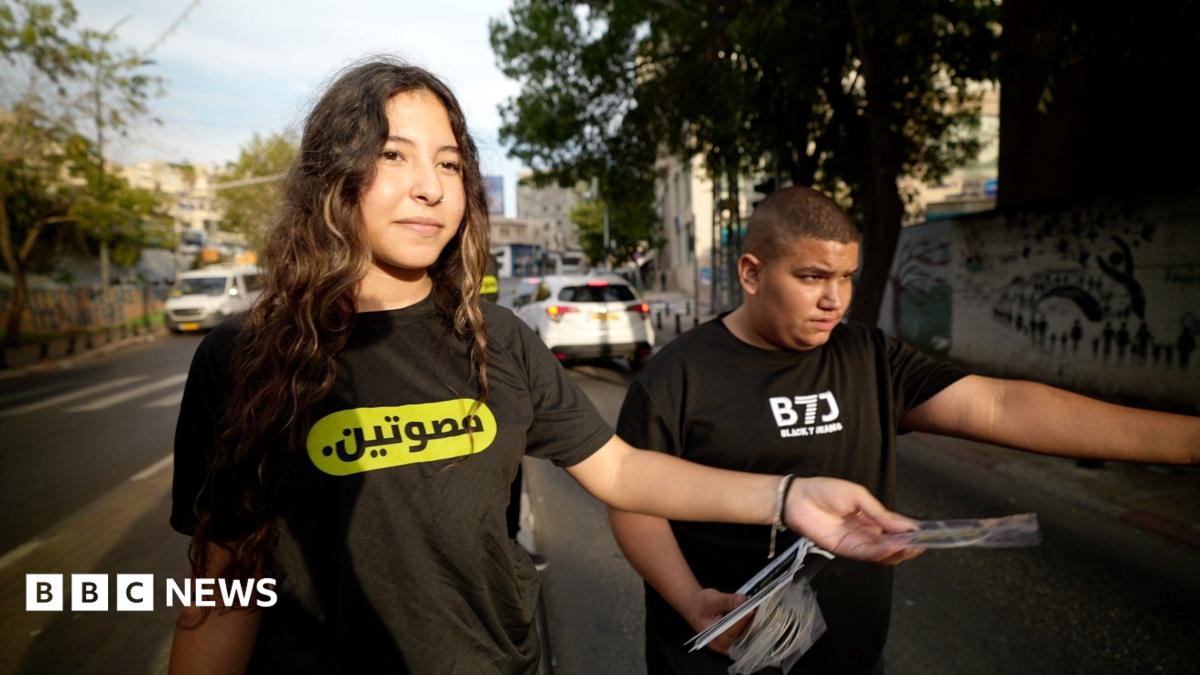
In the bustling streets of Nazareth, a major urban hub for the Arab-Israeli community, a collective sense of urgency is palpable. Students and political activists are actively mobilizing motorists and residents to participate in the upcoming vote. Historically, voter turnout among Arab Israelis has fluctuated, often suppressed by a feeling of political alienation. However, this election cycle is fundamentally different. There is a concerted effort to challenge the current right-wing administration led by Prime Minister Benjamin Netanyahu. For many, the choice is not merely about policy but about survival and social inclusion in a state that many feel has marginalized them.
For those interested in how election outcomes ripple through broader regional dynamics, it is useful to observe shifts in public sentiment, such as those analyzed in our recent coverage of the diplomatic efforts in the Middle East. The political tension in Israel is currently being exacerbated by an environment of unprecedented mistrust, significantly altered by the conflict that escalated in late 2023.
Root Cause & Deep Dive Analysis (Why Did This Happen?)
The friction between the Arab minority and the state has reached a critical juncture. Prominent civil society figures, such as those at the Mossawa Center, argue that the current government has fostered an atmosphere of systematic discrimination. The narrative of “us versus them” has permeated the campaign rhetoric, with some ministers explicitly promoting divisive policies. According to authoritative international news reporting, these campaigns have included rhetoric regarding the future of the Galilee and Negev regions, causing significant alarm within the Arab community.
Furthermore, the issue of personal security is a defining factor. With gang-related violence reaching record levels, many citizens are demanding state accountability. The failure to address this lawlessness has turned the ballot box into a tool for self-protection. When the state fails to provide basic safety, the desire for representative power becomes an existential necessity for marginalized communities.
Strategic Implications & Future Impact (What Does This Mean Globally?)
The strategic influence of Arab parties could force a total realignment of Israeli parliamentary norms. If neither the Netanyahu-led coalition nor the so-called Change Bloc secures a decisive win, the prospect of a government requiring external support from Arab lists becomes a mathematical reality. This would shatter long-standing taboos regarding coalition composition. Globally, this evolution would force allies to reconsider their engagement strategies with the Israeli state. An Israel that is forced to integrate its Arab minority more deeply into the corridors of power would present a different, perhaps more complex, face to the international community than the one dominated by nationalist rhetoric.
Conclusion & What to Watch Next
As the final days of the campaign approach, all eyes are on the turnout numbers. The ability of parties like the United Arab List to bridge the gap between policy advocacy and tangible government participation will be the ultimate litmus test for democratic pluralism in the region. Whether the results lead to a breakthrough in representation or a continuation of the current deadlock remains the most significant uncertainty in the Israeli election. The world will be watching to see if the outcome ushers in a new era of inclusivity or deepens the fractures that currently threaten the nation’s social fabric.