
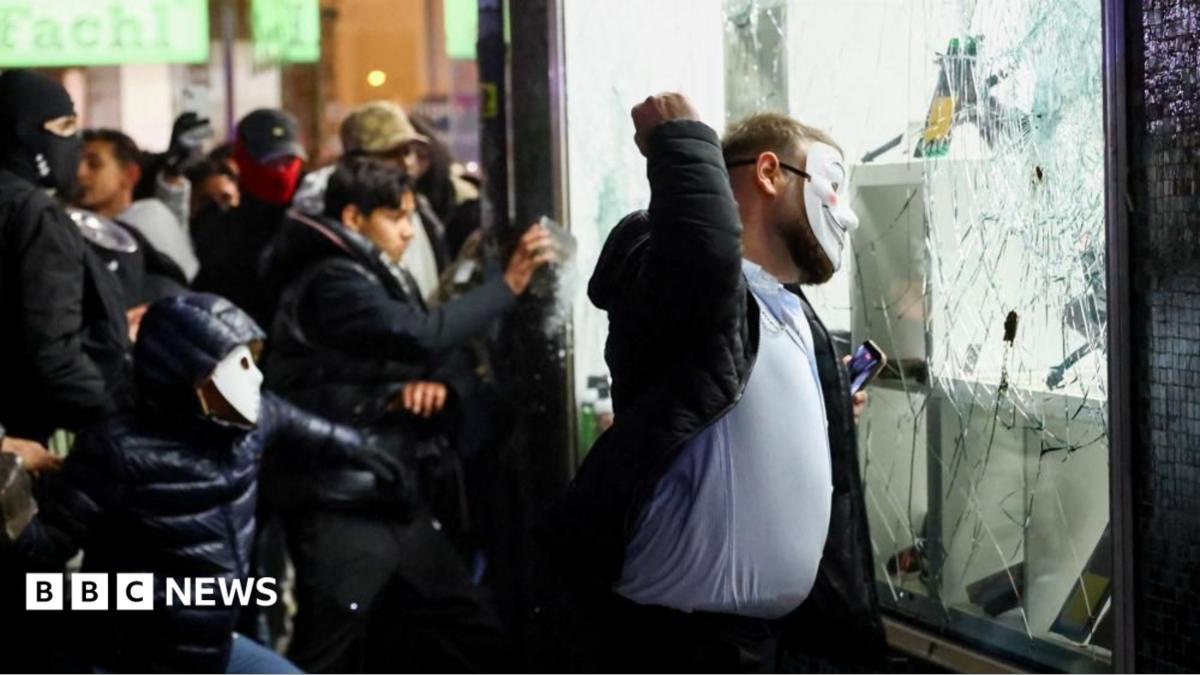
Shops looted as German cost-of-living protests turn violent
Introduction & Key Takeaways
As civil unrest sweeps across Europe, the recent German cost-of-living protests have escalated into scenes of localized violence and looting. While thousands of participants initially gathered for peaceful demonstrations organized by the youth campaign group Gen Z regelt, the situation in major hubs like Frankfurt, Berlin, and Cologne took a destructive turn by nightfall. This instability reflects a growing pan-European frustration regarding economic precarity, public service degradation, and future anxieties among the youth demographic.
Key takeaways from the unfolding situation include:
- Widespread civil unrest driven by rising living costs, education funding gaps, and opposition to military conscription.
- The tactical infiltration of peaceful protests by extremist elements leading to looting and attacks on emergency personnel.
- A growing pattern of youth-led mobilization observed in multiple nations, including France, Italy, and Portugal.
- Government warnings of strict legal consequences for rioters to prevent the normalization of violent civil disorder.
Background & Context
The latest wave of unrest, organized under the banner of Gen Z regelt, represents a desperate call for systemic reform. Participants voiced clear demands, including better support for healthcare and education systems, alongside a rejection of compulsory military service. Unlike previous singular-issue strikes, this movement synthesizes a broad range of grievances that mirror the economic displacement felt by younger generations throughout the continent. Historically, the structural decline in public investment across Europe has served as a primary catalyst for such large-scale civil actions. As seen recently in thousands rallying in Berlin, the youth demographic is becoming increasingly vocal and organized.
Root Cause & Deep Dive Analysis
Why has the situation devolved so rapidly in Germany? The root cause lies in the intersection of long-term fiscal austerity and a lack of clear political pathways for youth concerns. When state institutions fail to provide adequate social safety nets, institutional trust erodes. In Frankfurt, the commercial heart of Germany, the looting of shops and attacks on law enforcement suggest that extremist groups are exploiting this volatility. Officials, including the interior minister of Hesse, have condemned the violence as a betrayal of the democratic mandate of the protesters. This indicates that while the initial impetus for the German cost-of-living protests was rooted in genuine policy disagreement, the manifestation of violence highlights an increasingly fragile social contract.
Strategic Implications & Future Impact
The geopolitical ramifications for the European Union are significant. If domestic instability continues to mirror the unrest observed in France, the resulting political pressure may force central governments to pivot away from necessary fiscal tightening. This creates a difficult dilemma for policymakers who must balance the demands for social spending with the need for economic stability. Furthermore, the spread of protests to nations like Italy and Portugal indicates a systemic weakness that could paralyze regional efforts toward economic integration. For the international community, the observation is clear, as experts note that civil discourse is increasingly being replaced by performative disruption.
Conclusion & What to Watch Next
As authorities attempt to restore order through increased policing and warnings of harsh judicial penalties, the core issues remain unaddressed. The German cost-of-living protests have underscored the urgency of engaging the younger generation in meaningful policy dialogue. Watch for upcoming announcements from government officials regarding emergency subsidies or policy concessions, as well as the potential for further, more radicalized demonstrations if grievances continue to be met with police force rather than political negotiation.