
‘Wanted To Spread Anarchy’: Delhi Police Call Viral ‘Groping’ Video AI-Generated, Arrest 24-Year-Old YouTuber
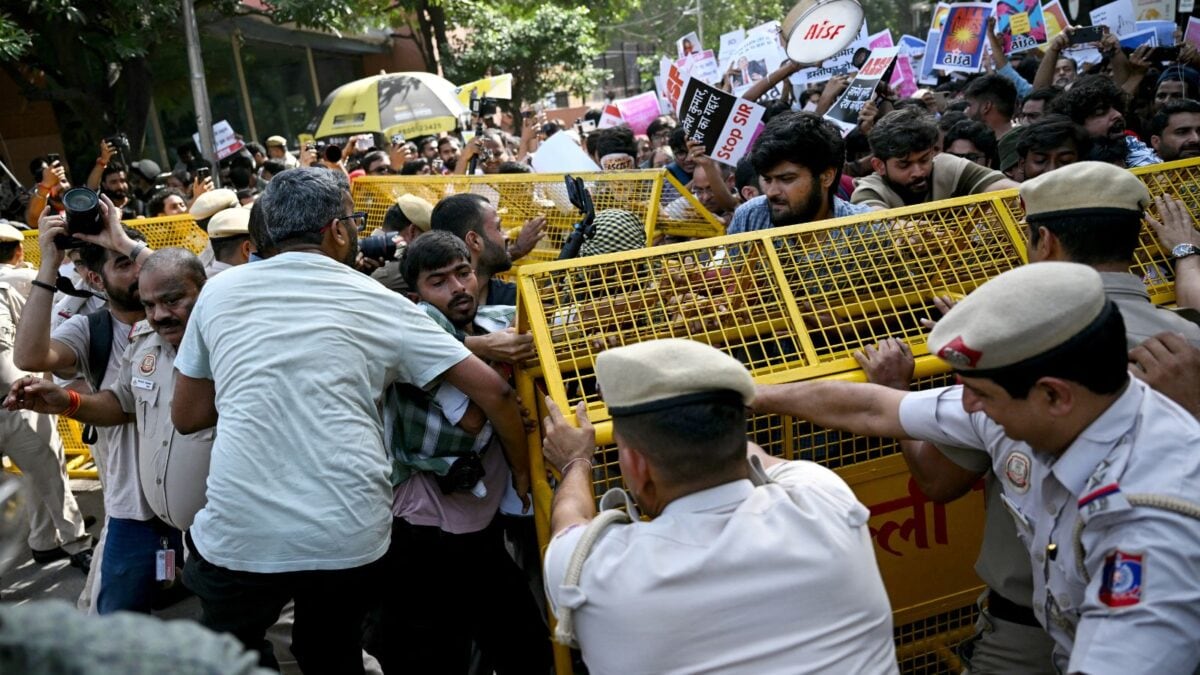
In a move that highlights the growing dangers of synthetic media, the Delhi Police have arrested a 24-year-old YouTuber for his alleged role in a calculated disinformation campaign. The suspect, identified as Nadeem Ahmed, stands accused of creating and disseminating an AI-generated poster that falsely depicted Additional DCP Vivek Bhagat in a highly inflammatory scenario. By portraying the officer as sexually assaulting an independent female journalist, investigators believe the motive behind the fabricated imagery was an explicit attempt to incite public unrest and, as authorities put it, to spread anarchy within the capital.
The controversy surrounding the arrest of the YouTuber stems from a volatile atmosphere following a genuine, albeit separate, incident. On October 3, an independent journalist named Rosy had leveled serious allegations of sexual harassment against Additional DCP Vivek Bhagat during a detention event at Jantar Mantar. While that specific complaint sparked legitimate public discourse, the emergence of the AI-generated imagery muddied the waters significantly, leading authorities to launch a swift investigation into the provenance of the viral content.
The Investigation into AI-Generated Disinformation
As digital tools become increasingly sophisticated, the challenge for law enforcement to distinguish between authentic evidence and malicious fabrication has intensified. The Delhi Police, utilizing their social media monitoring unit, successfully traced the viral images back to a YouTube channel identified as News Aiyna. This channel, founded earlier this year, had garnered approximately 24,000 subscribers before it became the focal point of a criminal investigation. Upon locating Ahmed, who resides in Haryana, police officers executed an arrest and reportedly seized several tools utilized for generating the deepfake materials.
During initial interrogations, Ahmed allegedly admitted to crafting the doctored visuals with the specific intent of tarnishing the reputation of the Delhi Police. This incident, which mirrors broader concerns regarding the misuse of technology, has prompted authorities to register a case involving sections related to rioting and criminal conspiracy. The situation is reminiscent of other legal challenges where the intersection of digital platforms and public order has necessitated rigorous judicial scrutiny.
Beyond the immediate arrest, investigators are widening their scope to determine if this was a singular act of a misguided content creator or part of a broader, well-funded orchestration. The police are now looking into potential foreign links and financial backing that could suggest a pre-planned conspiracy. They are actively seeking to establish if Ahmed was acting under instructions from external handlers, an angle that highlights the national security implications of modern digital warfare.
The suspect, who reportedly dropped out of school in the tenth grade and identified as an independent journalist, has become a test case for how Indian authorities handle the proliferation of harmful Artificial Intelligence applications. As the digital landscape continues to evolve, the ability to rapidly verify video and photographic evidence is becoming as vital to policing as traditional surveillance methods. The Delhi Police are continuing their efforts to identify other participants in the scheme, ensuring that those who use technology to foment chaos are held accountable under the full weight of the law.