
‘BRICS Has Reached Moment Of Coming Of Age’: PM Modi Urges Unity For Tangible Results
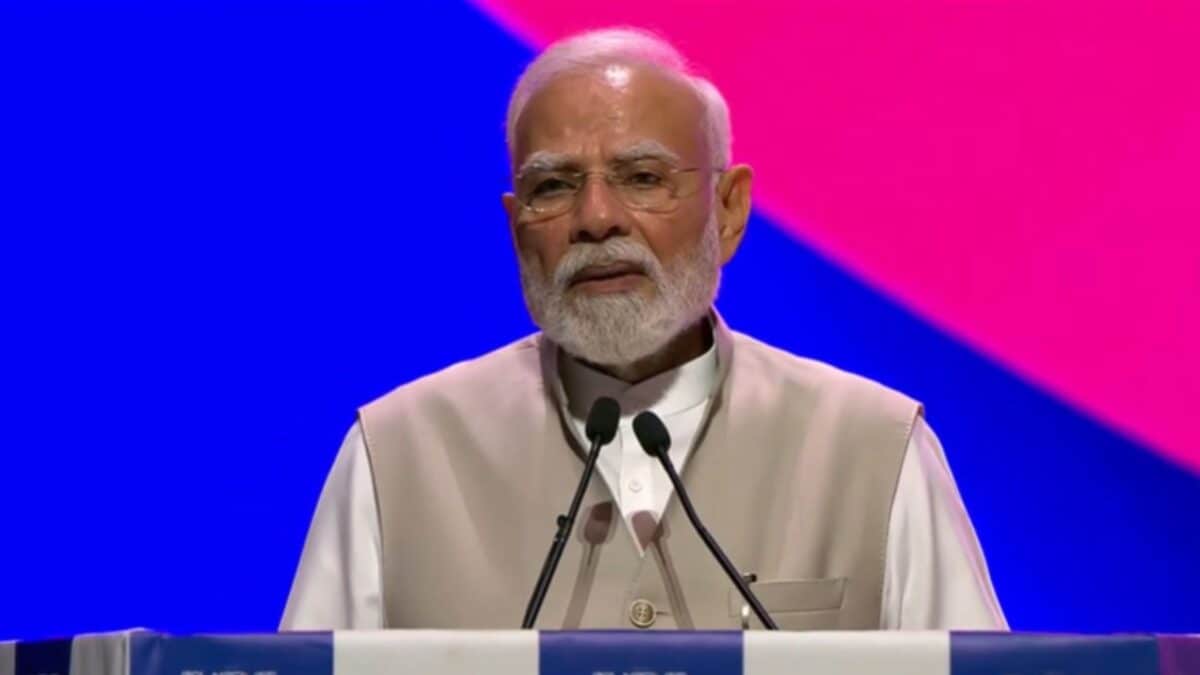
New Delhi buzzed with diplomatic fervor this past Saturday as Prime Minister Narendra Modi declared that the BRICS grouping had arrived at its definitive “coming of age” moment. Addressing a distinguished assembly of foreign leaders and delegates at the much-anticipated BRICS Summit in the Indian capital, Modi issued a powerful call for enhanced BRICS unity, urging member countries to transform their collective consensus into concrete, impactful outcomes on the global stage. His statement underscored a pivotal juncture for the influential bloc, emphasizing its maturation into an indispensable forum for the world’s burgeoning economies.
The Evolution of a Global Player: Two Decades of BRICS Unity
Over the past two decades, what began as an economic acronym coined by Goldman Sachs to highlight promising emerging markets — Brazil, Russia, India, China, and later South Africa — has blossomed into a formidable geopolitical and economic powerhouse. Prime Minister Modi eloquently articulated this journey, noting that BRICS has not merely grown in size or influence but has cultivated a distinct identity, carving out its unique space in the intricate tapestry of international relations. The group’s foundational principle, as reiterated by Modi, revolves around mutual respect for diverse perspectives and a shared commitment to progress through consensus. “We strive to advance not by opposing anyone, but by taking everyone along,” he declared, painting a picture of an inclusive, collaborative future for the international community.
This summit, held at the majestic Bharat Mandapam, was particularly symbolic as it marked the 20th anniversary of the grouping. Modi reflected on this milestone with profound significance, equating it to a human life reaching the age of 20 – a transition into a new phase defined by maturity and heightened responsibility. This metaphorical benchmark highlights the bloc’s readiness to assume a more assertive and pivotal role in shaping global governance and economic policy. The Prime Minister extended his heartfelt appreciation to all participating nations for their unwavering support during India’s successful BRICS chairmanship, which centered on critical pillars such as resilience, innovation, cooperation, and sustainability, encapsulated by the theme, “Building for Resilience, Innovation, Cooperation and Sustainability.”
Navigating a Turbulent Global Stage with Collective Strength
The timing of this summit could not be more critical. It unfolded against a backdrop of escalating geopolitical tensions and economic uncertainties that reverberate across continents. Conflicts in Eastern Europe, particularly the ongoing situation in Ukraine, continue to destabilize regional and global security frameworks, prompting discussions on collective responses and humanitarian efforts. Zelensky says he expects war to continue into winter after talks with US envoys, a grim reminder of the protracted nature of such conflicts. Simultaneously, the volatility gripping West Asia, compounded by disruptions around vital maritime arteries like the Strait of Hormuz, threatens global energy supplies and trade routes. Indeed, oil prices surge as US-Iran strikes intensify in Strait of Hormuz, illustrating the immediate economic ramifications of these regional disputes. These multifaceted challenges, coupled with burgeoning global trade tensions, underscore the imperative for robust international collaboration and a unified stance from a bloc like BRICS.
The two-day summit drew an impressive roster of world leaders, including Russian President Vladimir Putin, Chinese President Xi Jinping, and Iranian President Masoud Pezeshkian, alongside other high-level delegates. Their presence alone signifies the weight and growing importance attached to BRICS deliberations. Discussions throughout the summit invariably touched upon strategies for fostering greater economic integration, enhancing trade partnerships, and collectively addressing shared developmental challenges. The aspiration for greater BRICS unity is not merely political posturing; it’s a strategic necessity in an increasingly fragmented world.
As the bloc stands at this significant threshold, its collective voice represents billions of people and a substantial portion of the world’s economy. The member countries, a diverse group of nations, are increasingly asserting their prerogative to have an equitable say in global decision-making, particularly concerning issues that disproportionately affect the “Global South.” This sentiment was powerfully articulated by PM Modi in a prior address, where he advocated for the Global South to transition from being merely a ‘rule-taker’ to a ‘rule-shaper’ – a clear indication of BRICS’s ambition to reform global governance structures and champion a more multipolar world order. This entails not just economic cooperation but also a robust diplomatic engagement that ensures equitable representation and fair play in international diplomacy.
The challenge now lies in harnessing this collective maturity and responsibility. Translating the often-complex consensus among diverse nations into truly tangible results demands consistent effort, innovative solutions, and unwavering commitment. Whether it’s through bolstering the New Development Bank, fostering digital innovation, or collaborating on climate action, the true test of BRICS’s “coming of age” will be its ability to deliver concrete benefits to its member states and, by extension, to the wider world.