
Photos: Rohingya refugees rally nine years after Myanmar exodus
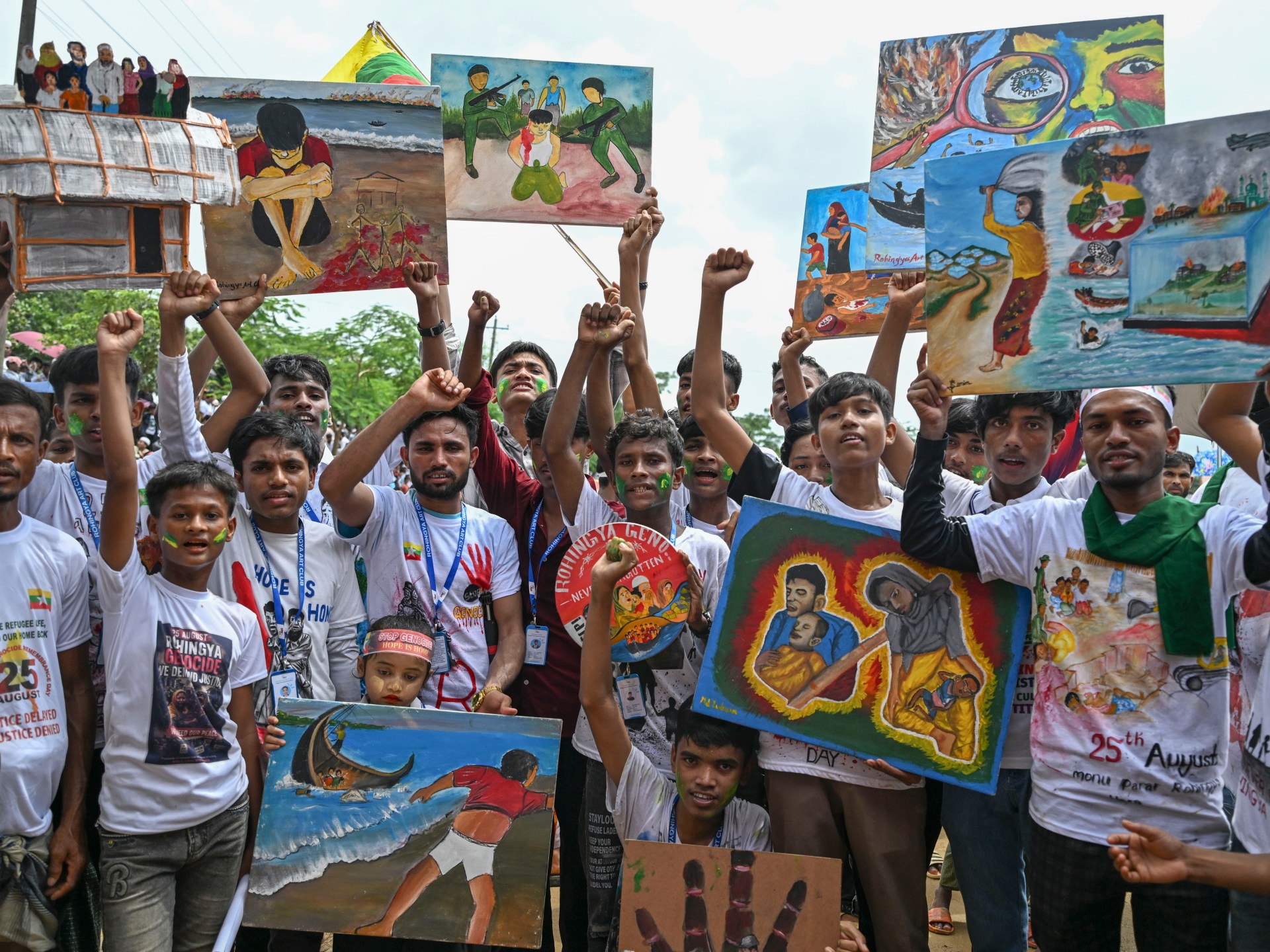
Nine years have passed since the chilling military crackdown in Myanmar forced a staggering exodus, yet the plight of Rohingya refugees remains a stark testament to unresolved conflict and humanitarian crisis. Recently, tens of thousands of Rohingya refugees in Bangladesh’s sprawling and severely overcrowded camps have once again taken to the streets, their voices unified in protest against the dire, often desperate conditions that define their daily existence. Their unwavering demand is for nothing less than a safe, dignified, and guaranteed return to their ancestral homes in Myanmar’s Rakhine state.
This poignant rally, held on what many in the community now refer to as the “ninth anniversary of Rohingya Genocide Day,” serves as a grim reminder of the unspeakable atrocities committed against them. From the labyrinthine lanes of Cox’s Bazar, home to the world’s largest refugee settlement, the collective cry resonates, urging the international community to not only acknowledge their suffering but to actively intervene and guarantee fundamental security in Rakhine, a prerequisite for any meaningful repatriation.
The Roots of a Mass Exodus and Persistent Statelessness
The roots of this profound displacement trace back to August 2017, when Buddhist-majority Myanmar launched a brutal military campaign in Rakhine state. This operation, ostensibly a response to attacks by an armed Rohingya group, swiftly escalated into what the United Nations and numerous international bodies have described as having “genocidal intent.” Eyewitness accounts and exhaustive reports detailed systematic violence: mass killings, widespread rape, and the indiscriminate torching of villages, forcing over 740,000 Rohingya to flee across the border into Bangladesh. The international community, through organizations like the International Court of Justice, continues to grapple with the legal and moral implications of these unimaginable atrocities, which have left an indelible scar on an entire population.
Prior to this mass exodus, the Rohingya, a Muslim ethnic minority, had long faced systemic discrimination and statelessness within Myanmar, where they are denied citizenship and basic rights. The 2017 crackdown merely exacerbated a protracted crisis, pushing a vulnerable community to the brink and creating a humanitarian emergency of unprecedented scale.
Dire Conditions in Cox’s Bazar: A Humanitarian Quagmire
Today, over 1.2 million Rohingya individuals are crammed into approximately 30 camps in Cox’s Bazar. This sprawling settlement, a testament to human resilience and global charity, has unfortunately become synonymous with profound hardship. Aid agencies consistently report that conditions are deteriorating, exacerbated by significant funding cuts and reduced food rations. The ramifications are stark: Save the Children warns that a distressing one in three refugees is anticipated to face “crisis” levels of hunger, or worse, between September and December alone.
More than half of the camp residents are children, growing up in an environment where hope is a scarce commodity and opportunities for education, healthcare, and psychological support are critically limited. The United Council of Rohingya (UCR) refugee group articulated their profound distress, stating that their recent rally was organized to “remember the atrocities committed” and to underscore the “ongoing humanitarian crisis” that continues to engulf their community. The precariousness of life within these bamboo and tarpaulin shelters highlights the urgent need for sustainable, long-term solutions, far beyond mere temporary relief.
Stalled Repatriation: A Cycle of Distrust for Rohingya Refugees
The Bangladeshi government has, on at least two occasions, attempted to initiate repatriation efforts, working with Myanmar to facilitate returns. However, these initiatives have consistently faltered. The primary obstacle remains the unwavering refusal of Rohingya refugees to return, citing profound and entirely legitimate security concerns in Myanmar. Dhaka has affirmed that it will not coerce anyone into returning, understanding that true repatriation must be voluntary, safe, and dignified.
Myanmar’s military government has vehemently disputed Bangladesh’s figures and steadfastly refused to use the term “Rohingya,” instead labelling them as “Bengali.” This linguistic denial is deeply significant, perceived as a calculated attempt to strip them of their identity and inherent right to return to their ancestral lands in Rakhine. The international community, though condemning the atrocities, faces a monumental task in ensuring a safe and dignified return for these displaced individuals. The complexity of such international pressure and condemnation is evident in various global scenarios, such as when UK, France, Germany, Italy and Canada condemn Israel’s West Bank settlement project, highlighting how nations grapple with collective responses to humanitarian and territorial disputes. The Rohingya refugees in Bangladesh are acutely aware that without international guarantees for their safety, rights, and recognition, any return would be to a precarious and potentially perilous existence.
The ongoing denial of their identity by Myanmar’s authorities, coupled with the lack of accountability for past human rights violations, creates an atmosphere of deep mistrust. For the Rohingya, returning home isn’t just about crossing a border; it’s about returning to a place where their existence is acknowledged, their rights are protected, and their future is secure. This demand for justice and security is not merely a plea for aid, but a fundamental call for human dignity and the restoration of a people’s homeland.
As the ninth anniversary passes, the calls from the Rohingya community for global attention and sustained action grow louder. The world cannot afford to turn a blind eye to the protracted suffering of these displaced populations, whose resilience is matched only by the scale of the injustice they have endured. A comprehensive, international effort is critical to break this cycle of displacement and despair, ensuring that the dream of a safe return for the Rohingya can finally become a reality.